












A drone strike targeting the residence of a prominent pro-government militia commander in Sudan’s Gezira State has intensified concerns over the expanding use of drone warfare in the country’s civil conflict, as fighting between the Sudanese Armed Forces (SAF) and the Rapid Support Forces enters its fourth year.
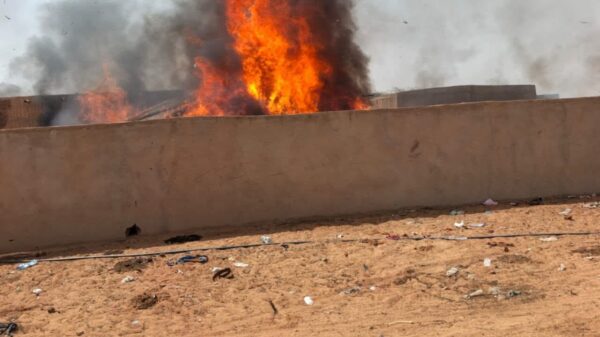
According to multiple conflict monitors and regional observers, the strike occurred on May 2 in the Al-Kahli Zaidan area of Gezira State and targeted the home of Abu Aqla Kaykal, commander of the Sudan Shield Forces, an armed faction aligned with the SAF.
Reports indicate that several members of Kaykal’s family were killed in the attack, including his brother. Kaykal himself was not confirmed among the casualties at the time of reporting. The strike has been widely attributed to the RSF, although the group had not issued an official statement claiming responsibility.
The incident marks another escalation in the increasingly personalized nature of Sudan’s conflict, where commanders, allied militias, and associated civilian networks have become direct targets in a war that has steadily expanded beyond conventional front-line engagements.
Escalating Drone Warfare
Human rights organizations and international observers have repeatedly warned about the growing deployment of drones by both the SAF and the RSF. The use of unmanned aerial systems has accelerated across central Sudan, particularly in contested regions such as Gezira, Khartoum, and parts of Darfur.
The United Nations Office of the High Commissioner for Human Rights and other monitoring bodies have expressed concern that drone operations frequently strike residential neighborhoods, markets, and civilian infrastructure, contributing to mounting civilian casualties and displacement.
Military analysts note that while drone strikes are often intended to disrupt command structures or eliminate strategic figures, attacks targeting homes linked to military leaders significantly increase the risk to noncombatants. The Al-Kahli Zaidan strike reflects a broader trend in which personal residences and family compounds are becoming embedded within the operational logic of the conflict.
Conflict Entrenched in Stalemate
Sudan’s civil war, which erupted in April 2023 following a power struggle between SAF leader General Abdel Fattah al-Burhan and RSF commander Mohamed Hamdan Dagalo, widely known as Hemedti, remains locked in a destructive stalemate.
Despite periodic offensives and territorial shifts, neither side has secured decisive military superiority. Analysts increasingly describe the conflict as a phase of “negative stabilization,” characterized by continuing infrastructure destruction, economic collapse, and persistent insecurity without meaningful political progress.
The SAF continues to rely on a network of allied armed groups and regional militias, including the Sudan Shield Forces, while the RSF maintains operational mobility through decentralized units and extensive territorial influence in western and central Sudan.
Deepening Humanitarian Emergency
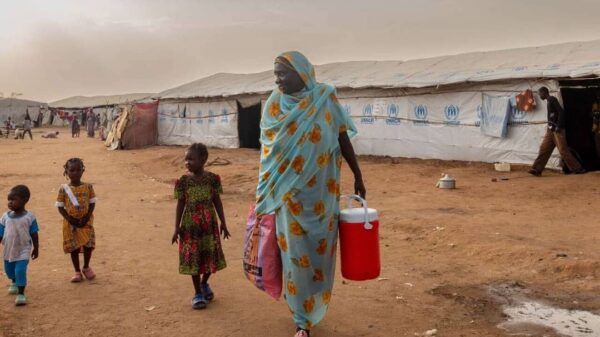
The ongoing war has produced one of the world’s largest humanitarian crises. Millions of civilians have been displaced internally or forced to flee to neighboring countries, including Chad, South Sudan, Egypt, and Ethiopia.
Aid agencies warn that continued fighting in agricultural regions such as Gezira State threatens food production and humanitarian access at a critical time. The destruction of transport routes, storage facilities, and civilian infrastructure has further complicated relief operations.
International organizations continue to call for renewed ceasefire negotiations and greater protection for civilians, but diplomatic efforts have so far failed to produce a durable political settlement.
The strike in Al-Kahli Zaidan underscores the continuing volatility of the conflict and highlights the increasing dangers faced by civilians living in areas tied to military or militia activity.