




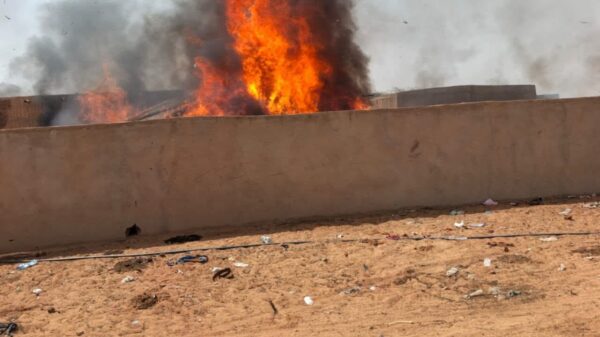









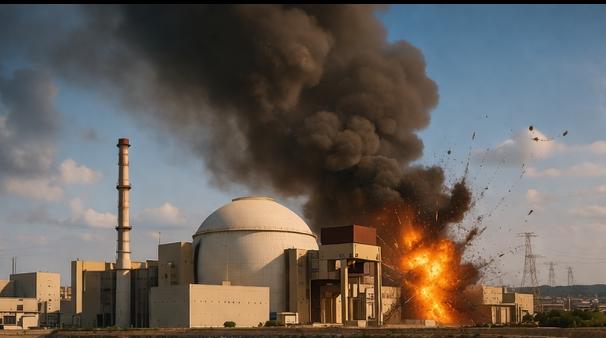
A projectile strike has hit an auxiliary facility at Iran’s Bushehr nuclear power plant marking a new escalation in the regional conflict and raising international concern over nuclear safety.
The International Atomic Energy Agency and Iranian authorities confirmed that the strike damaged a non critical support building while the main reactor and safety systems remain intact and operational.
Iran’s Atomic Energy Organization said one security personnel was killed by shrapnel from the impact and confirmed that no radiation leak has been detected.
The head of the IAEA expressed deep concern stressing that nuclear facilities must never be targeted under any circumstances noting that this is the fourth incident near the Bushehr site since the conflict began.
Bushehr located in southern Iran is the country’s only operational nuclear power plant running on low enriched uranium supplied by Russia and producing around one thousand megawatts of electricity.
At the same time coordinated strikes targeted facilities in the Mahshahr petrochemical zone in Khuzestan province including the Bandar Imam complex and other industrial plants.
Local officials confirmed that at least five people were injured in the attacks.
The affected facilities are key to Iran’s production of liquefied petroleum gas polymers and export oriented chemical products.
Analysts warn that continued disruption could impact global petrochemical supply chains.
The strikes follow warnings of extensive attacks on Iranian energy infrastructure if maritime transit through the Strait of Hormuz is not restored.
Iran’s Revolutionary Guard claimed it shot down a US drone and an attack aircraft although these claims remain unverified.
Reports also indicate ongoing search and rescue operations for a downed US fighter jet with one crew member rescued and another still missing.
The conflict has also affected Iraq where a border crossing was closed after nearby strikes killed one Iraqi civilian and injured five others.
Since the conflict began it has expanded into a multi domain confrontation affecting military economic and civilian infrastructure.
The continued closure of the Strait of Hormuz has contributed to rising oil prices and market volatility.
International calls for restraint are growing particularly regarding operations near nuclear and critical energy facilities.