


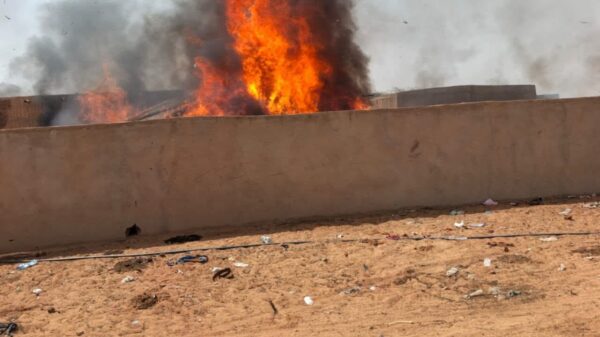








A deadly ambush targeting a military-escorted civilian convoy in Ghana’s Upper East Region has heightened concerns over the deteriorating security situation in Bawku, a long-standing flashpoint of ethnic and chieftaincy tensions. The attack, which took place on Monday in the Binduri area, reflects growing fears that local violence is intersecting with broader regional militant threats.
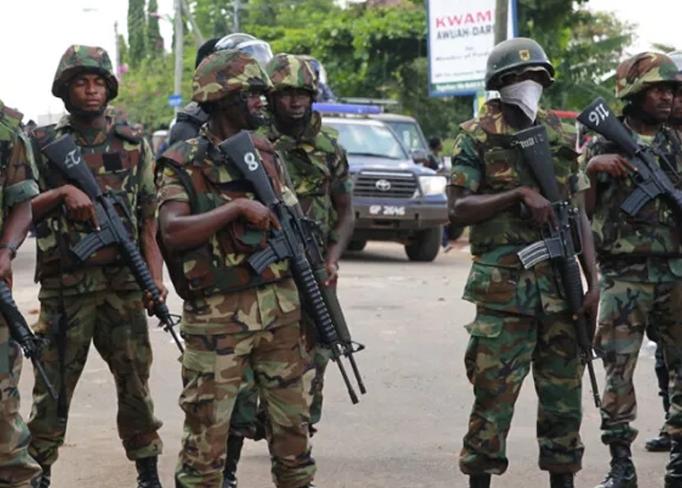
According to statements from the Ghana Armed Forces and the Ministry of the Interior, the convoy—comprising around 140 civilians under military escort—was traveling from Bawku to Bolgatanga when it came under heavy gunfire from unidentified assailants. The convoy was part of ongoing efforts to secure civilian movement along an increasingly unstable route.
Authorities confirmed that three civilians were killed in the crossfire, while military personnel returned fire and reportedly neutralized seven attackers during the engagement.
Following the incident, security forces conducted a coordinated sweep of the surrounding area, resulting in the arrest of ten suspects who are currently being interrogated to determine their identities and possible affiliations.
In a notable development, security forces recovered a G3 automatic rifle, two loaded magazines, and 176 rounds of ammunition from a suspect who allegedly attempted to hide inside a local mosque. Officials stressed that the use of religious sites as safe havens for armed actors represents a dangerous escalation in tactics.
The violence in Bawku is rooted in a long-standing chieftaincy dispute between the Kusasi and Mamprusi ethnic groups, both of whom claim rightful authority over the area. Despite a 2003 Supreme Court ruling and multiple mediation efforts, the conflict has persisted and periodically erupts into violence.
Bawku’s strategic importance as a commercial transit hub linking Ghana to Burkina Faso and Togo has amplified the impact of the latest attack, with cross-border trade routes disrupted and economic activity effectively stalled.
Security analysts and officials have raised increasing concerns that the crisis is no longer purely local, with intelligence suggesting that extremist groups operating in neighboring Burkina Faso may be exploiting ethnic divisions to expand their influence into northern Ghana.
The Ministry of National Security has described the situation as a potential “Sahel spillover,” referring to broader regional instability, while the Ghana Armed Forces have intensified Operation Koudanlgou to strengthen border security and counter cross-border threats.
As of April 28, a strict curfew from 8:00 p.m. to 5:00 a.m. remains in effect across Bawku Municipality and surrounding areas, with military presence significantly increased to approximately 1,500 troops on high alert.
Interior Minister Henry Quartey warned against complicity with armed groups and condemned the misuse of religious spaces, urging residents to cooperate with security agencies through the “See Something, Say Something” campaign.
“The government will not tolerate the use of sacred spaces as sanctuaries for criminals,” the minister said, calling on citizens to fully cooperate with ongoing operations.
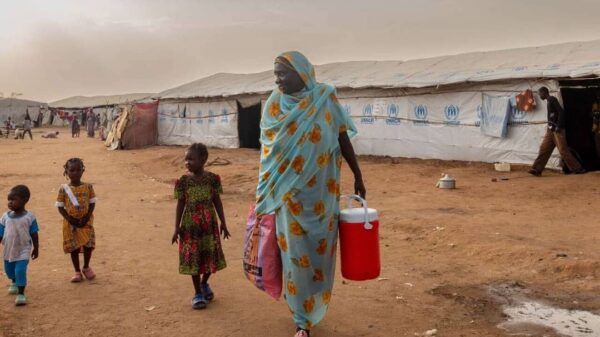
Recent data illustrates the sustained human toll of the conflict, with around 85 deaths recorded in 2025 and more than 12,000 internally displaced persons. In 2026 alone, at least 34 deaths and 4,500 displacements have already been documented, indicating that the crisis remains unresolved.
The ambush marks a significant escalation in both operational complexity and broader implications for national and regional security, as investigations continue amid concerns of further deterioration.
Security officials reiterated that anyone found obstructing operations or harboring suspects will face prosecution under the law.