












The conflict between Iran and the United States–Israel alliance has entered a dangerous new stage as Iranian missiles and drones struck multiple countries across the Gulf during overnight attacks, marking the widest geographic expansion of the war since hostilities began.
Regional officials said strikes targeted military installations, diplomatic facilities and urban areas across Bahrain, Saudi Arabia, Qatar, the United Arab Emirates, Jordan and Kuwait. The attacks represent the first time in the current conflict that several Arab states were struck during the same night, intensifying fears that the confrontation is evolving into a broader regional war.
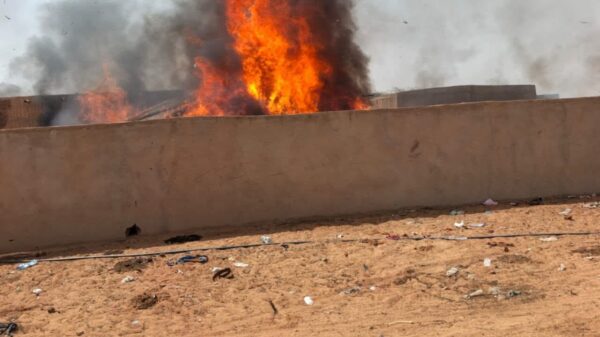
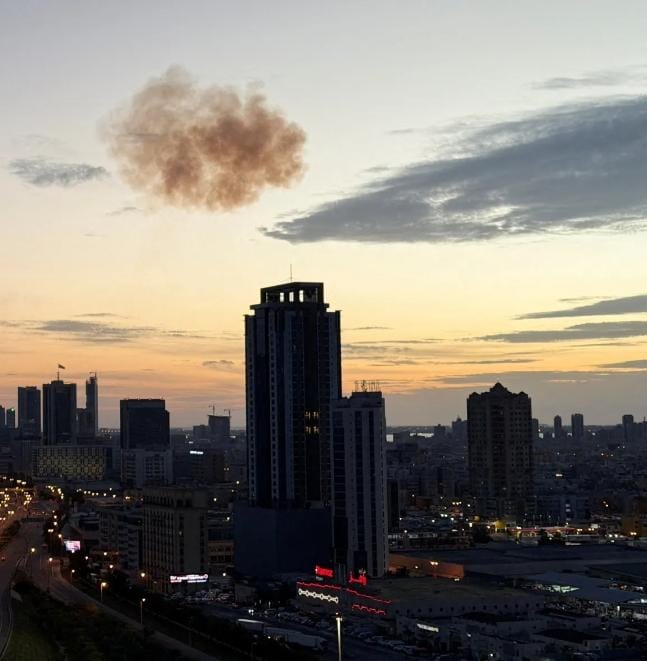
Authorities in Bahrain said Iranian drones targeted towers in the financial district of Manama that house diplomatic offices, including the Israeli embassy. Air defense systems intercepted several incoming projectiles, though at least one drone struck near a hotel and residential buildings, causing fires that emergency crews later contained. Officials reported no confirmed fatalities.
The incident followed an earlier strike that ignited a fire at Bahrain’s main oil refinery, highlighting growing concerns over the vulnerability of Gulf energy infrastructure.
Saudi Arabia said its air defenses intercepted a cruise missile near Al-Kharj southeast of Riyadh and three ballistic missiles aimed at Prince Sultan Air Base. Additional drones targeting the Riyadh region were also shot down. Authorities reported no major damage but raised security alerts across central parts of the country.
Qatar said its air defense systems intercepted a drone attack aimed at Al Udeid Air Base, the largest United States military installation in the Middle East and a central hub for American regional operations. Residents in the capital were briefly advised to remain indoors while authorities assessed the situation.
The United Arab Emirates faced one of the largest waves of aerial threats during the night. Officials said more than 130 drones and several ballistic missiles were detected heading toward the country. Most were intercepted, though some drones and at least one missile reportedly landed inside national territory, causing minor damage and injuries.
Jordanian air defenses also intercepted multiple drones over the northern city of Irbid. Military officials said fighter jets from the United Kingdom operating from bases in Cyprus assisted regional air defense systems in destroying drones flying across Jordanian and Iraqi airspace.
In Kuwait, authorities confirmed that two people were killed during overnight interceptions of missiles and drones, among the first confirmed civilian fatalities reported in Gulf states since the conflict began. The Kuwaiti military said hundreds of projectiles have been intercepted since the start of the war, many aimed at civilian infrastructure and residential areas.
International concern has intensified as the fighting spreads across the region.
European Union foreign policy officials met with ministers from Gulf countries to coordinate a response and condemned the strikes as unjustified aggression, warning that the widening conflict could threaten global economic stability.
European naval forces have also moved closer to the Strait of Hormuz to protect shipping routes and energy supplies along a corridor through which roughly one fifth of the world’s oil flows.
The United Kingdom said its prime minister authorized the use of British military bases in the region for defensive operations aimed at protecting nationals and allied forces.
The military confrontation continues to escalate on both sides.
United States Central Command said coalition strikes have inflicted heavy damage on Iran’s naval capabilities. Officials reported that more than thirty vessels belonging to Iran’s Revolutionary Guard naval forces have been destroyed during the campaign, including a large drone carrier damaged in a recent strike.
Iranian officials have warned that their retaliation campaign is continuing and signaled that new weapons and tactics may be deployed in the coming stages of the conflict.
Governments across the West have issued their highest travel warnings for much of the Middle East as the war widens.
The United States, the United Kingdom and several European countries have advised citizens to avoid travel to large parts of the region and have begun organizing evacuation flights for nationals affected by widespread airspace closures.
Air travel across the Gulf remains heavily disrupted as airlines cancel or reroute flights in response to continuing missile threats.
Analysts say the coordinated strikes across several Gulf states indicate that the confrontation is moving beyond a bilateral conflict into a wider regional crisis.
With missile attacks continuing and diplomatic efforts struggling to gain momentum, the war appears to be entering a prolonged and potentially more volatile phase with significant implications for global energy markets and maritime trade.