







The regional conflict between the United States, Israel and Iran escalated sharply as the United Arab Emirates confirmed it had intercepted a large wave of Iranian missiles and drones targeting critical infrastructure across the country.
The UAE Ministry of Defence said its air defense systems intercepted 11 ballistic missiles and 123 drones within a 24-hour period. Since hostilities began on February 28, Emirati forces report downing a total of 186 missiles and more than 750 drones aimed at strategic sites.
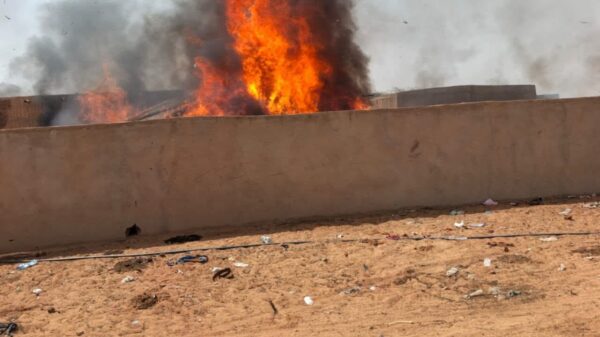
In one of the most significant incidents, debris from a drone interception ignited a fire at an oil storage facility in Fujairah. The blaze occurred about 15 kilometers from the site of the ATP Fujairah Challenger tennis tournament, prompting an immediate suspension of play as athletes and spectators were evacuated to secure shelters.
Authorities said emergency crews quickly contained the fire and that no casualties linked to the tournament were reported.
Despite the success of air defense systems, falling debris and impact damage caused civilian casualties. Officials confirmed three deaths nationals of Pakistan, Nepal and Bangladesh and said 68 others sustained minor injuries.
The UAE government condemned what it described as blatant aggression and reiterated its right to respond in defense of national sovereignty.
Inside Iran, the fourth day of the joint U.S.–Israeli campaign — codenamed Operation Epic Fury by Washington and Operation Roaring Lion by Israel — produced heavy casualties while triggering severe disruptions to global energy markets.
The Iranian Red Crescent Society reported that 787 people have been killed nationwide in strikes across 153 cities since Saturday. Independent human rights groups said the toll could rise as search and rescue teams continue operations in heavily damaged urban areas.
Public anger intensified during a mass funeral in Minab for 165 schoolgirls and staff killed in a strike on the Shajareh Tayyebeh school, an event that has become a rallying point for anti-American and anti-Israeli sentiment.
Following the confirmed death of Supreme Leader Ali Khamenei, Iran is governed by an interim council, marking a critical leadership transition under wartime conditions.
The conflict has severely disrupted energy production and maritime trade in the Gulf.
State energy company QatarEnergy announced the suspension of all liquefied natural gas production after Iranian strikes hit industrial hubs in Ras Laffan and Mesaieed. European natural gas prices surged more than 30 percent following the announcement.
Maritime traffic through the Strait of Hormuz has reportedly dropped by 94 percent as major shipping lines suspended transit operations due to security risks. Insurance premiums reached record highs, contributing to a spike in global crude prices, with Brent crude trading at $82 per barrel.
U.S. President Donald Trump said the conflict could extend beyond the initially projected four to five weeks, citing the objective of achieving regime change in Tehran.
Russia has emerged as a notable economic beneficiary of the energy shock, with Urals crude trading at $57 per barrel. Analysts said the redeployment of U.S. Patriot missile systems toward the Gulf could alter the military balance in Ukraine.
As air defenses activate nightly across the Gulf and energy markets fluctuate sharply, the conflict is reshaping not only regional security but the broader global economic landscape.