











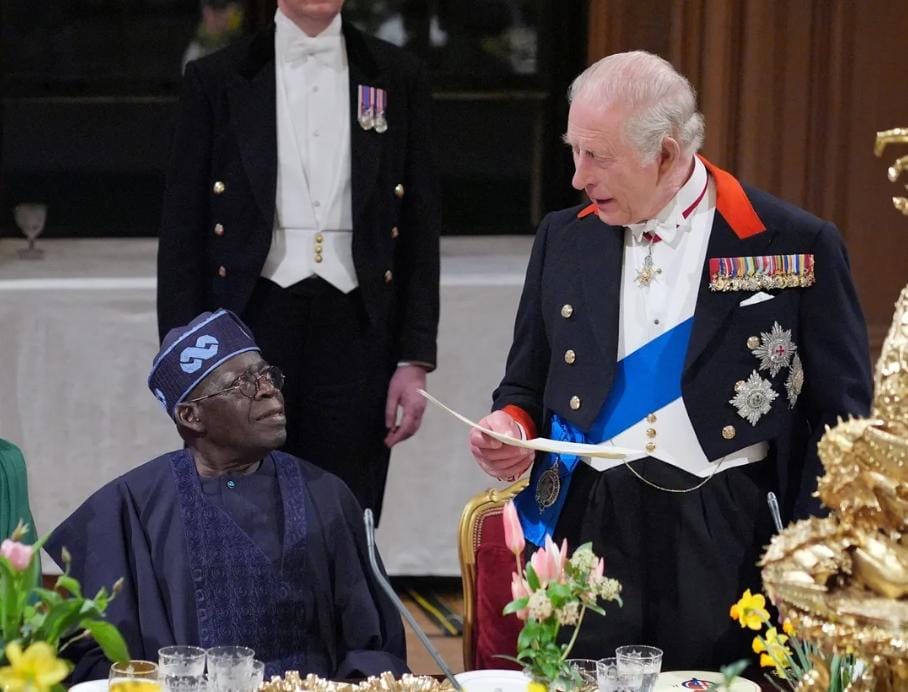
The Nigerian president’s state visit to the United Kingdom marks a significant shift in bilateral relations combining symbolic diplomacy with concrete economic and security outcomes in the first such visit in decades.
The visit featured a formal reception at Windsor Castle where the British monarch acknowledged the legacy of colonial rule in Nigeria in what analysts describe as a carefully calibrated gesture addressing historical sensitivities without a formal apology.
The event also included cultural and religious elements reflecting Nigeria’s diversity reinforcing a broader effort at symbolic diplomacy between the two nations.
Economically the visit delivered a package of agreements worth more than one billion pounds covering port modernization renewable energy projects and trade facilitation positioning Nigeria as a key partner in Britain’s Africa strategy.
Security cooperation emerged as a central theme with the UK pledging technical and intelligence support to Nigeria’s counterinsurgency efforts particularly in the northeast while Nigerian authorities moved to strengthen operational coordination on the ground.
The visit also highlighted the role of the Nigerian diaspora in the UK showcasing its influence across economic and cultural sectors and encouraging increased investment back into Nigeria.
The renewed partnership comes amid broader global shifts as Britain seeks to expand post Brexit alliances and Nigeria aims to diversify its international partnerships in response to evolving security and economic challenges.
Analysts view the visit as a turning point combining acknowledgment of the past with a forward looking strategic partnership.
As global pressures intensify the strengthened relationship may serve as a model for redefining ties between African nations and Western powers.