





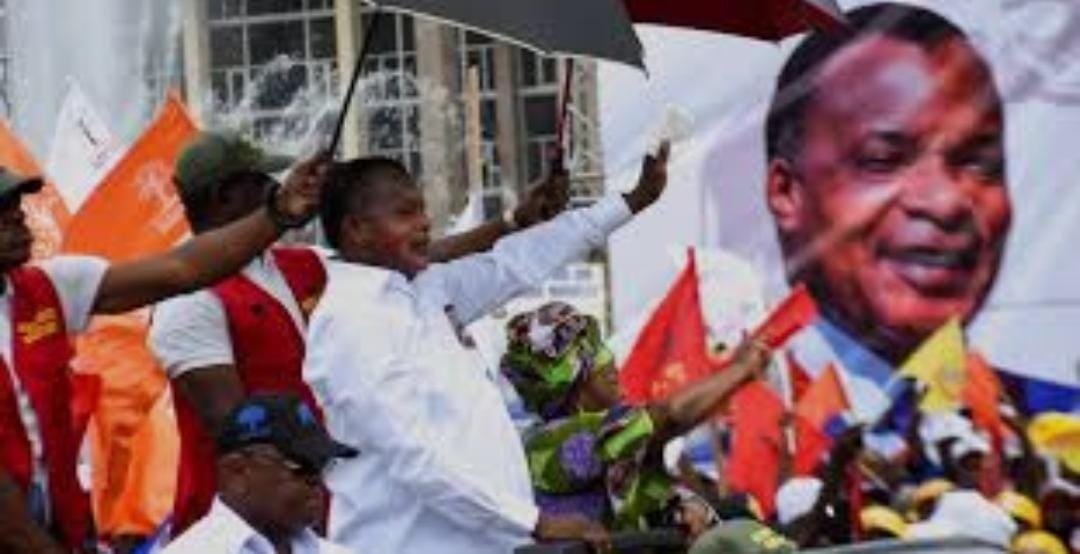
Voters in the Republic of the Congo went to the polls in a presidential election that could extend the rule of President Denis Sassou Nguesso, who is seeking a fifth consecutive term after more than four decades in power.
The eighty two year old leader has governed the oil producing Central African state for a combined forty one years, making him one of Africa’s longest serving heads of state.
His latest re election bid comes amid a political climate in which opposition groups continue to question the transparency of the electoral process and the fairness of political competition.
More than three point two million registered voters were eligible to cast ballots as polling stations opened nationwide in the morning and are scheduled to close in the evening according to national electoral authorities.
The election is administered by the National Independent Electoral Commission while the Constitutional Court is responsible for certifying the final results following the official vote count.
The incumbent faces six challengers including former finance minister Mathias Dzon and political figure Alexis Bongo.
However two major opposition parties have chosen to boycott the vote arguing that the political environment does not provide sufficient guarantees of fairness and independence.
Critics have repeatedly raised concerns about the neutrality of the election commission and restrictions placed on opposition political activity.
Authorities have rejected those claims and say the electoral process complies with national legal standards while urging citizens to participate peacefully.
International observers are monitoring the vote. The African Union has deployed a short term election observation mission consisting of thirty four observers from twenty African countries.
The mission is led by African Union Commission chairperson Mahmoud Ali Youssouf whose team is tasked with assessing whether voting procedures meet regional democratic standards.
A preliminary assessment from the observers is expected in the coming days addressing polling operations voter participation and the transparency of the process.
The election is taking place against a backdrop of relative macroeconomic stability largely supported by oil and liquefied natural gas production which form the backbone of the national economy.
Despite this resource wealth the country continues to face significant social challenges. World Bank data indicate that about fifty two percent of the population lives below the poverty line highlighting a persistent gap between resource revenues and living standards.
Freedom House has also given the country a low score in its global freedom index citing restrictions on political opposition media activity and civil society organizations.
Election authorities say provisional results could be released within two to three days after the polls close after which the Constitutional Court will review any electoral complaints before declaring the final certified results.
The outcome of the vote will determine whether Denis Sassou Nguesso extends his long rule over the oil rich Central African nation or whether the election signals the beginning of a political shift.