




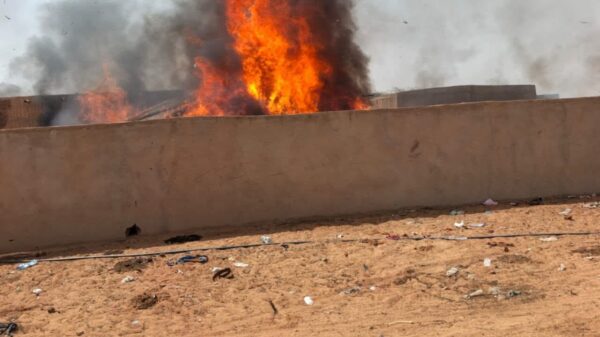










Thousands of mourners gathered in the southern Iranian city of Minab for a mass funeral honoring victims of what officials describe as the deadliest civilian incident since the start of the current conflict between Iran and the United States–Israel coalition.
The strike, which occurred on February 28 during the opening phase of the U.S.–Israeli military campaign, destroyed the Shajareh Tayyebeh girls’ elementary school in Hormozgan province.
Iranian authorities have confirmed 165 fatalities, though some local sources estimate the toll may be as high as 180. The majority of the victims were girls between the ages of 7 and 12. Several teachers and school staff were also killed.
State media footage showed streets filled with mourners dressed in black, many carrying photographs of the children. Parents and relatives wept openly as funeral prayers were held, while crowds chanted anti-American and anti-Israeli slogans.
The funeral has intensified domestic anger and placed renewed international scrutiny on the conduct of military operations in the conflict.
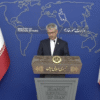
Iran’s Foreign Minister Abbas Araghchi described the school site as a “document of American crimes,” accusing the United States and Israel of targeting civilian infrastructure, including schools and hospitals.
The Israeli military said it was not aware of strikes at the specific location cited. U.S. Secretary of State Marco Rubio said Washington would not deliberately target a school, while U.S. Central Command confirmed it is reviewing reports of civilian casualties.
UNESCO described the bombing as a grave violation of humanitarian law. Nobel Peace Prize laureate Malala Yousafzai said she was heartbroken and appalled, calling the killing of children unconscionable.
Independent verification of casualty figures remains difficult due to restricted access to the site.
Iran has entered its fourth day of war under interim leadership following the confirmed death of Supreme Leader Ayatollah Ali Khamenei.
An interim governing council composed of President Masoud Pezeshkian, Judiciary Chief Gholam-Hossein Mohseni-Ejei, and Assembly of Experts member Ahmad Arafi has assumed temporary authority during what Tehran has declared a 40-day national mourning period.
The United States and Israel have expanded their military objectives since operations began February 28. U.S. officials have indicated a shift from a focus on denuclearization to broader strategic aims that include weakening Iran’s governing structure.
More than 1,250 targets have reportedly been struck across Iran, with coalition forces emphasizing naval assets and strategic infrastructure.
Iran has responded with drone operations targeting facilities in Kuwait, Qatar and Saudi Arabia. One of the most significant impacts has been the reported suspension of liquefied natural gas production in Qatar, sending shockwaves through global energy markets.
Iran has declared a seven-day national holiday while organizing nationwide memorials. Public anger appears to be rising, particularly following the Minab school bombing.
Analysts warn that the humanitarian dimension of the conflict may further harden public sentiment and complicate any diplomatic pathway.
Global energy markets have reacted sharply to the intensifying conflict as regional instability disrupts key production and export facilities.
Iranian drone strikes targeting Gulf infrastructure have reportedly halted Qatari liquefied natural gas production, raising fears of prolonged supply constraints.
Oil futures surged in early trading, with investors pricing in the risk of wider regional escalation. Analysts warn that further attacks on Gulf energy infrastructure could exacerbate supply shortages and push prices significantly higher.
The conflict has expanded beyond direct military engagements, with economic and humanitarian consequences spreading rapidly across global markets. Energy traders are closely monitoring developments in Tehran, particularly the stability of Iran’s interim leadership and the potential for further retaliatory strikes.