







As the joint U.S. Israeli military campaign against Iran enters its fourth day, Lebanon has rapidly emerged as a second active front in the expanding regional conflict. Intensifying exchanges between the Israel Defense Forces and Hezbollah have transformed parts of southern Lebanon and Beirut’s southern suburbs into active combat zones.
Full-Scale Air Campaign Over Beirut
Israeli officials say operations have escalated from intermittent strikes to what they describe as a sustained air campaign targeting Hezbollah infrastructure. For the second consecutive day, the Dahiyeh district of Beirut—long regarded as a Hezbollah stronghold—has been subjected to heavy bombardment.
The IDF states that the strikes are aimed at dismantling command centers and weapons depots, accusing Hezbollah of escalating hostilities following the reported death of Iran’s Supreme Leader. Lebanese authorities report extensive destruction across residential blocks, while independent verification of specific military targets remains limited.
Border Tensions and Military Posturing
Along the southern frontier, the IDF has repositioned troops to what it describes as additional defensive positions. Israeli officials characterize the move as a forward defensive measure rather than the start of a ground invasion.
Lebanese security sources indicate that the Lebanese Armed Forces have withdrawn from several advanced border positions, citing security concerns and the risk of being drawn directly into the confrontation.
Hezbollah’s response has been swift. At dawn on Tuesday, the group launched what it described as a “swarm of drones” targeting the Ramat David Airbase in northern Israel. The strike followed a major missile barrage against Haifa on Monday, marking the most significant cross-border exchange in more than a year.
Mounting Humanitarian Crisis
The escalation has sharply worsened Lebanon’s humanitarian situation.
Lebanon’s Health Ministry said Monday’s airstrikes killed at least 52 people and wounded 154. Casualty figures continued to rise as further strikes were reported on Tuesday.
Authorities have issued evacuation orders for 59 areas nationwide, triggering large-scale internal displacement. Highways leading north from southern Lebanon and west from Dahiyeh have been heavily congested as families flee bombardment zones.
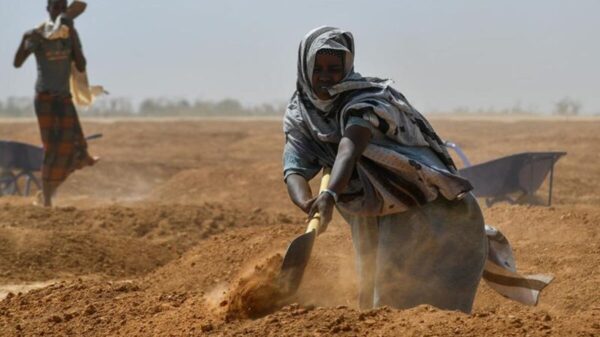
In Beirut, public schools have been closed and converted into emergency shelters to house thousands of displaced civilians. Aid agencies warn that the country already weakened by years of economic crisis faces severe constraints in delivering food, medical assistance and temporary housing.
Political Rift in Beirut
The fighting has exposed deepening divisions within Lebanon’s political leadership.
Prime Minister Nawaf Salam, who took office in February 2025, has declared Hezbollah’s independent military operations illegal and instructed national security forces to prevent attacks launched from Lebanese territory.
Hezbollah has rejected the directive, accusing the Salam administration of failing to defend Lebanese sovereignty against Israeli strikes. The standoff highlights longstanding tensions over the group’s autonomous military capabilities operating outside formal state control.
Salam convened an emergency cabinet meeting on Tuesday and initiated high-level diplomatic contacts, including talks with Egyptian officials, seeking an immediate ceasefire.
Regional Spillover from the “Iran Front”
The escalation in Lebanon is directly linked to broader U.S.–Israeli operations inside Iran, referred to by Washington as “Operation Epic Fury” and by Israel as “Operation Roaring Lion.” The United States Central Command said Iranian Revolutionary Guard command facilities have sustained significant damage, potentially affecting Hezbollah’s coordination with Tehran.
The United States confirmed that six service members were killed in the region, primarily in Iranian retaliatory strikes in Kuwait.
Analysts warn that sustained Israeli strikes in Lebanon, combined with Hezbollah’s expanding missile and drone operations, risk drawing additional regional actors into open confrontation, further widening a conflict that has already destabilized multiple fronts across the Middle East.