













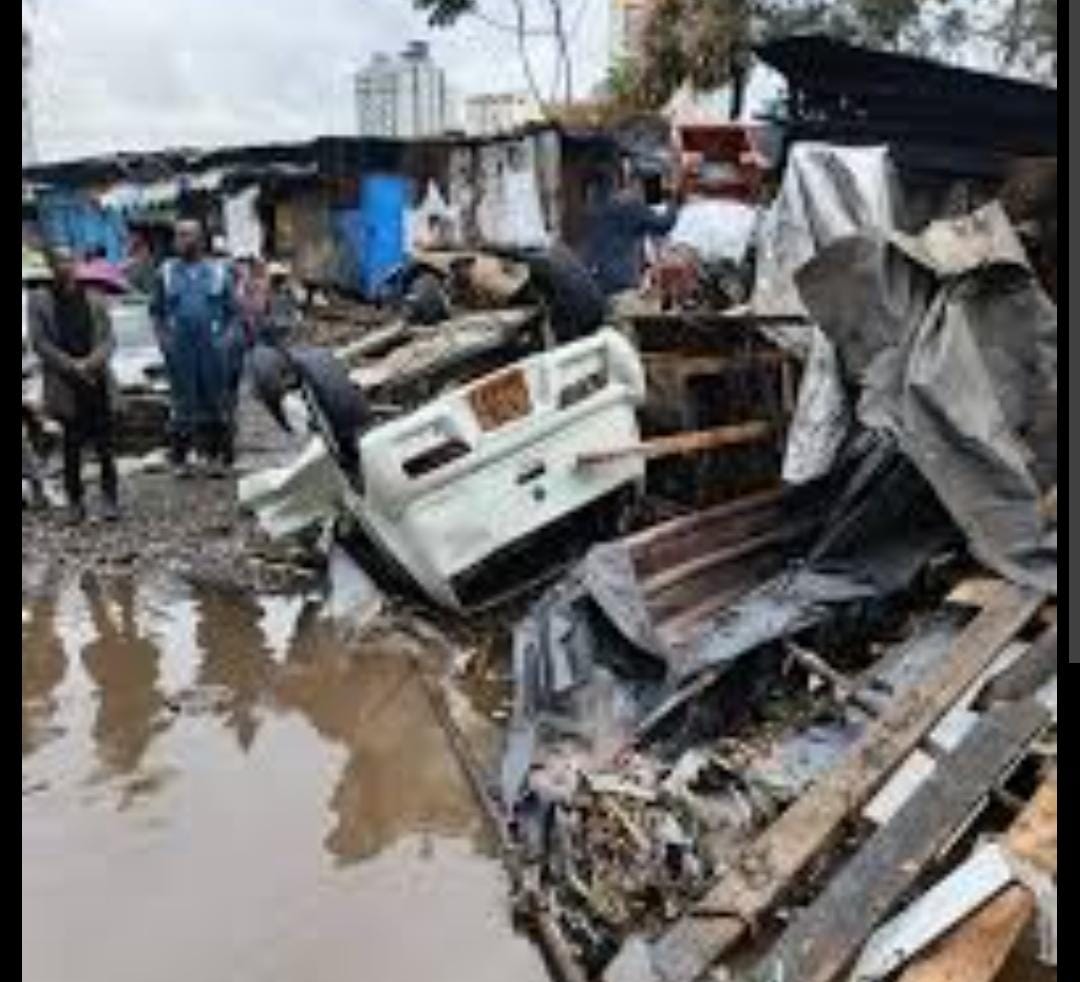
Kenya is facing a deepening humanitarian emergency after days of intense rainfall triggered widespread flooding across several regions, leaving dozens dead and forcing tens of thousands from their homes.
Authorities said the nationwide death toll has risen to 43 as overflowing rivers and overwhelmed drainage systems inundated urban and rural communities.
The capital has been the hardest hit, accounting for the majority of fatalities.
Emergency officials reported that more than 50,000 people have been displaced across the country, with around 10,000 households severely affected by the floods.
The confirmed regional breakdown shows the scale of the disaster across several parts of the country.
The capital recorded 26 deaths, while eastern regions reported 10 fatalities.
Additional deaths were reported in the Rift Valley, Nyanza and coastal regions.
In response to the crisis, the government activated a nationwide emergency response involving multiple state agencies.
Rescue and evacuation operations are being led by units from the national defence forces, including specialized rapid response teams deployed to assist residents trapped by rising floodwaters.
Authorities also announced several humanitarian measures aimed at supporting affected families.
Officials said the government will cover hospital expenses for those injured during the flooding and provide financial support for funeral costs for families who lost relatives.
Emergency food assistance from national reserves has also begun reaching flood-affected communities.
Floodwaters have disrupted transportation networks, particularly in the capital where roads and low-lying areas have been submerged.
Operations at the country’s main aviation hub were also affected as heavy rains forced several incoming flights to divert to the coastal city.
Road transport has been severely disrupted in multiple districts.
To ease congestion and provide alternative routes, operators temporarily suspended toll fees on a major elevated highway in the capital, allowing drivers to bypass flooded ground-level roads.
Meteorological authorities warned that heavy rainfall is expected to continue, raising the risk of additional flooding and landslides.
Officials said saturated soil conditions mean even moderate rainfall could quickly trigger new flash floods in vulnerable areas.
Authorities also warned residents to avoid sheltering under trees or near metal structures during thunderstorms due to the risk of lightning.
Drivers were urged not to attempt crossing flooded roads, where strong currents and poor visibility could prove deadly.
Emergency responders remain on high alert as monitoring intensifies in several flood-prone regions.
Particular concern surrounds areas near the large inland lake, the coastal belt and parts of the central highlands where rivers have already burst their banks.
One major river in western regions has overflowed, contributing to rising floodwaters in nearby communities.
Rescue teams continue evacuation operations while humanitarian organizations expand relief efforts for displaced families.
Officials warned that the situation remains fluid as rainfall continues across much of the country and urged residents in vulnerable areas to follow emergency instructions issued by local authorities.