





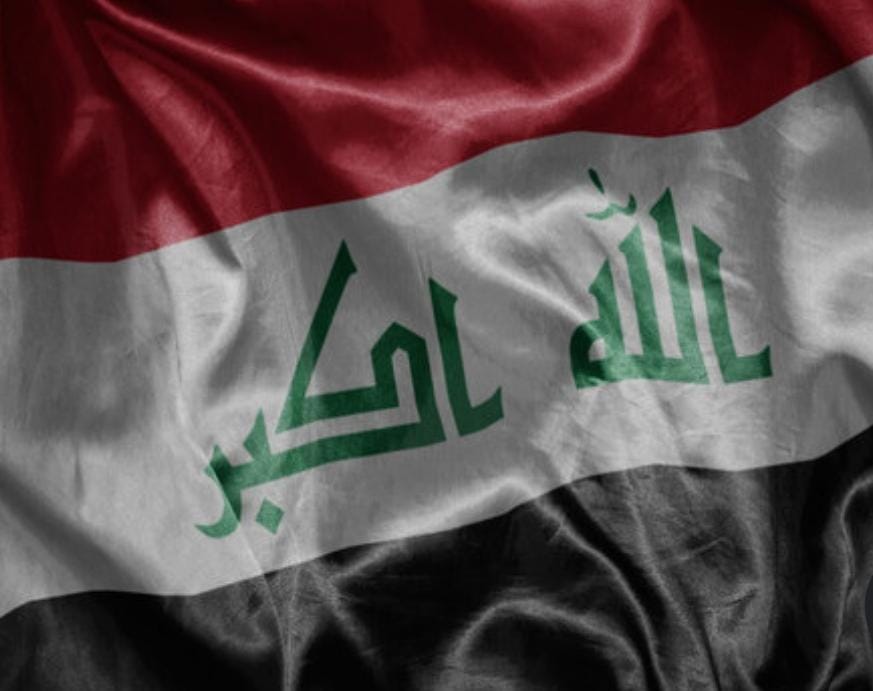
Iraq is increasingly being drawn into the expanding regional war involving the United States, Israel and Iran as new missile strikes, drone incidents and diplomatic tensions signal that the country is becoming a secondary theater of the conflict.
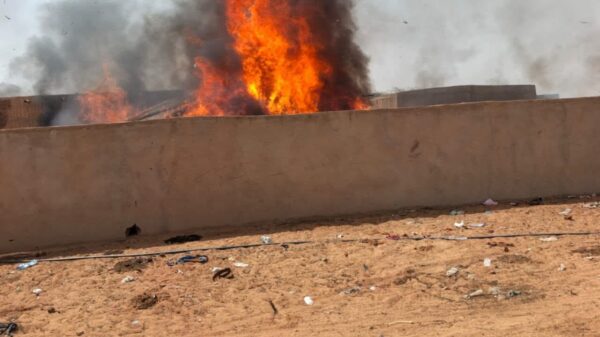
Iran’s Islamic Revolutionary Guard Corps announced that it carried out a missile attack on Harir Air Base in Iraq’s Kurdistan Region, a facility used by U.S. forces.
In an official statement the IRGC said it launched five missiles targeting what it described as the “headquarters of the invading U.S. Army.”
U.S. and Kurdish authorities have not yet released full damage assessments but early reports indicate heightened security across the region following the strike.
The attack marks one of the most direct Iranian strikes against U.S. assets on Iraqi soil since the escalation of the regional war.
In a separate incident an airstrike hit positions of the 40th Brigade of the Popular Mobilization Forces in the Dibis district of Kirkuk according to Iraqi security officials and local health authorities.
Officials confirmed that at least five fighters were killed and 18 others wounded in the attack.
No country has formally claimed responsibility for the strike but PMF leaders accused the United States of carrying it out describing the attack as “American aggression.”
The Popular Mobilization Forces are an umbrella network of mostly Shia militias many of which maintain close ties with Iran and have become increasingly active since tensions between Washington Tel Aviv and Tehran intensified.
Tensions also rose in Erbil the capital of Iraq’s Kurdistan Region where Kurdish counterterrorism forces reported intercepting three explosive drones.
One of the drones reportedly crashed near the UAE consulate causing structural damage to the building but no casualties.
The United Arab Emirates Ministry of Foreign Affairs condemned the incident calling it a “flagrant violation of international norms.”
Authorities have not yet publicly identified who launched the drones.
Amid rising tensions Iraq’s federal government has attempted to distance itself from the growing regional confrontation.
Prime Minister Mohammed Shia al Sudani held a phone call with U.S. Secretary of State Marco Rubio according to the prime minister’s media office.
Sudani stressed that Iraqi territory airspace and waters must not be used as a launchpad for attacks against neighboring countries emphasizing Baghdad’s desire to avoid deeper involvement in the war.
He also reiterated that only the Iraqi state has the authority to decide issues of war and peace rejecting attempts by militias or foreign powers to pull Iraq further into the conflict.
Despite the government’s neutrality stance internal political tensions are rising.
Several senior Shia political and militia figures have publicly pledged allegiance to Mojtaba Khamenei the new Iranian leader who succeeded his father after the death of Ali Khamenei during the early days of the conflict.
The Iraqi government previously declared three days of national mourning after the elder Khamenei was killed during the opening phase of the war.
The move reflected Iraq’s complex political ties with Tehran and underscored the delicate balance Baghdad is attempting to maintain.
In Washington Secretary of State Marco Rubio defended ongoing U.S. military operations in the region.
Officials say the strikes are “pre-emptive” operations designed to neutralize Iran’s short-range ballistic missile capabilities arguing they fall under the right of self defense under Article 51 of the United Nations Charter.
Analysts warn that the combination of Iranian missile strikes militia activity and foreign military operations risks turning Iraq into a major battleground by proxy.
The situation is particularly sensitive in northern Iraq where U.S. forces Kurdish authorities Iranian aligned militias and international diplomatic missions operate in close proximity.
With the broader regional war still escalating security officials fear that further attacks inside Iraq could occur in the coming days.