






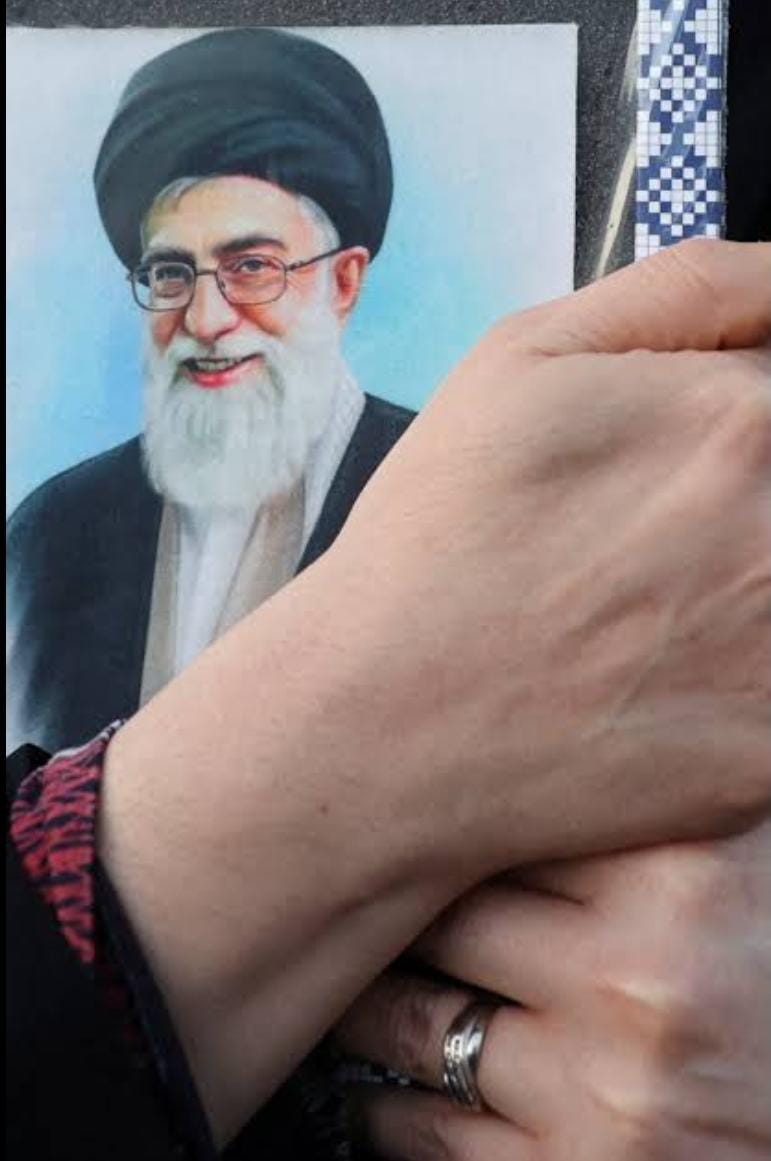
Iran is entering one of the most volatile moments in its modern history as preparations proceed to bury Supreme Leader Ali Khamenei while authorities simultaneously move to select his successor under the pressure of sustained military strikes and explicit assassination threats from Israel.
The confirmed death of Khamenei created a power vacuum at the apex of the Islamic Republic, triggering emergency constitutional procedures while the country remains under heavy bombardment from U.S.–Israeli operations.
The government has declared a three-day national mourning period, and a farewell ceremony is scheduled at the Imam Khomeini Prayer Hall in Tehran. Officials expect turnout potentially rivaling the millions who attended the funeral of Ruhollah Khomeini, the founder of the Islamic Republic.
Security concerns remain acute. With more than 1,250 reported U.S.–Israeli strikes recorded in recent days, the interim leadership council has reportedly sought a temporary humanitarian pause in military operations to ensure the safety of the mass gathering. No formal agreement has been publicly confirmed.
The risk of an attack during the ceremony underscores the extraordinary nature of the crisis, as a state funeral is prepared while the country remains in an active war zone.
Under the constitution, the responsibility for selecting a new Supreme Leader rests with the 88-member Assembly of Experts, which has convened in emergency session.
Among the leading contenders is Mojtaba Khamenei, the second son of the late leader, who is believed to be in a secure undisclosed location after surviving the recent wave of attacks.
Senior cleric Ahmad Khatami said that despite the war situation, the Assembly is nearing a conclusion. Under Iranian law, the Supreme Leader must be a senior Shiite jurist with significant political authority and administrative capability.
In the interim, governance is being managed by a provisional council composed of President Masoud Pezeshkian, Judiciary Chief Gholam-Hossein Mohseni-Ejei and cleric Alireza Arafi.
Analysts say that although key military and governmental infrastructure has sustained damage — including reports that a building linked to the Assembly was struck — the command hierarchy of the Islamic Republic remains operational.
In a sharp escalation, Israel’s defense minister issued a direct warning to Iran’s leadership body, stating that any leader chosen by what he described as the Iranian regime would be a target for assassination regardless of his identity or location.
The remark suggests Israel now views the office of Supreme Leader itself as a legitimate military target, heightening fears that the succession process could trigger further escalation, including attempts to disrupt the transition through targeted strikes.
Security analysts describe the threat as unprecedented in scope, challenging the continuity of the Islamic Republic’s highest authority.
At the same time, U.S. President Donald Trump adopted a more calibrated tone regarding Iran’s future leadership, saying that while the installation of another hostile leader would represent the worst outcome, a figure from within the current system willing to negotiate could open a path toward ending the war.
The comments suggest Washington may favor a negotiated resolution if Iran’s next leader signals readiness for diplomatic engagement.
The broader conflict continues to intensify. More than 1,250 U.S.–Israeli strikes have been recorded across Iran, while Tehran has launched hundreds of ballistic missiles and thousands of drones targeting U.S. and Israeli assets across the Gulf.
Energy markets remain under pressure as the Strait of Hormuz stays effectively closed, pushing Brent crude prices to around $84 per barrel.
Iran continues to operate under interim leadership pending the decision of the Assembly of Experts.
Despite heavy damage to infrastructure, analysts say Iran’s chain of command remains intact. However, the threat to assassinate a successor before formal inauguration introduces a destabilizing factor that could reshape both domestic politics and the wider regional conflict.
The Islamic Republic has faced unrest, sanctions and war before, but never a leadership transition under an explicit assassination threat from a foreign power during active hostilities.
The coming hours are expected to prove decisive. The Assembly of Experts’ final vote, alongside potential developments in Washington over the war powers debate, could determine whether the conflict escalates further or moves toward a negotiated pause.
For now, Iran prepares to bury a Supreme Leader while confronting the possibility that his successor may begin his tenure as a marked target.