









The conflict in the Gulf has reached a decisive and dangerous turning point as the Strait of Hormuz the world’s most critical energy transit corridor remains effectively closed for a fifth consecutive day. What began as a localized military confrontation has evolved into a full-scale economic confrontation, sending shockwaves through global energy and financial markets.
Tensions escalated sharply as Iran’s Islamic Revolutionary Guard Corps declared what it described as complete control over the narrow waterway.
A senior IRGC official, Mohammad Akbarzadeh, warned that any commercial vessel attempting to transit the strait would be set ablaze, while Iranian naval forces reportedly issued repeated VHF radio warnings to ships operating in the area.
In response, U.S. President Donald Trump announced that the U.S. Navy would begin escorting oil tankers through the corridor as soon as possible to guarantee what he described as the free flow of energy. The move signals a significant escalation and raises the risk of direct naval confrontation.
In an unusual financial intervention, Trump also directed the United States International Development Finance Corporation to provide political risk insurance coverage for maritime trade in the Gulf after major private insurers withdrew coverage due to wartime risks.
The near-total halt of traffic through the strait — where nearly one-fifth of global oil supplies normally pass — has triggered immediate economic repercussions.
Brent crude rose to around $84 per barrel, its highest level since July 2024 and roughly 15 percent higher than before the outbreak of hostilities. European natural gas prices have remained volatile after surging earlier in the week.
Asian markets have been particularly affected. South Korea’s benchmark KOSPI index plunged sharply during trading, prompting a temporary circuit breaker halt as investors reacted to fears that one of the world’s largest crude oil importers could face severe disruptions to energy supplies.
Maritime tracking data indicate that roughly 200 oil tankers are currently stranded inside the Gulf, while hundreds of additional vessels are waiting outside in the Gulf of Oman, reluctant to enter what insurers now classify as an active conflict zone.
As the standoff continues, regional powers are urgently exploring alternative export routes.
Pakistan has requested emergency oil supplies from Saudi Arabia to be routed through the Red Sea port of Yanbu, bypassing the strait entirely. Saudi officials have signaled support, with at least one shipment already arranged through the alternative route.
State energy company Saudi Aramco is working to maximize capacity on its East-West Pipeline, which transports crude from the Gulf to the Red Sea. Analysts say the pipeline’s capacity remains far below the volumes typically exported through the strait.
The crisis is unfolding amid political uncertainty inside Iran. An interim leadership council is governing the country following the death of the Supreme Leader, while Mojtaba Khamenei, son of the late ayatollah, is emerging as a potential contender in the succession process.
The internal political transition adds another layer of unpredictability to Tehran’s strategic calculations at a moment of intense external pressure.
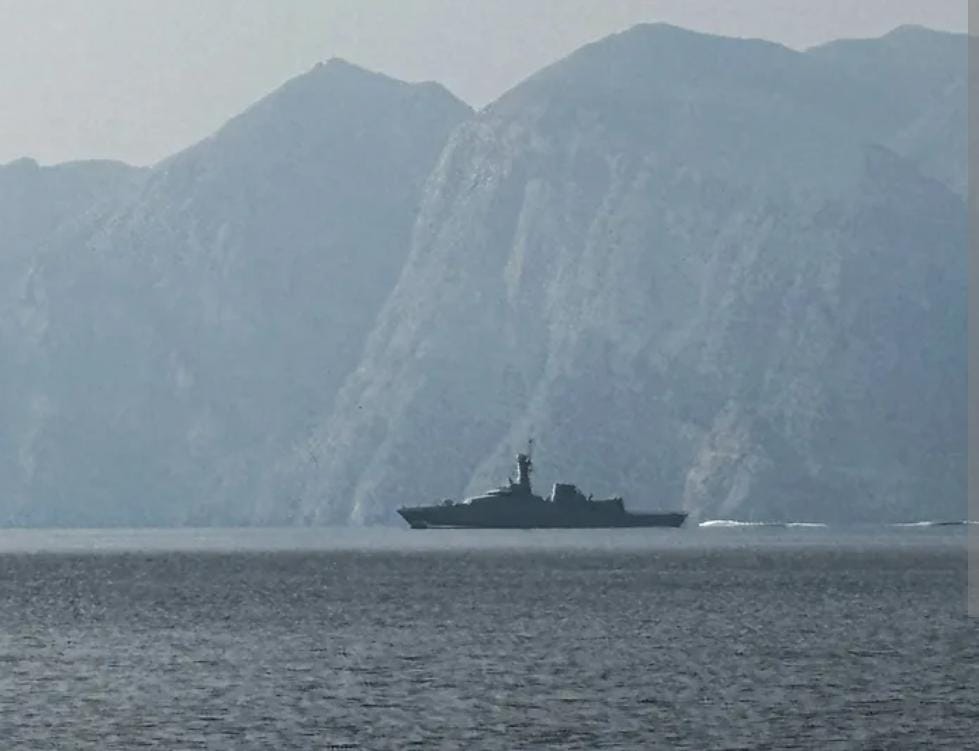
Meanwhile, U.S. and Israeli air operations inside Iran continue, widening the scope of the conflict. The United Kingdom has deployed the destroyer HMS Dragon to Cyprus to secure regional bases and reinforce allied positions.
Despite Iranian claims of full maritime control, at least one tanker identified as the Pola reportedly managed to transit the strait under cover of darkness with its tracking system switched off, suggesting enforcement of the blockade remains uncertain.
With commercial transit through the strait reduced by roughly 96 percent, the confrontation has transformed the Gulf crisis into a systemic shock to global energy security and international trade.