










The Palestinian militant group Hamas has urged Iran to avoid launching drone and missile attacks against Gulf states as the regional conflict enters its third week, highlighting growing tensions within the network of alliances often referred to as the Axis of Resistance.
In a statement the group called on Tehran not to target neighboring Arab countries including Oman the United Arab Emirates and Saudi Arabia.
Hamas said attacks against Gulf states could undermine bonds of fraternity within the region and complicate diplomatic and humanitarian mediation efforts led by Arab governments.
While urging restraint toward Gulf nations the group reaffirmed Iran’s right to defend itself against attacks by the United States and Israel stating that Tehran could respond using all available means consistent with international law.
Analysts say the message reflects a delicate balancing act by Hamas which relies heavily on financial and political support from Gulf states particularly Qatar while historically maintaining ties with Iran.
The statement is also seen as a sign of tactical distancing between Hamas and Tehran as the broader regional war expands.
Gulf states remain critical actors in humanitarian negotiations and reconstruction planning for Gaza and maintaining relations with these governments is considered essential for future funding and political backing.
Regional observers note that Qatar Saudi Arabia and other Gulf countries have played central roles in ceasefire mediation and humanitarian aid delivery during the Gaza conflict.
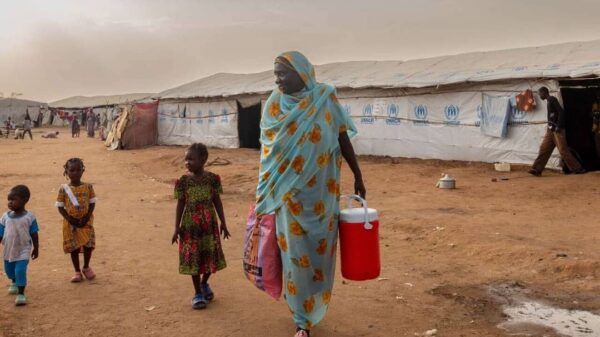
These developments come as the humanitarian situation in the Palestinian territories continues to deteriorate even though a ceasefire formally remains in place.
Palestinian health authorities say the conflict that followed the Israel Hamas war has resulted in severe casualties in the Gaza Strip with more than seventy two thousand people killed and more than one hundred seventy one thousand wounded.
Although the United States backed ceasefire technically remains active Palestinian officials report hundreds of alleged violations since the agreement was announced.
Gulf states have meanwhile pledged significant financial support for post war stabilization.
Officials confirmed that Qatar Saudi Arabia and Kuwait have each committed one billion dollars to a proposed international initiative aimed at supporting reconstruction humanitarian operations and governance programs in Gaza bringing the total pledges to roughly four point two billion dollars.
Military tensions across the Gulf region continue to rise.
Following recent United States strikes on Iran’s Kharg Island the Islamic Revolutionary Guard Corps warned that United States military facilities in the United Arab Emirates could become legitimate targets if the confrontation escalates further.
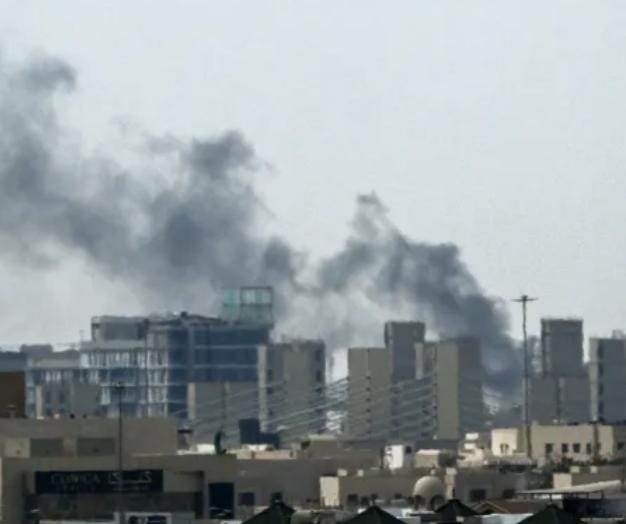
The warning followed reports that debris from intercepted missiles fell in Dubai raising concerns about the conflict spreading into commercial and civilian areas.
Inside Israel the war continues to generate domestic debate.
Recent polling suggests that while the Israeli public is increasingly affected by Iranian missile attacks most respondents still support the government’s military campaign against Iran.
However reports indicate that dissenting voices within Israel have faced intimidation amid the tense national security environment.
The United States Department of Defense also confirmed the death of an American service member from injuries sustained during an attack on a United States military base in Saudi Arabia.
The conflict has also sparked debate among international legal scholars.
Some statements attributed to officials in Washington referring to a potential policy of refusing surrender by Iranian forces have drawn scrutiny.
Legal experts say such rhetoric could carry serious implications because international humanitarian law prohibits declaring that enemy combatants will not be accepted if they surrender.