










At least seventeen people including students teachers and a medical worker were killed after a series of suicide drone strikes targeted civilian infrastructure in Sudan’s White Nile State according to medical networks and local hospital officials. The attacks mark a significant escalation in the civil war between the Sudanese Armed Forces and the Rapid Support Forces which continues to devastate civilian communities across the country.
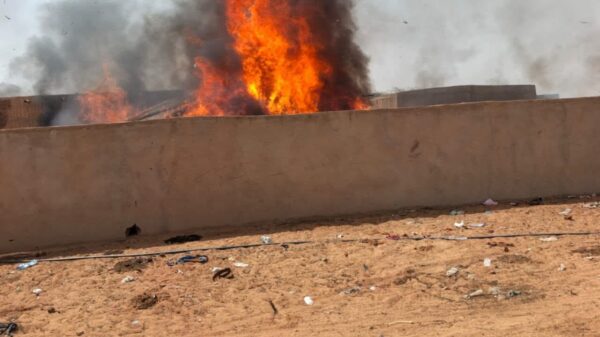
The strikes occurred in the village of Shukeiri where four drones reportedly hit a secondary school a hospital and a health center. The Sudan Doctors Network said at least ten additional people were wounded several of whom required emergency surgery at Al-Duwaim Hospital.
Medical officials said there was no military presence in the village at the time of the attack raising concerns among humanitarian groups that civilian facilities are increasingly being targeted in the conflict.
A local health official described the strike as a direct assault on civilian life and critical medical services pointing to the damage inflicted on the hospital and the urgent conditions facing the wounded.
The attack follows a pattern of escalating drone strikes in White Nile State. Regional authorities say this was the third consecutive day of such incidents.
On the previous day drones struck the Um Dabaker thermal power plant one of the region’s key electricity facilities triggering widespread power outages in the cities of Kosti and Rabak.
The loss of electricity has further strained hospitals and essential services already operating under severe resource shortages.
The violence comes amid a rapidly worsening humanitarian crisis across Sudan.
Recent figures released by the World Food Programme and other United Nations agencies indicate that approximately twenty one point two million people about forty one percent of Sudan’s population are experiencing high levels of acute food insecurity.
Famine conditions have already been confirmed in several regions including El Fasher in North Darfur and Kadugli in South Kordofan.
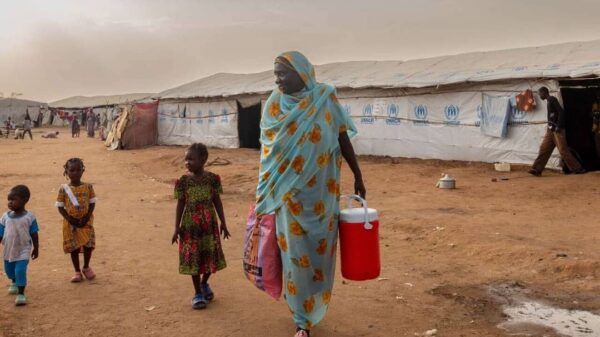
Displacement has reached historic levels with more than twelve million people forced to flee their homes since the war began making Sudan the largest displacement crisis in the world according to United Nations humanitarian officials.
The country’s education system has also collapsed under the strain of the conflict.
Aid organizations estimate that fourteen million of Sudan’s seventeen million school aged children are currently out of school because of destroyed infrastructure displacement and widespread insecurity.
International investigators are increasingly examining alleged atrocities committed during the war.
The prosecutor of the International Criminal Court informed the United Nations Security Council that evidence collected during the conflict points to possible war crimes and crimes against humanity.
The investigation has focused particularly on events surrounding the Rapid Support Forces takeover of El Fasher where witnesses reported widespread killings and the destruction of civilian neighborhoods.
A separate report by a United Nations fact finding mission concluded that atrocities committed by Rapid Support Forces units in North Darfur show the hallmarks of genocide citing mass executions and systematic sexual violence targeting members of the Zaghawa and Fur ethnic communities.
Despite the scale of the crisis analysts note that international attention has been limited as global focus remains largely on the escalating conflict in the Middle East.
Humanitarian organizations warn that this shift in attention risks further isolating Sudan during one of the worst humanitarian disasters of the decade.
Aid agencies are calling for urgent international intervention to protect civilians reopen humanitarian corridors and stabilize essential services across the country.
Experts warn that without significant diplomatic pressure and humanitarian support Sudan’s civil war could spiral into an even deeper humanitarian catastrophe.