








The long-standing confrontation between the United States and Iran has entered one of its most perilous phases in years, as intensified military posturing in the Middle East unfolds alongside discreet diplomatic efforts aimed at averting a broader conflict.
U.S. officials describe the current approach as a deliberate “dual-track” strategy, combining maximum military pressure with a narrowly maintained channel for negotiations.
Military Brinkmanship in the Arabian Sea
The escalation centers on the deployment of a powerful U.S. naval battle group led by the aircraft carrier Abraham Lincoln to the Arabian Sea. President Donald Trump ordered the deployment in response to what Washington has described as a deadly crackdown on anti-government protests across Iran in January 2026.
The administration has publicly drawn a red line over the execution of detained protesters, citing by name the case of 26-year-old Erfan Soltani. President Trump warned that all options, including direct military action, would be considered should executions proceed.
Iran’s leadership responded with equally sharp warnings. Supreme Leader Ayatollah Ali Khamenei has described the protests as a foreign-backed coup and accused the United States and its allies of orchestrating destabilization. In a speech on February 1, he warned that any U.S. strike would ignite a wider regional war, threatening retaliation against American bases and allies, including Israel.
Quiet Diplomacy Through Regional Intermediaries
Despite the confrontational rhetoric, multiple official sources confirm that back-channel diplomacy is underway.
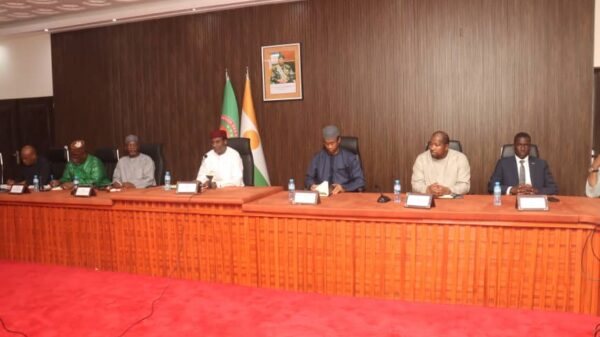
Türkiye, alongside Egypt and Qatar, has emerged as a key intermediary in what diplomats refer to as the “Ankara Track.” Preparations are reportedly under way for a potential meeting later this week in Ankara between White House envoy Steve Witkoff and senior Iranian officials, aimed at establishing a preliminary framework for negotiations.
Iranian Foreign Minister Abbas Araghchi adopted a cautiously optimistic tone in a February 1 interview with CNN, saying he believes President Trump is “wise enough” to avoid a full-scale war. He nevertheless accused unnamed regional actors of seeking to draw Washington into a conflict with Tehran.
Nuclear Program at the Core of the Crisis
Iran’s nuclear program remains the central and most consequential issue in the standoff. U.S. officials maintain that American strikes carried out in June 2025 destroyed key Iranian nuclear facilities. The International Atomic Energy Agency, however, has been unable to independently verify those claims, citing restricted access to several sites.
Iran’s nuclear chief, Mohammad Eslami, has said Tehran no longer considers itself bound by a 60 percent uranium enrichment cap following the reimposition of international sanctions last year. While he reiterated that nuclear weapons have no place in Iran’s defense doctrine, Western officials regard enrichment beyond that level as a serious proliferation risk.
Deep Gaps in Negotiating Positions
Prospects for negotiations face substantial hurdles. Washington is demanding a complete halt to Iran’s domestic uranium enrichment, the transfer of existing nuclear stockpiles, and strict limits on long-range missile development. Tehran, by contrast, insists on recognition of its right to peaceful nuclear energy and considers its missile program non-negotiable, framing it as essential to national deterrence.
Sanctions remain another major obstacle. The Trump administration has vowed to maintain its maximum pressure campaign until a comprehensive deal is reached, while Iranian officials argue that full sanctions relief must precede any meaningful confidence-building.
The two sides also remain deeply divided over Iran’s handling of domestic unrest. The United States has called for an immediate end to violence against protesters, while Tehran maintains it is responding to an attempted coup.
A Narrow Window
As warships maneuver in the Arabian Sea and diplomats quietly shuttle between capitals, analysts warn that the coming days may prove decisive in determining whether the crisis escalates into open conflict or shifts toward fragile negotiations.
For now, the standoff reflects a familiar but dangerous pattern in U.S.–Iran relations: maximal threats paired with last-minute diplomacy, with each side betting that the other will ultimately step back.