












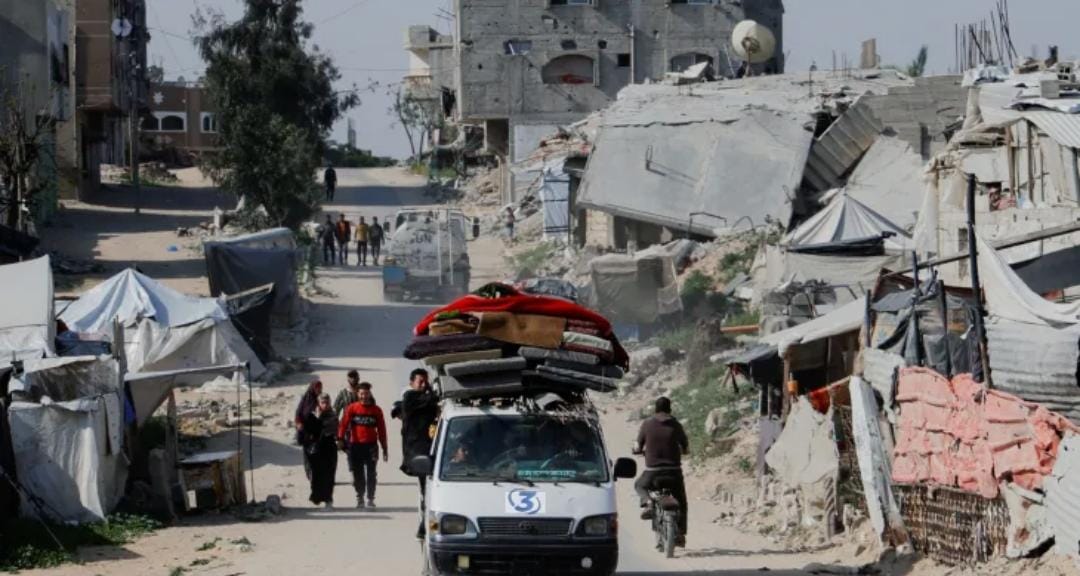
Despite its official “reopening” on February 2, the Rafah crossing continues to operate under severe restrictions, functioning as a major bottleneck for Palestinians seeking to exit or return to Gaza, according to data from the Gaza Government Media Office and the United Nations Office for the Coordination of Humanitarian Affairs (OCHA).
Humanitarian agencies report that civilian movement remains significantly below expectations outlined in the October 2025 ceasefire framework.
Limited Medical Evacuations
Since the crossing resumed operations:
- 172 Palestinians have been allowed to return to Gaza.
- 250 patients and accompanying individuals have exited the territory.
- Approximately 20,000 patients remain on waiting lists for medical evacuation.
Under ceasefire arrangements, 50 patients per day — accompanied by 100 companions — were expected to cross. However, humanitarian sources indicate that actual daily movement averages between 25 and 30 individuals in total, substantially below the projected capacity.
The restrictions come amid continued strain on Gaza’s health system. As of February 11:
- 22 hospitals remain out of service.
- Approximately 1,700 healthcare workers have been killed since October 2023.
- Thousands of patients with cancer, kidney failure, trauma injuries, and other critical conditions face prolonged delays in receiving specialized treatment abroad.
Individuals who have crossed report undergoing extended security screening procedures on the Palestinian side of the crossing. Some describe lengthy questioning and the confiscation of personal belongings during inspections. Israeli authorities have not publicly detailed the operational security protocols currently in place.
Citizenship Revocation Orders
In a related development, Israeli Prime Minister Benjamin Netanyahu has signed initial orders implementing the February 2023 Citizenship Revocation Law.
The orders apply to:
- Mahmoud Ahmad, convicted in a shooting attack and imprisoned for 23 years;
- Mohammed al-Halsi, sentenced in 2016 for a stabbing attack.
Under the law, their Israeli citizenship will be revoked, and they are to be deported to Gaza upon completion of their prison terms.
Human rights organization Adalah has criticized the policy, warning that citizenship revocation may undermine legal protections and potentially result in statelessness. The Israeli government maintains that the measure targets individuals convicted of serious security offenses and is intended to enhance national security.
Diplomatic Context
These developments coincide with Prime Minister Netanyahu’s visit to Washington for talks with U.S. President Donald Trump, marking their seventh meeting during Trump’s second term.
While official agendas focus on energy cooperation and regional security coordination, observers note that humanitarian access to Gaza and ceasefire implementation remain key underlying issues shaping bilateral discussions.
As restrictions persist and evacuation rates remain limited, humanitarian agencies warn that the Rafah crossing’s constrained capacity risks exacerbating Gaza’s already fragile medical and humanitarian situation.