










The Trump-brokered Gaza peace plan entered its most fragile stage on Tuesday as escalating violence, humanitarian paralysis, and political deadlock pushed the ceasefire toward the brink, despite its formal continuation since October 2025.
The transition to “Phase Two” of the agreement—intended to shift from military de-escalation to reconstruction and demilitarization—has instead revealed deep structural weaknesses, with civilians paying the heaviest price.
Shifting Borders and the “Yellow Line”
At the heart of the crisis is the so-called “Yellow Line,” a boundary established under the peace plan to separate Israeli-controlled areas from zones intended for technocratic Palestinian governance. Although designed as a fixed demarcation, field reports and satellite imagery indicate that Israeli forces have moved concrete barriers deeper into Gaza, advancing by an average of 300 meters in several areas.
As a result, Israel now exercises military control over an estimated 53 to 58 percent of Gaza’s territory, compressing nearly two million Palestinians into a narrow coastal strip. Humanitarian agencies warn that the expansion of buffer zones undermines the territorial assumptions of Phase Two and erodes confidence in the ceasefire.
Rafah Crossing: Reopened in Name Only
The reopening of the Rafah crossing was presented as a central achievement of Phase Two, intended to facilitate medical evacuations and humanitarian movement. Aid organizations, however, describe the current operation as largely symbolic.
On February 4, all medical evacuations through Rafah were abruptly suspended. Israeli authorities cited missing procedural documentation from the World Health Organization, while the Palestinian Red Crescent said it received no prior notification of the cancellations.
More than 18,500 patients remain on evacuation waiting lists. At the current rate of 15 to 20 evacuations per day, doctors estimate that clearing the backlog would take more than a year, a scenario they describe as catastrophic, particularly for the 440 critically ill patients still trapped inside Gaza.
Ceasefire Under Strain
Oversight of the truce rests with the U.S.-led “Board of Peace,” established in January 2026 to supervise compliance and reconstruction. Despite its mandate, the body has struggled to contain renewed violence.
Since the ceasefire began in October, at least 529 Palestinians have been killed by Israeli fire, according to compiled casualty data. The central political deadlock remains unresolved: Phase Two requires Hamas to disarm and Israel to withdraw fully from Gaza. Israel refuses to withdraw until Hamas is neutralized, while Hamas refuses to disarm as long as Israeli forces continue advancing the Yellow Line.
Diplomats involved in the process privately describe the situation as a circular stalemate lacking any effective enforcement mechanism.
A Humanitarian Winter
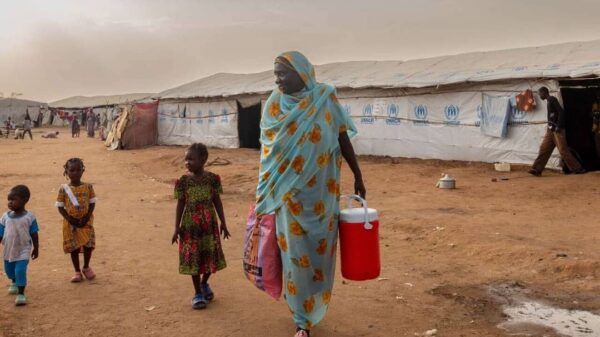
The security crisis is compounded by what the United Nations has termed a “winter of horror.” Heavy seasonal rains have flooded displacement camps, destroying or submerging more than 127,000 tents.
With severe shortages of shelter, fuel, and warm clothing, exposure has become deadly. At least seven children have died from hypothermia this winter, with nighttime temperatures dropping to around 8°C. Aid agencies warn that additional deaths are likely without urgent winterization support.
An Uncertain Path Forward
While Phase One of the peace plan succeeded in halting large-scale hostilities, Phase Two—focused on reconstruction, governance transition, and demilitarization—now appears stalled. With borders contested, evacuations frozen, and trust rapidly eroding, analysts warn that the ceasefire risks becoming a technical construct rather than a lived reality.
As humanitarian needs deepen and political positions harden, the coming weeks may determine whether the peace plan can still be salvaged or whether Gaza is heading toward another cycle of open conflict.