








English
Nigeria’s security landscape is undergoing a significant shift as worsening domestic instability converges with a more assertive United States foreign policy under President Donald Trump. A surge in mass-casualty attacks across northern Nigeria, coupled with expanded U.S. military engagement, signals a new and complex phase in Abuja–Washington relations.
The Tungan Dutse Massacre
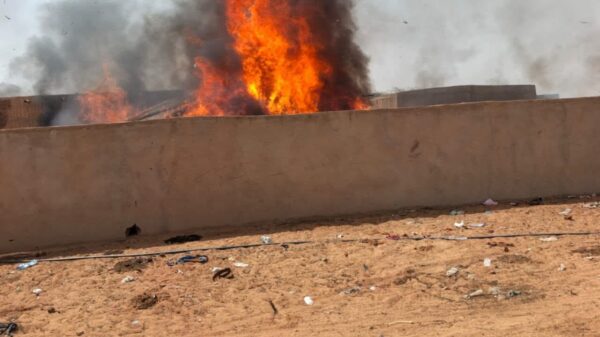
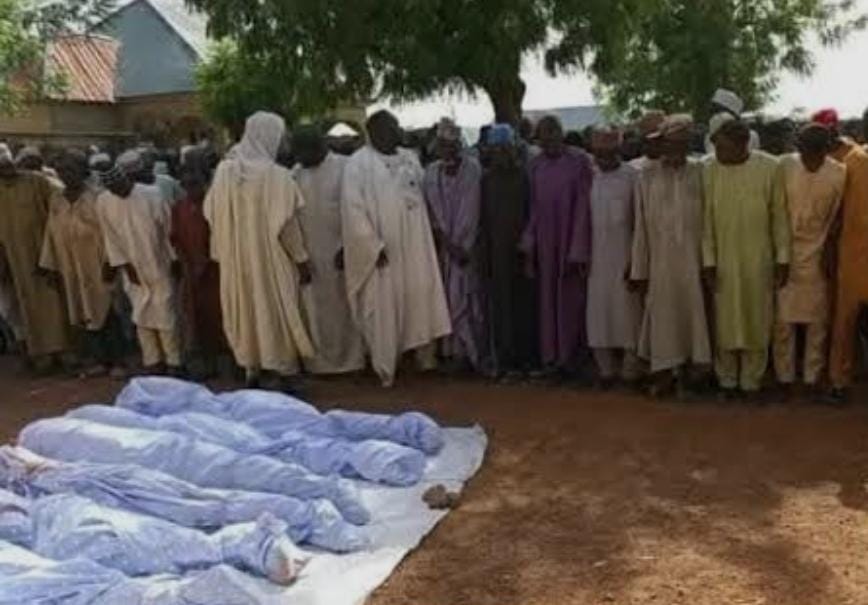
At least 50 people were killed in an overnight assault on February 19-20 in Tungan Dutse, a village in the Bukkuyum area of Zamfara State. According to local lawmakers and security sources, heavily armed gunmen on motorcycles besieged the community from late Thursday afternoon until Friday morning.
Residents reported that more than 150 motorcycles were seen moving toward the area a day before the attack. Despite warnings to security forces, no preventative action was taken.
In addition to the confirmed fatalities, an unspecified number of women and children were abducted. Local officials are compiling lists of the missing as families search for loved ones.
The attack follows a similarly devastating massacre earlier this month in Woro, Kwara State, where at least 162 people were killed on February 4. The back-to-back incidents highlight a sharp escalation in armed “bandit” activity across Nigeria’s northwest and north central regions.
Security analysts warn that the growing scale and coordination of these attacks point to increasingly organized networks with access to sophisticated weapons and mobility.
Expanded U.S. Military Involvement
Amid mounting insecurity, the United States has significantly increased its operational presence in Nigeria.
On February 16, Nigeria’s Ministry of Defence confirmed the arrival of 100 U.S. soldiers—informally referred to as “The 100” at Bauchi Airfield. Officials stated that the deployment is restricted to non-combat roles, including intelligence sharing, surveillance operations, and advanced training for Nigerian forces.
The U.S. mission is aimed at strengthening Nigeria’s capacity to confront armed groups such as Boko Haram, Islamic State West Africa Province, and Lakurawa, a group reportedly linked to Sahel-based extremist networks.
The deployment follows a controversial U.S. air operation conducted on December 25, 2025, in Sokoto State. President Trump described the strike as a “powerful and deadly” blow against ISIS-linked fighters. However, local accounts alleged that the strike targeted a rural community in Jabo with no confirmed terrorist presence, sparking debate about civilian risk and operational transparency.
While U.S. officials maintain that their role remains advisory, critics argue that the expanded presence reflects a broader militarization of bilateral ties.
Diplomatic Realignment
The evolving security partnership marks a notable transformation in relations between Abuja and Washington.
In October 2025, President Trump designated Nigeria a “Country of Particular Concern,” citing allegations of a “Christian genocide.” The move initially strained diplomatic ties with the administration of President Bola Tinubu.
However, as insecurity intensified, Nigeria formally requested U.S. assistance, leading to what observers describe as a “military-first” diplomatic approach. Under this arrangement, U.S. technical support and intelligence cooperation are exchanged for deeper Nigerian alignment in counter-terrorism initiatives.
A forthcoming U.S.-led initiative known as the “Board of Peace” is expected to convene soon to deliberate on regional interventions, including responses to escalating violence in the Sahel and the West Bank. While details of its agenda remain limited, the initiative signals Washington’s intention to broaden its strategic engagement across volatile regions.
A Defining Moment
For Nigeria, the immediate priority remains restoring security in vulnerable communities. Yet the convergence of internal violence and expanding foreign military involvement presents long-term strategic questions.
Will enhanced intelligence and training reverse the tide of mass attacks? Or will deeper foreign engagement further complicate an already fragile security environment?
As communities mourn the victims of Tungan Dutse and other recent massacres, the answers may shape Nigeria’s trajectory and its global alliances for years to come.