












The humanitarian crisis in the Gaza Strip has reached a critical threshold, according to recent assessments by the United Nations and the Gaza Ministry of Health, as severe winter weather compounds the effects of ongoing hostilities despite the October 2025 ceasefire agreement.
The “First Storm of Ramadan” Worsens Conditions
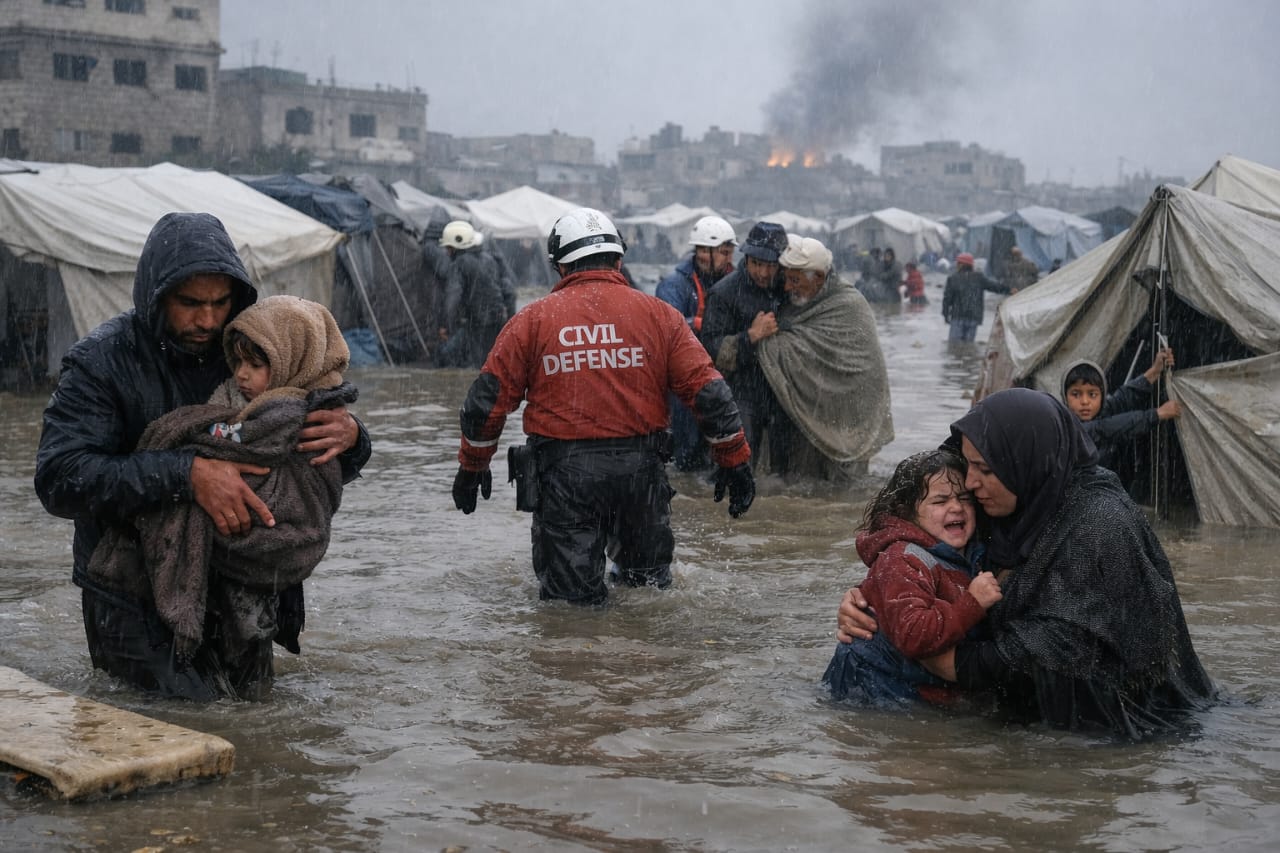
Heavy rains and strong winds struck Gaza late Monday in what officials are calling the “First Storm of Ramadan,” flooding makeshift displacement camps and exposing widespread infrastructure collapse.
In al-Mawasi, west of Khan Younis, and in parts of Gaza City — including the Remal neighborhood and the port area — floodwaters inundated tents sheltering thousands of displaced families. Civil defense teams reported numerous overnight distress calls as residents struggled to secure temporary shelters offering little protection from cold temperatures.
Humanitarian agencies warn that prolonged exposure to damp and freezing conditions heightens the risk of hypothermia, particularly among children and the elderly. Water contamination has also intensified concerns over the spread of diseases, including Hepatitis A, which health officials say is already on the rise.
Infrastructure Collapse and Rising Death Toll
A recent report by Israeli human rights organization B’Tselem documented at least 39 deaths — including 22 children — in the months leading up to the current storm, attributing the fatalities to infrastructure failures. Years of military operations have severely weakened drainage systems, electricity networks, and heating capacity, leaving the territory especially vulnerable to extreme weather.
According to official figures, more than 72,000 Palestinians have been killed since October 2023. Despite the ceasefire brokered in October 2025, over 600 additional fatalities have been recorded during the truce period, underscoring the fragility of the agreement.
Health System on the Brink
The medical system remains critically overstretched. Of Gaza’s 37 hospitals, only 19 are operational, and most are functioning at partial capacity due to damage, shortages of supplies, and limited fuel.
Health authorities report that approximately 20,000 patients — including 4,000 children — urgently require medical evacuation for life-saving treatment unavailable within Gaza.
While the Rafah crossing has reopened for limited transfers, only about 12 patients are reportedly being evacuated daily. At that pace, humanitarian organizations estimate it would take more than four years to clear the current waiting list.
Compounding the crisis, essential medical equipment — including laboratory and imaging devices — continues to be restricted from entry, classified by Israeli authorities as “dual-use” items with potential military applications.
Aid Restrictions and Malnutrition Fears
The UN Office for the Coordination of Humanitarian Affairs reported that 9 percent of humanitarian missions to northern Gaza were denied access by Israeli authorities in the past week alone.
Meanwhile, UNRWA confirmed a severe shortage of oil lubricants, crippling water well generators and solid waste management systems — a development that further elevates public health risks.
The World Food Programme projects that up to 100,000 children could face acute malnutrition by April 2026 unless humanitarian access improves significantly.
In a statement, UN High Commissioner for Human Rights Volker Türk described the continued displacement and lack of adequate shelter during winter conditions as a “systemic failure to protect civilian life.”
A Crisis Without Relief
With nearly 1.9 million Palestinians displaced and essential systems on the verge of collapse, aid agencies warn that without an immediate and substantial increase in humanitarian access — including fuel, medical supplies, shelter materials, and evacuation approvals — conditions could deteriorate further in the coming weeks.
As winter storms persist and the ceasefire remains fragile, the humanitarian crisis in Gaza shows little sign of immediate relief.