









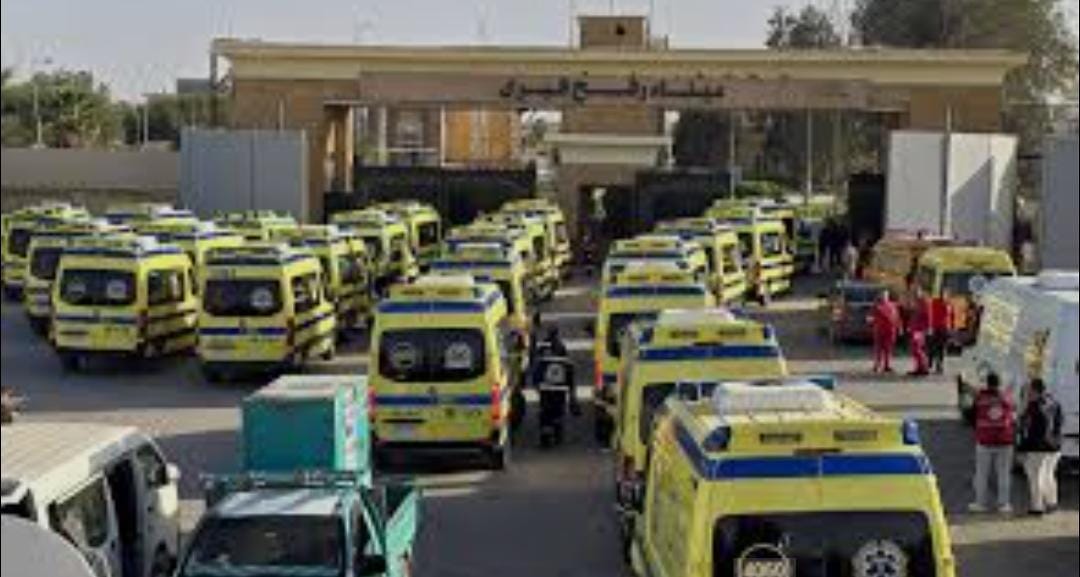
humanitarian agencies report that conditions in Gaza remain dire despite a fragile ceasefire and the partial reopening of the Rafah border crossing.
According to the United Nations Office for the Coordination of Humanitarian Affairs (OCHA), the World Health Organization (WHO), and the Gaza Ministry of Health, limited progress has been made in facilitating movement for medical patients and stranded civilians. However, the broader humanitarian crisis continues unabated.
Rafah Crossing Reopens Under Pilot Phase
Following the U.S.-brokered ceasefire known as the “Trump Declaration for Enduring Peace,” which entered into force in October 2025, the Rafah crossing partially reopened on February 1, 2026. The reopening is restricted to pedestrian transit and does not allow the entry of commercial goods or humanitarian cargo.
The crossing is operating under a pilot framework supervised by the European Union Border Assistance Mission (EUBAM), aimed at restoring limited civilian movement while maintaining security oversight.
Between February 1 and February 11, approximately 120 patients were evacuated abroad for urgent medical treatment. Humanitarian organizations say this represents just 24 percent of the 500 evacuations that Israeli authorities committed to under the ceasefire terms. Nearly 100 Palestinians stranded outside Gaza have returned through the crossing as of February 13.
Aid agencies stress that while the reopening carries symbolic weight, it remains insufficient to meet the scale of medical and humanitarian needs.
Mounting Casualties and Health System Collapse
Updated cumulative figures from the Gaza Ministry of Health indicate that more than 72,000 Palestinians have been killed since the conflict escalated on October 7, 2023. More than 171,000 people have been injured.
Despite the ceasefire declared on October 10, 2025, at least 523 additional deaths have been recorded due to intermittent violence and sporadic airstrikes, underscoring the fragility of the truce.
In late January 2026, Israeli security officials publicly stated that the Palestinian Ministry of Health’s reported death toll — around 70,000 at the time — was “broadly accurate.” Analysts described the statement as a significant shift in rhetoric and an implicit acknowledgment of figures that had previously been contested.
Ceasefire Framework and Governance Transition
The current framework, formally referred to as the “Comprehensive Plan,” remains in its first implementation phase. A military demarcation line known as the “Yellow Line” now divides Gaza. The eastern sector remains under Israeli military control, while the western portion faces fewer movement restrictions but widespread infrastructure destruction, including damaged hospitals, water systems and residential housing.
The humanitarian burden remains severe. Approximately 18,500 patients — including 4,000 children — are on waiting lists for specialized treatment unavailable inside Gaza. Health facilities continue to operate at limited capacity due to shortages of medicines, medical equipment and electricity.
On the governance front, a 15-member technocratic body known as the National Committee for the Administration of Gaza (NCAG) has begun assuming civilian administrative responsibilities as part of the ceasefire transition arrangements. International observers describe the mechanism as a tentative but necessary step toward stabilizing local governance.
A Narrow Window for Relief
While the partial reopening of Rafah represents a limited breakthrough after months of closure, humanitarian organizations caution that the measure alone cannot reverse the scale of devastation.
With tens of thousands dead, critical infrastructure in ruins and thousands still awaiting life-saving medical care, the coming weeks will test both the durability of the ceasefire and the international community’s ability to convert diplomatic commitments into sustained humanitarian relief and reconstruction support.