



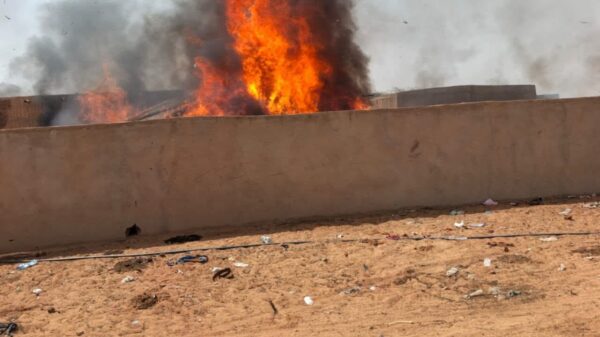









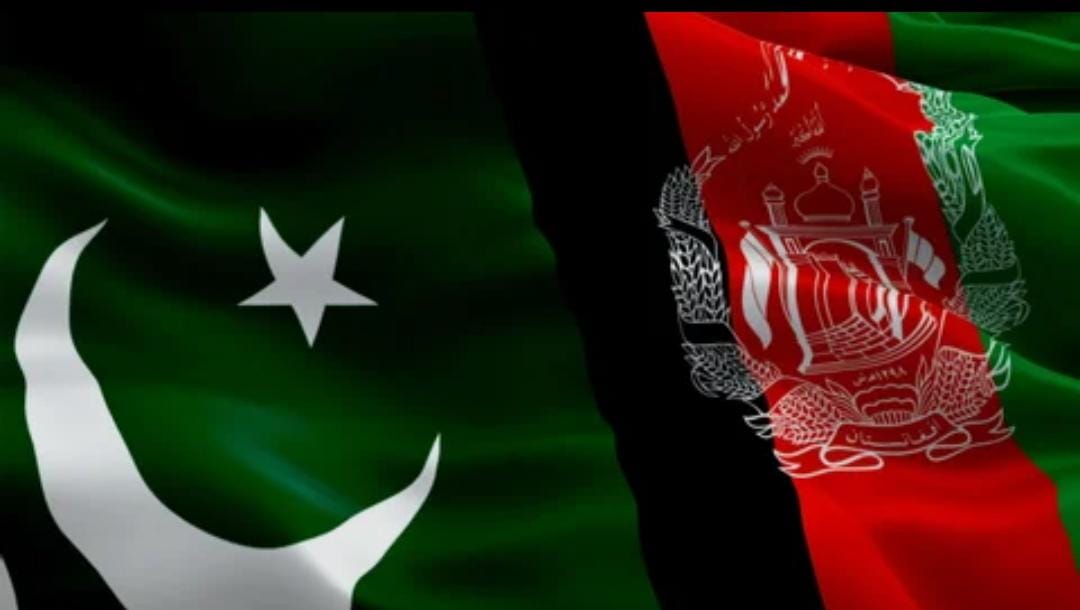
Tensions along the disputed Afghanistan–Pakistan border, commonly known as the Durand Line, escalated sharply on Thursday as Afghan forces launched what Taliban officials described as “large-scale offensive operations” against Pakistani military positions.
The latest clashes mark a significant deterioration in relations between Kabul and Islamabad, following Pakistani airstrikes earlier this week that both sides continue to dispute.
Afghan Offensive and Territorial Claims
Taliban government spokesperson Zabihullah Mujahid confirmed late Thursday that Afghan forces had begun coordinated attacks on Pakistani military outposts along the eastern frontier.
Deputy spokesperson Hamdullah Fitrat stated that Afghan forces had captured between 15 and 17 Pakistani military outposts during the clashes. These claims have not been independently verified.
The heaviest fighting has been reported in the eastern Afghan provinces of Nangarhar Province, Paktia Province, Khost Province, and Kunar Province.
Afghanistan’s East Corps has stated that there have been no Afghan casualties so far, though officials acknowledge that the situation remains fluid. There is currently no confirmed information regarding Pakistani military casualties.
Background: February 22 Airstrikes
The escalation follows Pakistani airstrikes conducted on Sunday, February 22.
Islamabad described the strikes as “intelligence-based operations” targeting militants affiliated with Tehreek-e-Taliban Pakistan (TTP) and Islamic State Khorasan Province (ISKP). Pakistani officials claimed more than 80 militants were killed.
Kabul rejected that account, asserting the strikes hit civilian homes and a religious school, killing at least 18 people, including women and children.
The United Nations Assistance Mission in Afghanistan (UNAMA) later confirmed that at least 13 civilians were killed in Nangarhar Province during the strikes.
International and Diplomatic Responses
The United Nations has urged restraint amid the rapidly escalating conflict. UNAMA and the UN Special Rapporteur on human rights in Afghanistan, Richard Bennett, called for “maximum restraint” from both sides and warned of the growing risks to civilians in border communities.
Afghanistan has formally lodged a complaint with the United Nations Security Council, alleging a violation of its territorial integrity.
Pakistan’s Foreign Ministry stated Thursday that it would “respond swiftly and strongly” in self-defense and urged the Taliban authorities to prevent militant groups from operating from Afghan territory.
Meanwhile, India issued a statement condemning the February 22 airstrikes and expressing support for Afghan sovereignty, further adding a regional dimension to the crisis.
A Long-Standing Dispute
The Durand Line has remained a deeply contested boundary since its demarcation in 1893. Afghanistan has never formally recognized it as an international border, a position that has repeatedly complicated bilateral military coordination and diplomatic engagement.
With active clashes underway and both sides maintaining hardened positions, regional observers warn that the situation could spiral into a broader confrontation unless immediate diplomatic channels are activated.
Further updates are expected as official casualty figures and military assessments emerge from both governments.