










The Middle East is facing one of its most dangerous escalations in recent years after joint U.S.–Israeli military strikes on Iran triggered retaliatory missile and drone attacks by Tehran, paralyzing regional aviation and raising fears of a broader war.
According to reports from major international media outlets, the unfolding crisis has effectively disrupted one of the world’s most critical air transit corridors and placed global markets and diplomatic channels under significant strain.
Widespread Airspace Closures and Global Impact
In the immediate aftermath of the strikes and Iran’s retaliation, at least eight countries — Iran, Israel, Iraq, Jordan, Qatar, Bahrain, Kuwait, and the United Arab Emirates — announced full or partial airspace closures.
Syria separately declared a 12-hour closure of its southern airspace.
The shutdown carries major global implications. With Russian and Ukrainian airspace already restricted due to their ongoing conflict, Middle Eastern corridors had become the primary route linking Europe and Asia. Aviation authorities confirmed that this vital corridor is now largely inaccessible, forcing airlines into lengthy diversions or full route suspensions.
Global Airlines Suspend Operations
Escalating security risks prompted swift action from major international carriers. Lufthansa, Air France, British Airways, KLM, Qatar Airways, Turkish Airlines, Japan Airlines, and Virgin Atlantic suspended flights to affected destinations or rerouted aircraft away from the region.
Air India announced it would avoid Middle Eastern airspace entirely until further notice.
Russia’s Ministry of Transport also suspended all Russian carrier flights to Iran and Israel, highlighting the scale of aviation disruption.
Industry analysts warn that prolonged closures could disrupt global supply chains, increase fuel costs, and significantly affect passenger traffic between Europe, Asia, and Africa.
Military Operations and Retaliation
The U.S. Pentagon has designated its campaign against Iran as “Operation Epic Fury,” while Israeli Defense Minister Israel Katz referred to Israel’s actions as “Operation Roaring Lion.”
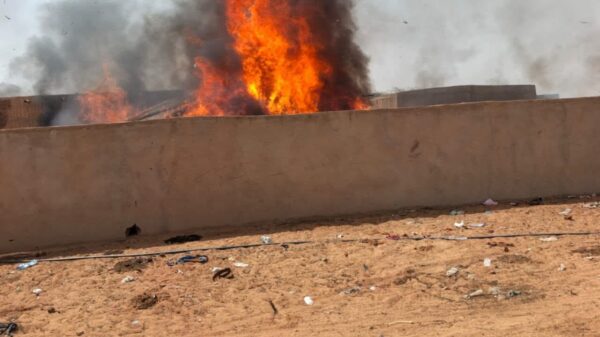
Strikes inside Iran reportedly targeted major cities including Tehran, Isfahan, Qom, Karaj, and Bushehr. Reports indicate that areas in central Tehran — including locations near the presidential office and the compound of Supreme Leader Ali Khamenei — were hit.
In response, Iran’s Islamic Revolutionary Guard Corps launched successive waves of missiles and drones.
Targets included:
Israel: Northern and central regions, where air-raid sirens sounded nationwide.
U.S. military assets: Facilities in Bahrain (home to the U.S. Fifth Fleet), bases in Kuwait, Qatar’s Al-Udeid Air Base, and installations in the United Arab Emirates.
Civilian Casualties Reported
Civilian casualties have been confirmed amid the escalating confrontation. Iranian sources reported 51 deaths following a strike near a girls’ school in Minab.
In the United Arab Emirates, state media reported that one civilian was killed in Abu Dhabi by falling shrapnel during the interception of an Iranian missile.
Independent verification of casualty figures remains ongoing.
Escalating Rhetoric
President Donald Trump said the United States had begun “major combat operations,” outlining objectives that include destroying Iran’s naval capabilities, dismantling its missile program, and facilitating political change.
Iran’s Foreign Ministry condemned the attacks as a “flagrant violation of sovereignty” and warned that Tehran’s response would have “no red lines.”
The tone of statements from both sides suggests the confrontation may intensify rather than de-escalate in the near term.
International Reaction
Global leaders have expressed alarm over the rapid deterioration of regional stability. French President Emmanuel Macron and Russian officials warned of “grave consequences” for international peace and security.
Diplomatic efforts are reportedly underway at the United Nations and among European governments, although no ceasefire framework has yet emerged.
A Region on Edge
With missile exchanges ongoing, civilian aviation halted, and U.S. and Iranian forces on heightened alert, the Middle East stands at a critical crossroads.
Energy markets are bracing for volatility, maritime routes face elevated risk, and international observers warn that miscalculation could draw additional regional actors into direct confrontation.
As of publication, the situation remains fluid, with further developments expected in the coming hours.