









Caracas – Update
On Saturday, 3 January 2026, Venezuela experienced dramatic and unprecedented developments after the United States announced it had carried out what it described as a “swift” military operation, claiming it resulted in the arrest of Venezuelan President Nicolás Maduro and his wife Cilia Flores, who were transferred خارج the country to face criminal charges related to “narco-terrorism”.
Military operation and explosions in Caracas
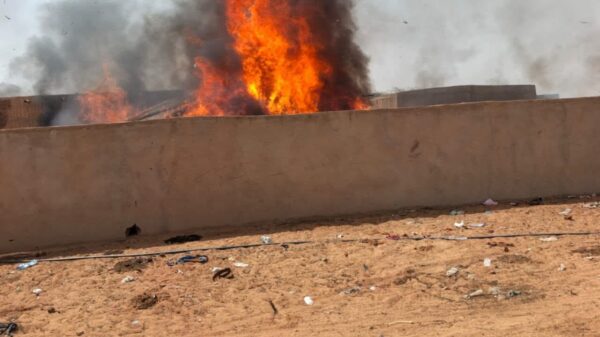
According to U.S. statements, the operation was accompanied by strikes on military facilities and strategic sites in the capital Caracas, including Fort Tiuna. Local reports spoke of powerful explosions at dawn and widespread power outages across parts of the city.
Shortly before reports of his arrest emerged, Maduro had declared a nationwide state of emergency, citing what he called a “serious military aggression”.
Political vacuum and uncertainty
Politically, uncertainty prevails over who is now governing the country. Vice President Delcy Rodríguez demanded disclosure of Maduro’s whereabouts and proof that he is alive, urging supporters to take to the streets.
Sharply divided international reactions
International reactions were deeply divided:
- In Washington, President Donald Trump said the operation aimed to “liberate the Venezuelan people” and end what he described as a “criminal dictatorship,” adding that the United States would be “heavily involved” in Venezuela’s oil sector going forward.
- Argentina, under President Javier Milei, welcomed the move as a “victory for democracy,” while Venezuelan opposition figures abroad voiced strong support and urged the armed forces not to resist.
- By contrast, Iran condemned the operation as “international piracy,” Cuba denounced it as an “imperialist aggression,” and Russia warned of the dangers of “direct military intervention”.
The United Nations called for restraint and respect for international law, while the European Union urged a peaceful, inclusive political solution. Regionally, Colombia and Brazil strengthened military deployments along their borders.
Economic impact and oil markets
Economically, the news triggered sharp volatility in global oil prices, amid fears of a prolonged disruption to supplies from a country holding the world’s largest proven reserves.
An open-ended crisis
As diplomatic activity intensifies worldwide, the situation remains fluid and unresolved, raising concerns over whether Venezuela is heading toward a managed political transition or a period of prolonged internal and regional instability.