

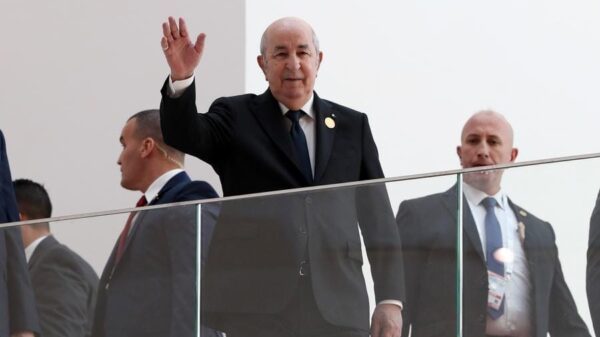







The United States has formally invited Turkish President Recep Tayyip Erdoğan to join a newly established international body overseeing Gaza’s post-war transition, marking a significant step in the implementation phase of Washington’s proposed framework to end the conflict and rebuild the territory.
According to official statements released on Jan. 16, U.S. President Donald Trump extended an invitation to Erdoğan to become a founding member of the Board of Peace (BoP), the international oversight authority created to supervise Gaza’s reconstruction and temporary administration.
The body was formally endorsed by the United Nations Security Council in November 2025 through Resolution 2803.
The invitation highlights Türkiye’s growing role as a regional mediator and security stakeholder in the post-conflict architecture emerging around Gaza.
Formation of the Board of Peace
The Board of Peace serves as the highest international supervisory authority guiding Gaza’s transition from a ceasefire toward long-term governance. Trump is serving as the founding chair, with membership drawn from key international and regional actors involved in mediation, humanitarian coordination and reconstruction planning.
To manage day-to-day operational matters, an 11-member Gaza Executive Board has been established to coordinate diplomatic, humanitarian and reconstruction activities.
Confirmed members of the Executive Board include:
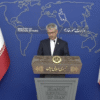
- Hakan Fidan, Turkish foreign minister
- Marco Rubio, U.S. secretary of state
- Steve Witkoff, U.S. special envoy
- Jared Kushner, special envoy
- Tony Blair, former British prime minister
- Sigrid Kaag, UN senior humanitarian coordinator
Officials described the Executive Board as the core mechanism linking international oversight with implementation on the ground.
Phase Two of the Peace Plan Begins
The announcement comes as the U.S. led “20-Point Plan” enters Phase Two, shifting from ceasefire stabilization toward governance transition and physical reconstruction.
On Jan. 14, Witkoff confirmed that Phase Two had formally begun, outlining priorities that include the comprehensive demilitarization of Gaza, the disarmament of unauthorized armed groups, deployment of an International Stabilization Force (ISF), and enhanced regional security coordination involving Egypt, Türkiye and Qatar.
Diplomatic sources said the objective of this phase is to establish secure conditions for rebuilding infrastructure, restoring public services and enabling displaced populations to return.
Palestinian-Led Civil Administration
While the Board of Peace provides international oversight, civil governance in Gaza will be led by a Palestinian technocratic body known as the National Committee for the Administration of Gaza (NCAG).
The NCAG is designed as an apolitical, expert-led authority responsible for public services, economic recovery and institutional rebuilding. It is headed by Ali Shaath, a former Palestinian Authority deputy minister with experience in economic development.
Former UN envoy Nickolay Mladenov has been appointed High Representative, serving as the main liaison between the international Board of Peace and the Palestinian administration.
Türkiye Welcomes Invitation
Türkiye’s Head of Communications Burhanettin Duran confirmed receipt of the invitation via the NSosyal platform, saying Ankara views the initiative as a critical pathway toward sustainable peace.
Turkish officials said Türkiye’s inclusion reflects its mediation efforts during the conflict, including facilitating ceasefire talks and humanitarian aid corridors.
A New Governance Framework for Gaza
The emerging framework establishes a layered governance structure comprising the Board of Peace for strategic oversight, the Executive Board for operational coordination, the NCAG for Palestinian civil administration and the International Stabilization Force for security support.
Diplomatic observers described the arrangement as the most comprehensive international governance framework proposed for Gaza in decades, combining international supervision with Palestinian ed administration.
As Phase Two advances, attention is now focused on implementation particularly disarmament, reconstruction financing and the restoration of essential services which will determine whether the plan can deliver lasting stability.