








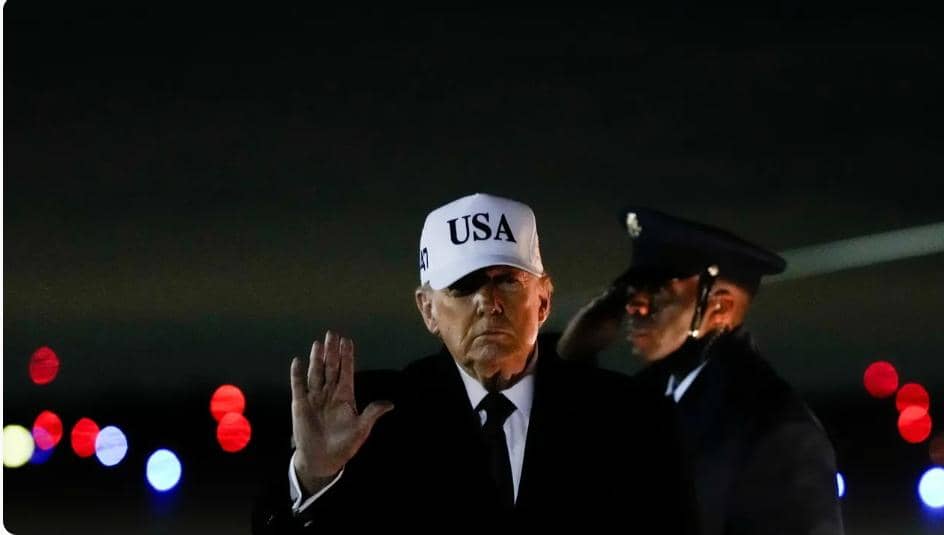
U.S. President Donald Trump on Monday announced a sweeping new trade measure imposing a 25% tariff on any country that continues commercial dealings with the Iran, sharply escalating Washington’s economic pressure on Tehran amid ongoing civil unrest inside the country.
The announcement was made on Trump’s Truth Social platform, where the president said the policy would take effect immediately.
“Effective immediately, any Country doing business with the Islamic Republic of Iran will pay a Tariff of 25% on any and all business being done with the United States of America,” Trump wrote, calling the decision “final and conclusive” and signaling no immediate plans to grant exemptions or negotiate waivers.
Targeted Global Trade Partners
The measure places several major economies at risk, particularly countries with sustained trade links to Tehran. Among the most exposed are China, Iran’s largest trading partner; India, which imports Iranian energy and agricultural products; Turkey, which maintains extensive cross-border trade and energy cooperation; the United Arab Emirates, a key hub for Iranian re-exports; and Russia, which has expanded economic and military ties with Iran in recent years.
If fully enforced, the policy would create a broad secondary-sanctions effect, forcing governments to choose between maintaining commercial ties with Iran or facing punitive costs on their exports to the United States.
Legal Basis and Domestic Challenges
Administration officials are expected to rely on the International Emergency Economic Powers Act as the legal basis for the tariffs. Trump has repeatedly used the statute during his second term to justify trade restrictions under national security authority.
The announcement comes as the Supreme Court of the United States is preparing to rule, potentially as early as Wednesday, Jan. 14, on the legality of the administration’s broader global tariff framework. Several U.S. states and small business groups have challenged the expansive use of emergency powers, arguing that the president has exceeded statutory authority.
For some countries, the new policy could result in compounded trade penalties. India, for example, already faces elevated U.S. duties on certain exports, and the additional 25% levy could significantly raise costs if New Delhi maintains commerce with Tehran.
Diplomatic and Security Dimensions
The White House defended the move as part of a wider strategy to respond to Iran’s internal crackdown on protest movements. Press Secretary Karoline Leavitt said diplomacy remained the administration’s “first option” but warned that the president was prepared to use “lethal force and might” if Iranian authorities continued violent repression.
Iranian Foreign Minister Abbas Araghchi rejected the accusations, saying Iran’s internal situation was “under control” and accusing Washington of economic warfare in support of what he described as “terrorist elements” inside the country.
Economic Impact at Home
Trade analysts warned that while the tariffs target foreign governments, the immediate financial burden would fall on U.S. importers, who pay duties at ports of entry. Those costs are likely to be passed on to consumers, potentially increasing prices for electronics, industrial components and raw materials sourced from affected countries.
A High-Stakes Confrontation
The announcement represents one of the most aggressive economic measures taken against Iran in recent years and raises the risk of intensified global trade tensions. Governments, investors and markets are expected to closely monitor international responses and the pending Supreme Court decision, which could determine the durability of the administration’s tariff authority.