







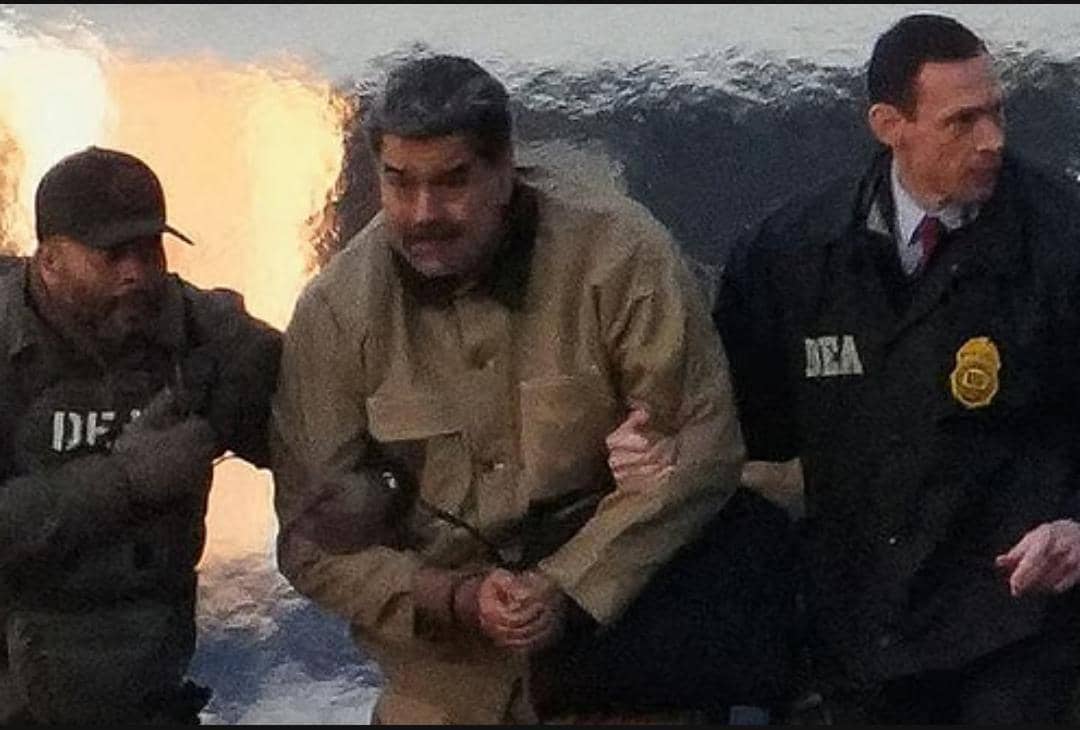
The capture of Venezuelan President Nicolás Maduro by United States forces and his transfer to New York on January 3, 2026, has triggered one of the most significant legal and geopolitical confrontations in the Western Hemisphere in decades—turning a covert military operation into a full-scale diplomatic crisis.
The operation, code-named Operation Absolute Resolve, marks the first time since the 1989 arrest of Panama’s General Manuel Noriega that a sitting head of state in the Americas has been forcibly removed and brought before a U.S. federal court.
A High-Risk Extraction in Caracas
According to U.S. defense officials, the operation was carried out late on January 3, when American special operations forces entered Caracas in a tightly coordinated nighttime mission. The extraction reportedly involved rapid strikes on key security nodes before Maduro was detained and transferred out of the country under heavy air and naval escort.
Washington has framed the mission as a law-enforcement action linked to longstanding criminal indictments, rather than an act of war. Venezuelan authorities, however, have denounced it as a flagrant violation of sovereignty and international law.
Legal Shockwaves in New York
Within hours of Maduro’s arrival in the United States, the Department of Justice unsealed a sweeping indictment in the Southern District of New York, charging the Venezuelan leader with narco-terrorism, cocaine trafficking conspiracies, and weapons-related offenses.
Maduro is expected to appear before U.S. District Judge Alvin Hellerstein, setting the stage for a legal battle that could redefine the reach of U.S. extraterritorial jurisdiction over alleged transnational crimes committed by foreign leaders.
Legal experts say the case could establish precedents with global ramifications, particularly concerning the intersection of criminal prosecution, state sovereignty, and the use of military force to execute arrests.
Power Shift and Political Turmoil in Caracas
In Caracas, the fallout was immediate. Vice President Delcy Rodríguez moved swiftly to assume the role of acting president, pledging institutional continuity while condemning the U.S. operation.
The sudden power transition has intensified political uncertainty inside Venezuela, with protests reported in several cities and security forces placed on high alert. Defense officials acknowledged casualties linked to U.S. strikes on military installations, further inflaming public anger.
A Hemispheric and Global Crisis
International reaction has been sharply divided. While some U.S. allies have cautiously welcomed the prospect of accountability, others—including Russia, China, and several countries in the Global South—have condemned the operation as a dangerous precedent.
The United Nations has warned that the incident risks undermining core principles of the UN Charter, particularly those related to sovereignty and the prohibition on the use of force.
As Maduro prepares for his first court appearance in New York, the confrontation between Washington and Caracas is rapidly evolving from a legal case into a defining test of international order—one that may reshape how power, law, and accountability intersect on the global stage.