








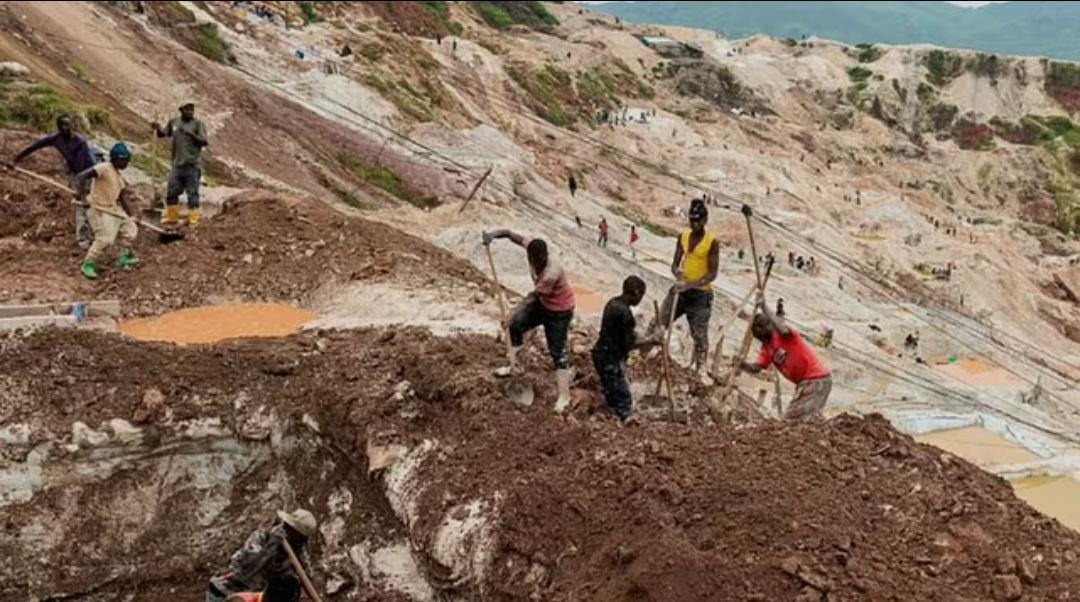
At least 227 people were killed after a massive landslide struck the Rubaya coltan mine in North Kivu province, eastern Democratic Republic of Congo, in one of the deadliest mining disasters in the country’s history, according to local authorities and Reuters.
The collapse was triggered by heavy seasonal rainfall, which caused unstable hillsides to give way at the largely unregulated artisanal mining site on Wednesday, Jan. 28. Rescue officials said the full scale of the disaster only became clear days later as recovery operations continued in difficult conditions.
Civilians among the victims
Local officials said the dead included artisanal miners, children and market women who were near the mining pits when the hillside collapsed. At least 20 people remain hospitalised with serious injuries, while search and recovery efforts are ongoing amid rugged terrain and persistent security concerns.
Mining at Rubaya is largely manual, with workers digging narrow, unsupported tunnels into unstable soil. The risks of collapse increase sharply during the rainy season, according to mining experts.
Strategic and conflict-affected mining zone
The Rubaya mining area is of major global importance, producing an estimated 15% of the world’s coltan — a key mineral refined into tantalum and used in smartphones, computers, electric vehicles and aerospace technologies.
The region has remained deeply affected by conflict. Since 2024, Rubaya has been under the control of the AFC/M23 rebel group. The United Nations has accused the group of exploiting mineral resources to finance its operations, including allegations of support from neighbouring Rwanda, claims that Kigali has repeatedly denied.
Analysts say the combination of armed group control, weak regulation and rising global demand for critical minerals has left miners and surrounding communities dangerously exposed.
A grim escalation
The scale of the Rubaya disaster far exceeds recent mining accidents in the country:
- January 2026 — Rubaya (Coltan): 227+ dead
- November 2025 — Lualaba (Cobalt): 32 dead
- June 2025 — Rubaya (Coltan): 12–21 dead
Human rights groups say repeated tragedies underscore the failure to enforce basic safety standards in artisanal mining areas, particularly in conflict zones.
Calls for accountability
As of Friday, there was no detailed public statement from the central government in Kinshasa outlining new safety measures or accountability mechanisms. International observers and advocacy groups are urging the government and the United Nations to strengthen oversight, improve worker protections and address the role of armed groups in mineral supply chains.
The Rubaya tragedy is expected to renew global scrutiny of how critical minerals essential to modern technology are sourced from some of the world’s most unstable regions.