






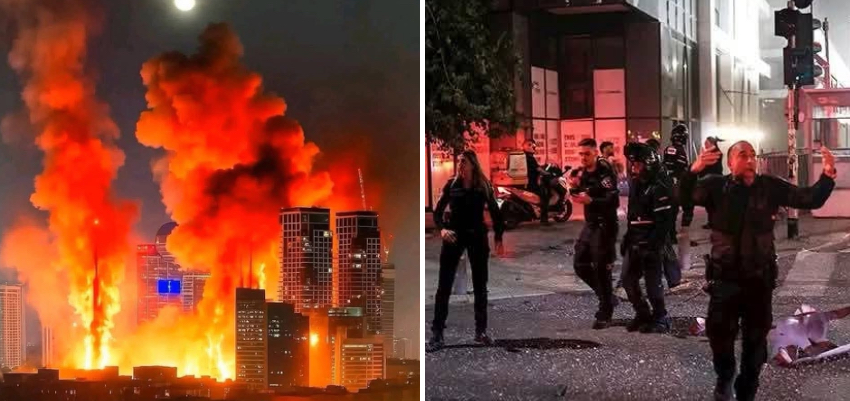
The Middle East witnessed an unprecedented escalation early Saturday, as Israel and Iran exchanged waves of missiles and airstrikes in what is being described as one of the most dangerous military confrontations in years. The scale and intensity of the attacks have raised fears of a broader regional war.
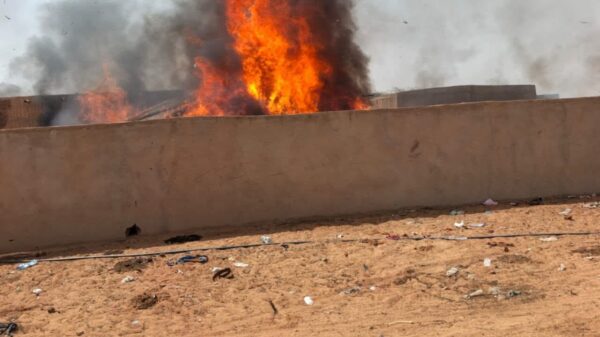
According to Israeli authorities, Iran launched several waves of ballistic missiles targeting key areas including Tel Aviv and Jerusalem, prompting Israel’s air defense systems to intercept incoming threats. Meanwhile, Iranian media reported explosions in Tehran, and the capital’s Mehrabad Airport was reportedly hit by rockets.
In retaliation, the Israeli Air Force launched a series of strikes against military and nuclear sites in Iran, claiming the goal was to disrupt Tehran’s nuclear program.
The confrontations have resulted in casualties on both sides, with dozens reported dead or injured, in addition to significant material damage.
U.S. officials confirmed that American forces were involved in intercepting Iranian missiles, reinforcing their strategic alliance with Israel. The incident has sparked growing concern that the conflict could expand to include other countries in the region, such as Lebanon or Syria, and possibly draw in global powers.
👉 Context for African Readers:
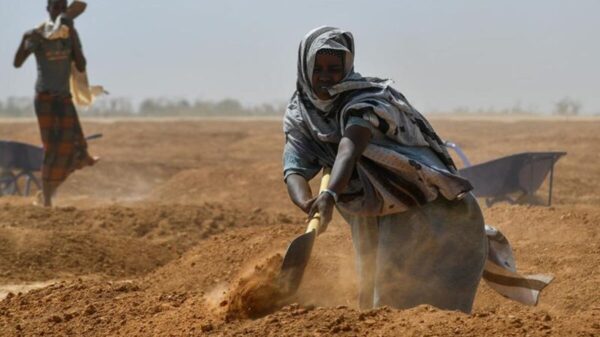
This escalation comes at a time of increasing global instability, including the war in Ukraine, rising tensions in the Sahel, and shifting power dynamics across the Middle East and Africa. For many African nations, any new war in the Middle East could have ripple effects—impacting energy prices, disrupting trade and supply chains, and putting African migrant workers in the region at risk. It could also complicate diplomatic relations with global powers involved in the confrontation.