









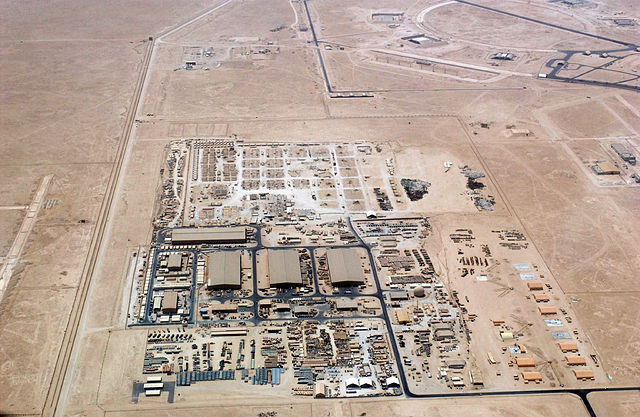
Iran’s recent strike on Al-Udeid Air Base in Qatar has reignited debate over U.S. military influence in the Middle East and the critical role this strategically located facility plays—largely funded and supported by Doha over the years.
Home to U.S. Central Command (CENTCOM) headquarters for the region, Al-Udeid is the largest American military base in the Middle East, hosting over 10,000 troops. From this base, the U.S. directs military operations spanning from Egypt to Kazakhstan, granting Washington unmatched regional reach and military dominance.
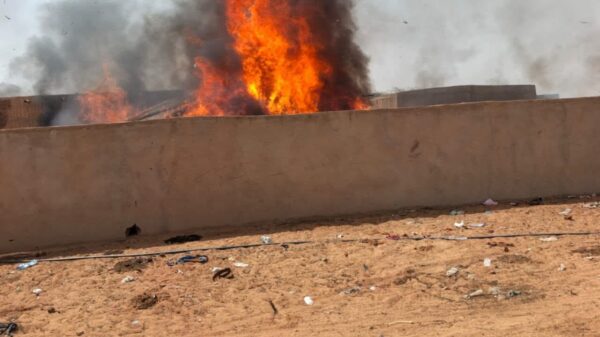
On June 23, Tehran launched missiles at the base in retaliation for U.S. airstrikes on Iranian nuclear sites. The attack sparked widespread condemnation across the Arab world, with many labeling it a direct violation of Qatar’s sovereignty.
Speaking to France 24, Dr. Imad Salamey, head of political studies at the Lebanese American University, stressed: “Any assault on Qatari territory constitutes a breach of international law, regardless of the presence of a U.S. base. Sovereignty remains intact unless the host nation is an active participant in aggression.”
He clarified that Qatar has never objected to the base’s operations, nor has it played a direct role in attacks on Iran—thus absolving it of complicity. Under international law, Qatar has full rights to defend itself.
The U.S. presence at Al-Udeid is governed by a defense agreement signed in 2002, following secret operations launched from the base during the Afghanistan war. Between 2003 and 2019, Qatar invested more than $8 billion in expanding and upgrading the facility, according to U.S. Library of Congress records.
Initially built in 1996 at a cost of $1 billion, the base was quietly offered to the U.S. in 2000. By April 2003, CENTCOM had officially relocated from Prince Sultan Air Base in Saudi Arabia to Al-Udeid, marking a strategic shift in U.S. Gulf operations.
Al-Udeid has since played a central role in the campaign against ISIS, with B-52 bombers launched from the base in 2016 targeting key militant positions.
As tensions between Iran and the U.S. continue to rise, the attack places Qatar in a delicate position—balancing strategic partnerships while reaffirming its sovereignty.
Qatar’s government has declared its “right to respond under international law,” as the international community watches to see if the UN will mediate or respond to the escalating situation.