






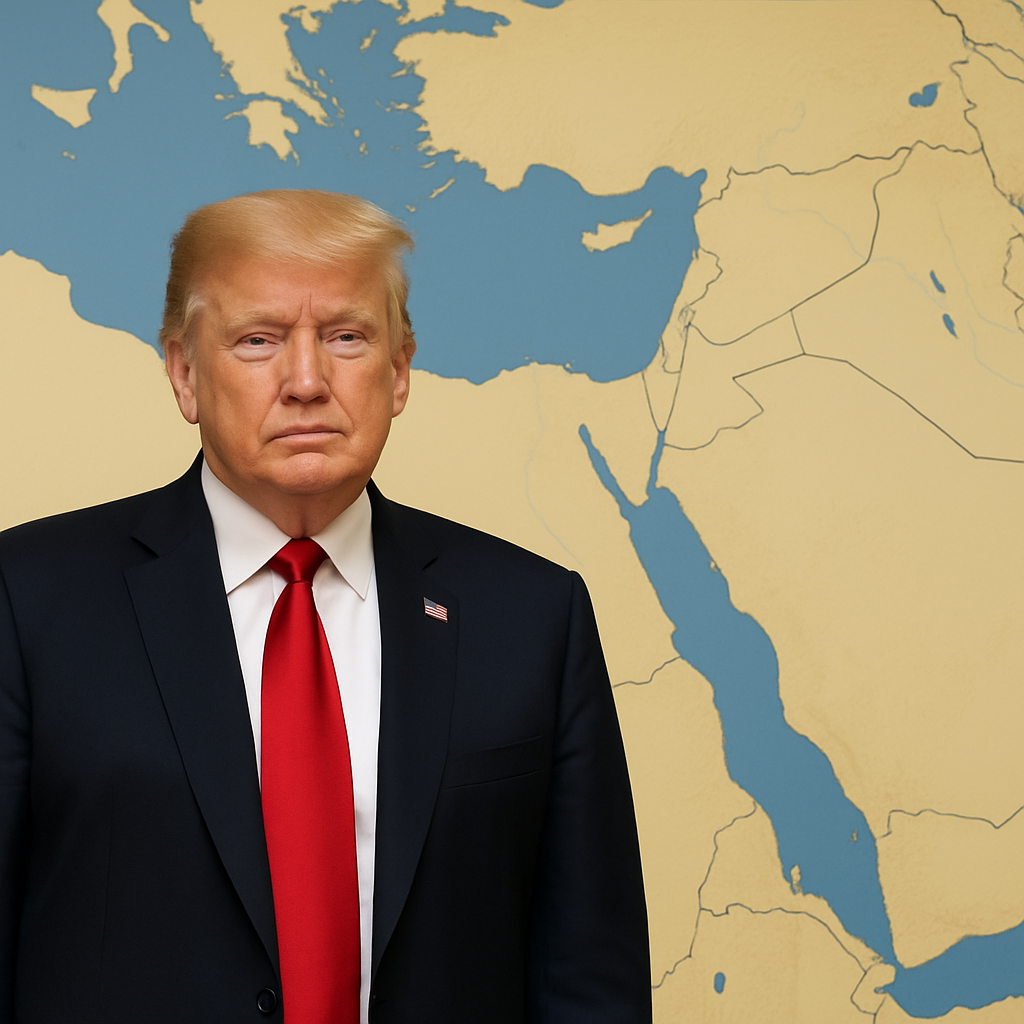
In a major diplomatic surprise, former U.S. President Donald Trump announced on Wednesday the full lifting of U.S. sanctions on Syria during a meeting with interim Syrian President Ahmad Al-Sharaa in Riyadh. The declaration marked the beginning of a regional tour that also includes Qatar and several key countries in the Middle East.
Trump urged Al-Sharaa to join the Abraham Accords and pursue normalization with Israel, calling the move “a vital step toward regional stability and future cooperation.”
President Al-Sharaa, who took office following the ousting of Bashar al-Assad in late 2024, expressed a willingness to engage in dialogue while emphasizing Syria’s sovereignty and unity.
This meeting was the first direct encounter between a U.S. president and a Syrian leader in over two decades, described by observers as an “unprecedented diplomatic breakthrough”, especially in light of the sudden reversal of long-standing sanctions imposed since 2011.
A Parallel Economic Agenda
Trump also visited Doha, where a landmark $200 billion aircraft deal was announced between Qatar Airways and Boeing, hailed as one of the largest U.S.-Gulf commercial agreements in recent history.
Remapping the Middle East?
Analysts believe Trump’s tour signals a shift in regional geopolitics, with the potential reintegration of Syria into new post-Abraham regional frameworks. Some Gulf capitals welcomed the initiative, while others voiced concern over justice and accountability for Syria’s war-torn population.
Despite not holding public office, Trump’s influence on U.S. foreign affairs remains significant—making this tour a development with global reverberations.