












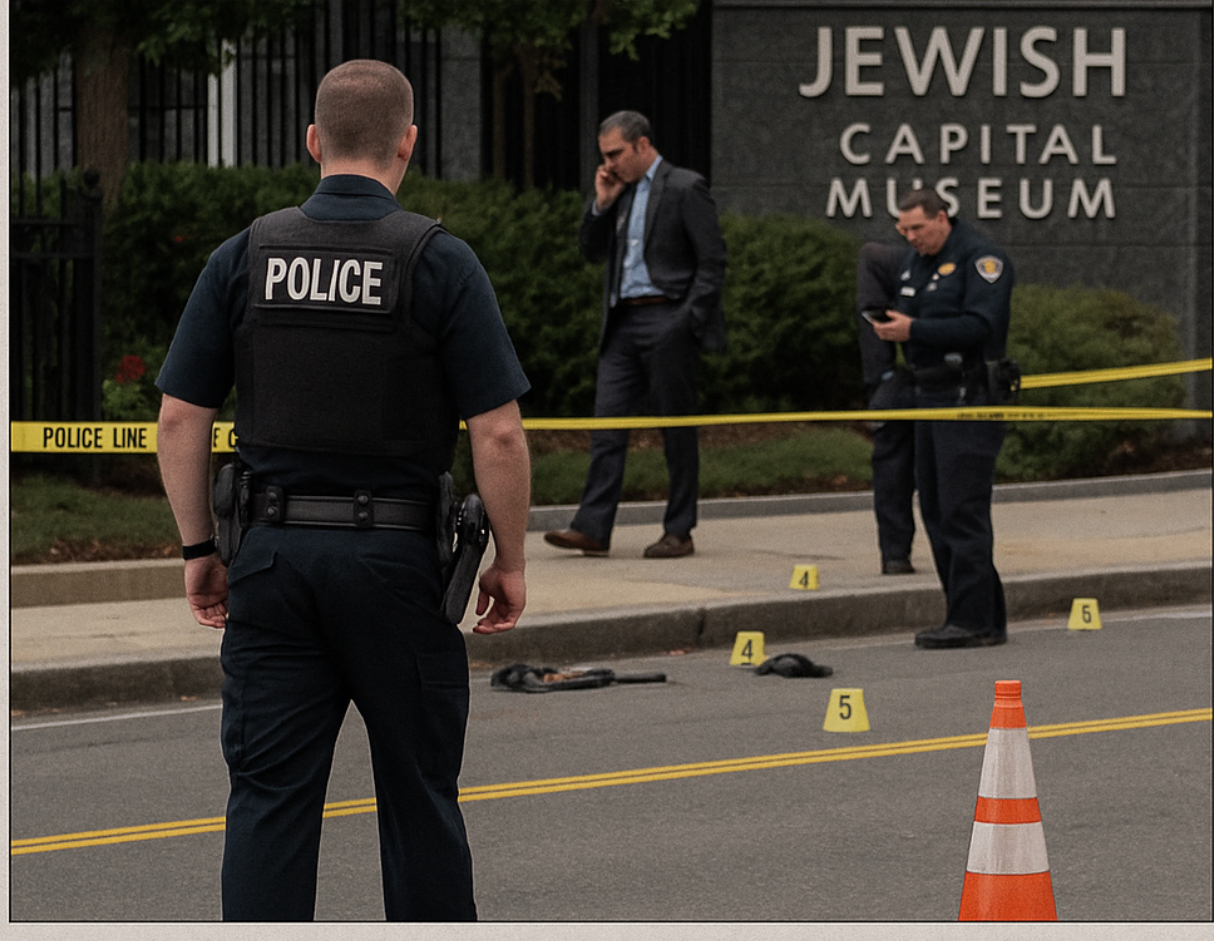
In a dramatic escalation of diplomatic tensions, Israel has accused several European countries of inciting anti-Semitism following the killing of two of its embassy employees in Washington. The deadly shooting, which occurred Wednesday evening near the Jewish Capital Museum, was quickly framed by Israeli officials as the result of “incendiary rhetoric” coming from European leaders.
A double murder that shook the capital
The victims, Yaron Lischinsky and Sarah Lynn Milgram, both staff members at the Israeli Embassy, were shot dead while attending a cultural event. The suspect, Elias Rodriguez, 30, from Chicago, allegedly shouted “Free Palestine” during his arrest. Authorities are now treating the incident as a politically motivated hate crime.
Israel blames Europe
At a press conference in Jerusalem, Foreign Minister Gideon Sa’ar claimed there was a direct link between international anti-Israel incitement and the attack in Washington. “This incitement is being promoted by leaders and officials in various countries and international bodies—especially in Europe,” he stated.
Prime Minister Benjamin Netanyahu went further, calling the act the outcome of “revolutionary incitement,” and directly attributing it to the wave of anti-Israel sentiment seen across Western capitals. He ordered increased security at Israeli embassies worldwide.
European responses: firm but defensive
France’s Foreign Ministry rejected the Israeli accusations, calling them “unacceptable and unfair,” and reiterated its firm opposition to all forms of anti-Semitism. UK Prime Minister Keir Starmer condemned the attack, but maintained the right to criticize Israel’s expanding military operations in Gaza.
The political backdrop
The killings come at a time of mounting global outrage over Israel’s military campaign in Gaza. Just days prior, Emmanuel Macron, Starmer, and Canadian Prime Minister Mark Carney issued a joint statement describing Israel’s actions in Gaza as “disgraceful,” threatening “concrete measures” should the offensive not be halted.
They also reaffirmed their commitment to recognizing a Palestinian state within a two-state solution framework and strongly denounced “hateful rhetoric” by Israeli officials, as well as any suggestion of forced displacement of civilians.
A diplomatic rift deepens
This tragedy has become more than just a criminal incident—it is a reflection of the increasingly toxic global climate surrounding the Israeli-Palestinian conflict. With Israel’s open accusations against European leaders, a new chapter of diplomatic friction may be unfolding. The question remains: will diplomacy prevail, or are we witnessing the start of a deeper geopolitical rupture?