







Acts by some individuals cannot justify removing a whole community, the Commission says, while civil society organisations in Niamey cite tensions and security concerns
Niger’s decision to expel members of the Mahamid community is drawing sharply different responses inside and outside the country. The African Commission on Human and Peoples’ Rights has called on Niger to suspend any collective or discriminatory removal of members of the Mahamid community in the Diffa region. Meanwhile, Nigerien civil society organisations have urged the government to send members of the community to Chad.
More than 1,000 people crossed into Chad, Commission says
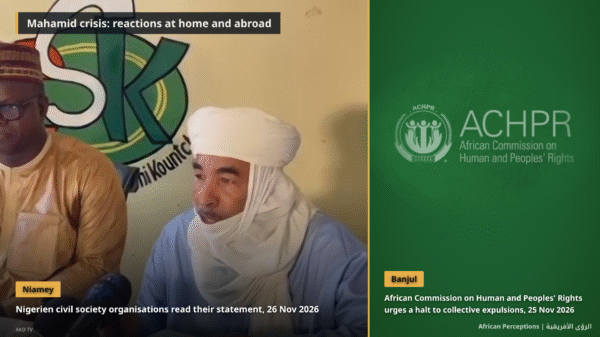
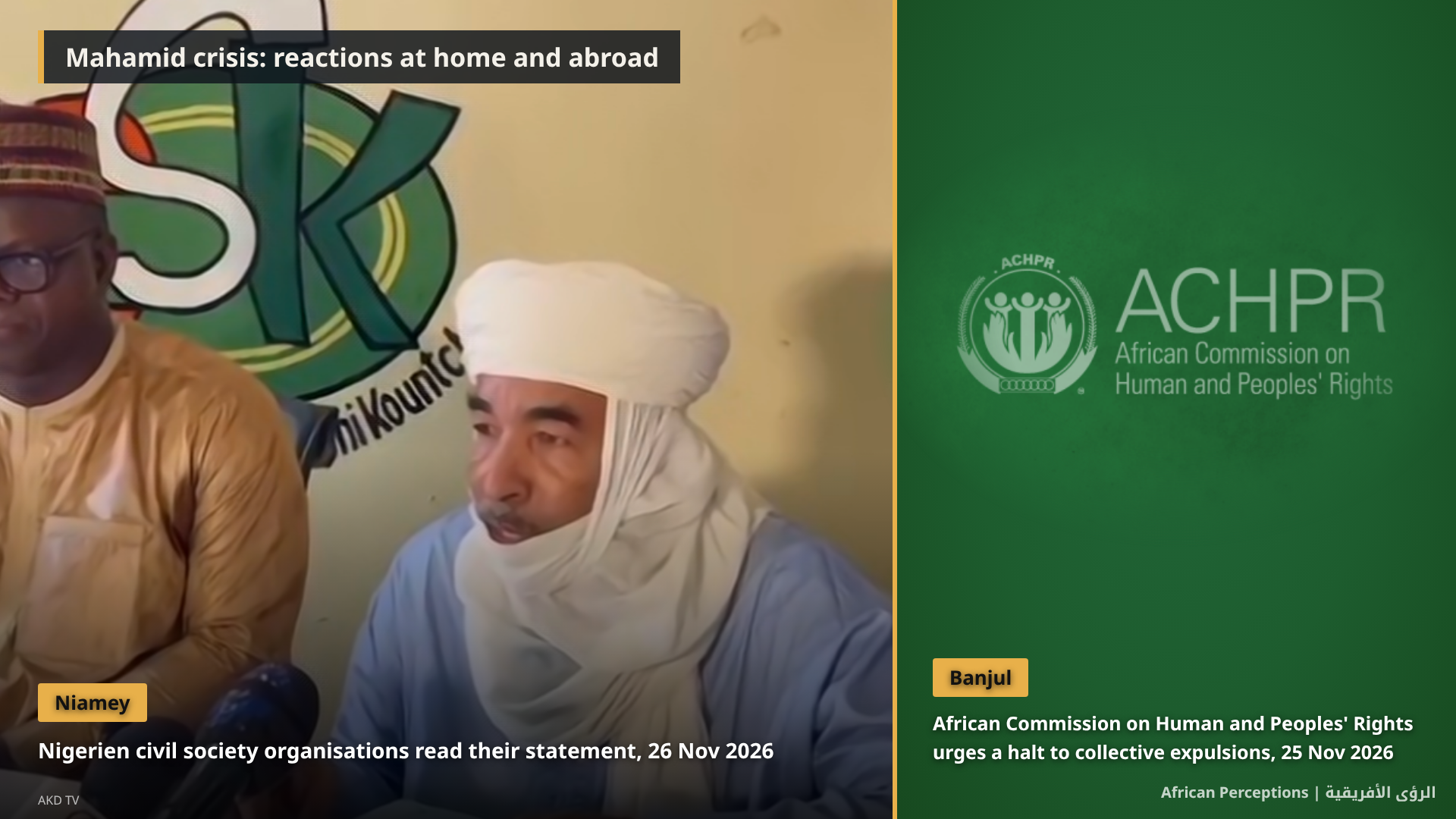
In a statement dated Banjul, November 25, 2026, and published the following day, the Commission said it was following “with concern” the situation of the Mahamid in Diffa, particularly reports that members of the community were being forced to move to Chad.
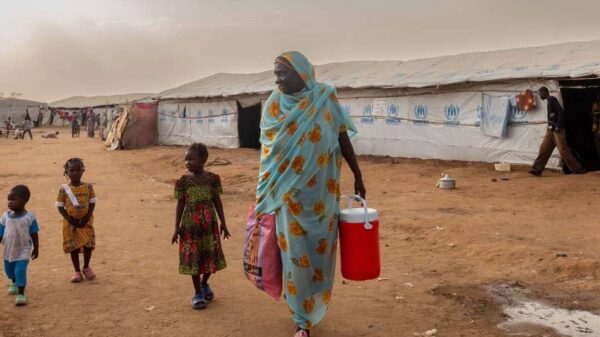
According to information received by the Commission, more than 200 households, or more than 1,000 people, have crossed the Niger–Chad border since November 12, 2026, and found refuge in Daboua, in Chad’s Lac province. Many of them are women and children living in precarious conditions. Testimonies also describe forced departures, lost property and the alleged confiscation of identity and civil status documents.
The Commission noted recent statements by the Nigerien authorities confirming a decision to expel members of the community, who were given two months to leave the country. The authorities cite security concerns, the validity of civil status and nationality documents, and alleged arms trafficking and logistical support for armed groups, it said.
“No collective punishment”
While acknowledging Niger’s security challenges, the Commission stressed that acts possibly attributable to certain individuals cannot justify removal measures targeting an entire community without distinction. It recalled that Article 12(5) of the African Charter on Human and Peoples’ Rights prohibits the mass expulsion of non-nationals, particularly those aimed at national, racial, ethnic or religious groups, while Articles 2 and 3 enshrine non-discrimination and equality before the law. Any removal must respect procedural safeguards and rest on an individual assessment of each person’s situation, it said.
The Commission voiced particular concern over uncertainty about the nationality of some of those affected, especially people reportedly born in Niger, resident there for decades or holding official Nigerien documents. Nationality cannot be determined solely on the basis of community membership or the presumed geographic origin of one’s ancestors, it said. Any challenge to nationality or documents must be examined individually to prevent arbitrary deprivation of nationality and the risk of statelessness, taking into account Article 6 of the African Charter on the Rights and Welfare of the Child.
It asked the Nigerien authorities to clarify the legal basis and implementation of the announced decisions, to return identity and civil status documents improperly withdrawn where applicable, and to guarantee access without discrimination to drinking water, education and health care.
The Commission commended the Chadian authorities for receiving and assisting the new arrivals, and encouraged both states to pursue dialogue and cooperation to clarify the people’s legal status and find lasting solutions. It invited the UN Refugee Agency (UNHCR), the International Organization for Migration (IOM) and other partners to help assess protection and humanitarian needs, with particular attention to children, women and other vulnerable people.
The statement was signed by Commissioner Idrissa Sow, Chairperson of the Commission and Commissioner responsible for human rights in Chad, and Commissioner Selma Sassi-Safer, Special Rapporteur on Refugees, Asylum Seekers, Internally Displaced Persons and Migrants in Africa and Commissioner responsible for Niger.
Nigerien groups: send them back to Chad
In Niamey, civil society organisations expressed “deep concern” over the presence and gradual settlement of the Mahamid community in Niger, in a press statement released on Thursday, November 26, 2026, and read out by Dr Hama Djibi, one of the heads of the organisations. They cited community tensions in the Diffa and Zinder regions and concerns about respect for the laws and regulations of the Republic.
According to the signatories, the community was first received in a humanitarian context from the late 1980s, then gradually changed its pattern of settlement and spread to several localities in the two regions. The statement also contains serious accusations of criminal activity and possible links to armed groups, accusations that call for rigorous verification. The organisations criticised what they called abuses in administrative management, questioning how certain administrative documents were issued and whether networks exist that could undermine national security.
The organisations asked the authorities to take the measures they deem necessary, including the repatriation of members of the community to their “country of origin,” Chad, and urged the government to open diplomatic talks with N’Djamena. They called for national unity and a patriotic rally behind the authorities, backing measures to protect Niger’s security, sovereignty and interests, while recalling that any individual responsibility must be established on verified facts and in accordance with the law.
Source: African Commission on Human and Peoples’ Rights