








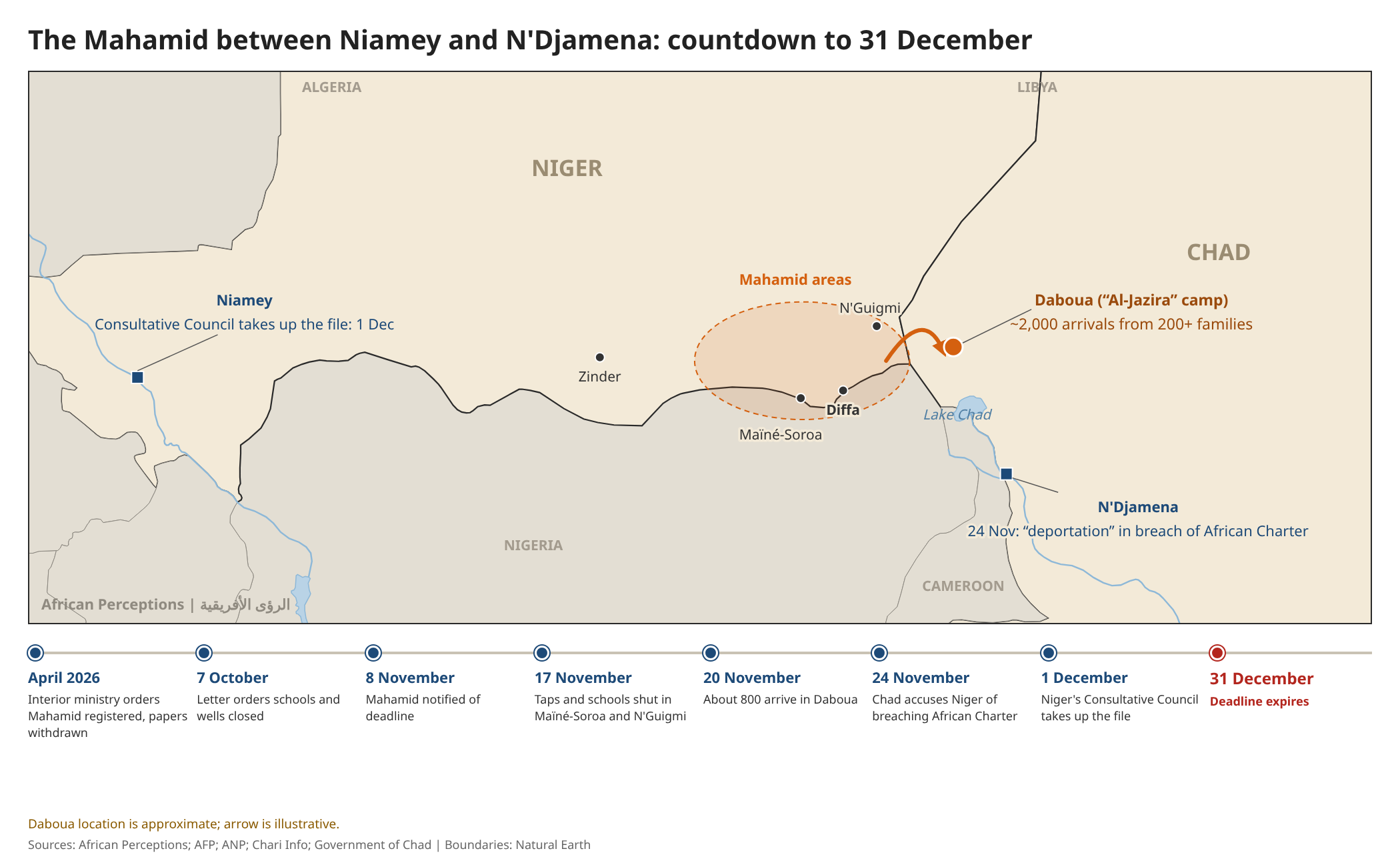
More than 200 families shelter at the “Al-Jazira” camp in Daboua; Chad seeks UN intervention, and Niger’s Consultative Council takes up the file on 1 December
The number of Mahamid Arabs who have reached Chad’s western Lac province after being expelled from Niger has risen to around 2,000 in two weeks. Chad’s government has sharpened its tone, accusing Nigerien authorities of violating their international obligations and calling on the United Nations and the international community to step in before the 31 December deadline.
From 800 to 2,000 in two weeks
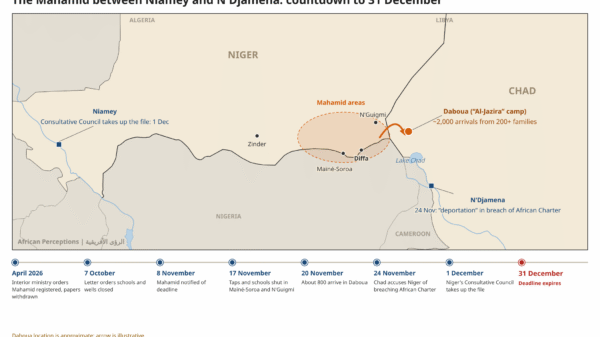
The first groups began arriving in the Daboua area of Lac province in mid-November. About 800 people were reported on 20 November, after which the Chadian outlets Tchadinfos and Alwihda Info said the number had passed a thousand, including men, women and children.
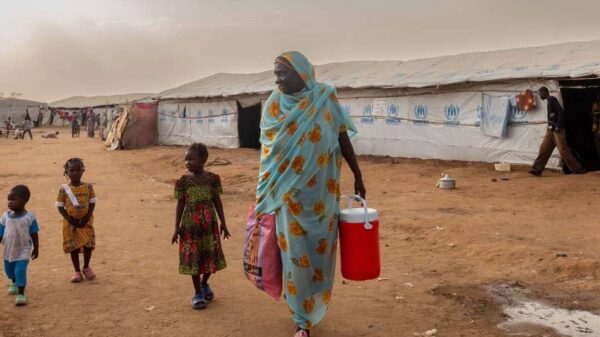
Citing local authorities, the Chadian newspaper Chari Info reported on Monday that the number had reached about 2,000 people from more than 200 families, housed at the “Al-Jazira” camp in the Daboua area of Fouli department. Authorities provided food, drinking water and shelter supplies, under the supervision of the department’s prefect, Démoya Soua Bel Bi, and other local officials.
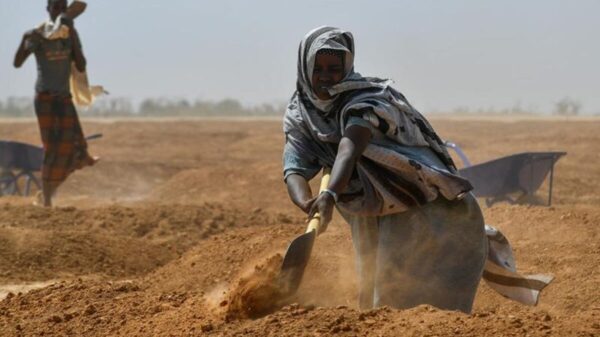
Alwihda Info said many arrivals found themselves without shelter, while the Chadian newspaper As-Salam reported that they came in difficult humanitarian conditions after losing their homes, amid shortages of drinking water and livestock feed.
N’Djamena: a “deportation” in breach of the African Charter
At a news conference on Tuesday, 24 November, information minister and government spokesman Gassim Chérif Mahamat accused Nigerien authorities of violating their international obligations, calling the removals a “deportation” contrary to the spirit of good neighbourliness.
He cited Article 12(5) of the African Charter on Human and Peoples’ Rights, which prohibits mass expulsion, saying international law does not allow an entire tribe to be expelled over suspicions or acts allegedly committed by individuals, and that the issue must not be handled out of sight of the international community.
Rejecting Niamey’s security arguments, he stressed that many of those expelled were born and raised in Niger or hold Nigerien identity documents, and that stripping them of their papers and expelling them threatens to create cases of statelessness. Chad, he said, will examine the arrivals’ cases individually, and he called for respect for the principles of freedom of movement and regional solidarity.
According to As-Salam, the government declared itself ready to receive those expelled and provide them with the necessary protection in a way that preserves their dignity. It urged the UN and its international partners to intervene urgently to stop the mass deportations before the end of December, stressing that despite its own security challenges it has never expelled groups on the basis of ethnicity or nationality. It also called on Chadians to show solidarity with the arrivals, pending clarification of the matter with Niamey.
Niamey: the file goes to the Consultative Council
In Niamey, the official Niger news agency (ANP) reported on 24 November that transitional president General Abdourahamane Tiani had signed a decree convening the Consultative Council for Refoundation for its second ordinary session of 2026, starting on Tuesday, 1 December. Alongside two draft decrees on demonstrations and public meetings and on the social security code, the agenda includes government presentations on discussions concerning the expulsion of the “Mahamid” from national territory.
How the crisis got here
According to AFP, Niger’s interior ministry instructed the governors of Diffa and Zinder in April 2026 to register members of the Mahamid, withdraw their Nigerien identity cards and passports, and arrange their departure. In October came a decision to close schools and wells said to have become the preserve of their communities, followed on 8 November by notification to the tribe’s representatives of a deadline of 31 December.
Nigerien authorities accuse some individuals linked to the tribe of providing logistical support or moving weapons in an area where armed groups such as Boko Haram operate. Tribal leaders deny the accusations, calling them score-settling and a mass expulsion. Tensions are compounded by recurring, sometimes deadly, competition between herders and settled communities over pasture and water as herds, especially of camels, grow.
It is not the first time. In October 2006, Nigerien authorities announced plans to deport large numbers of Arab nomads, before suspending them amid warnings of cross-border security and humanitarian unrest.
Fallout beyond borders
- Risk of statelessness: withdrawing documents before expulsion weakens people’s ability to prove their nationality and could leave them stranded between two states disputing where they belong.
- Humanitarian toll: those expelled lose their livelihoods and struggle to move their livestock, their main capital, while basic services in fragile border reception areas come under growing strain.
- Regional security: uncoordinated expulsions could fuel tensions between Lake Chad basin states and deepen fragility in border areas where smuggling networks and armed groups overlap.
Source: Chari Info; Tchadinfos; Alwihda Info; As-Salam (Chad); Niger news agency (ANP); AFP