

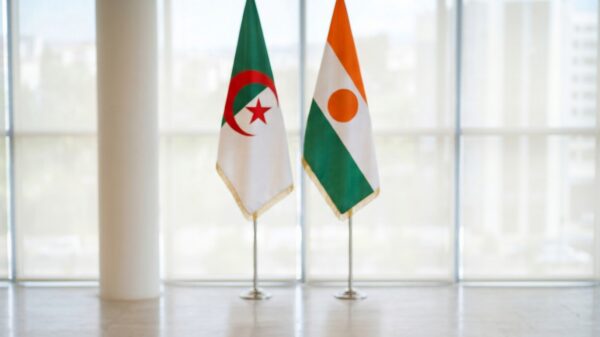




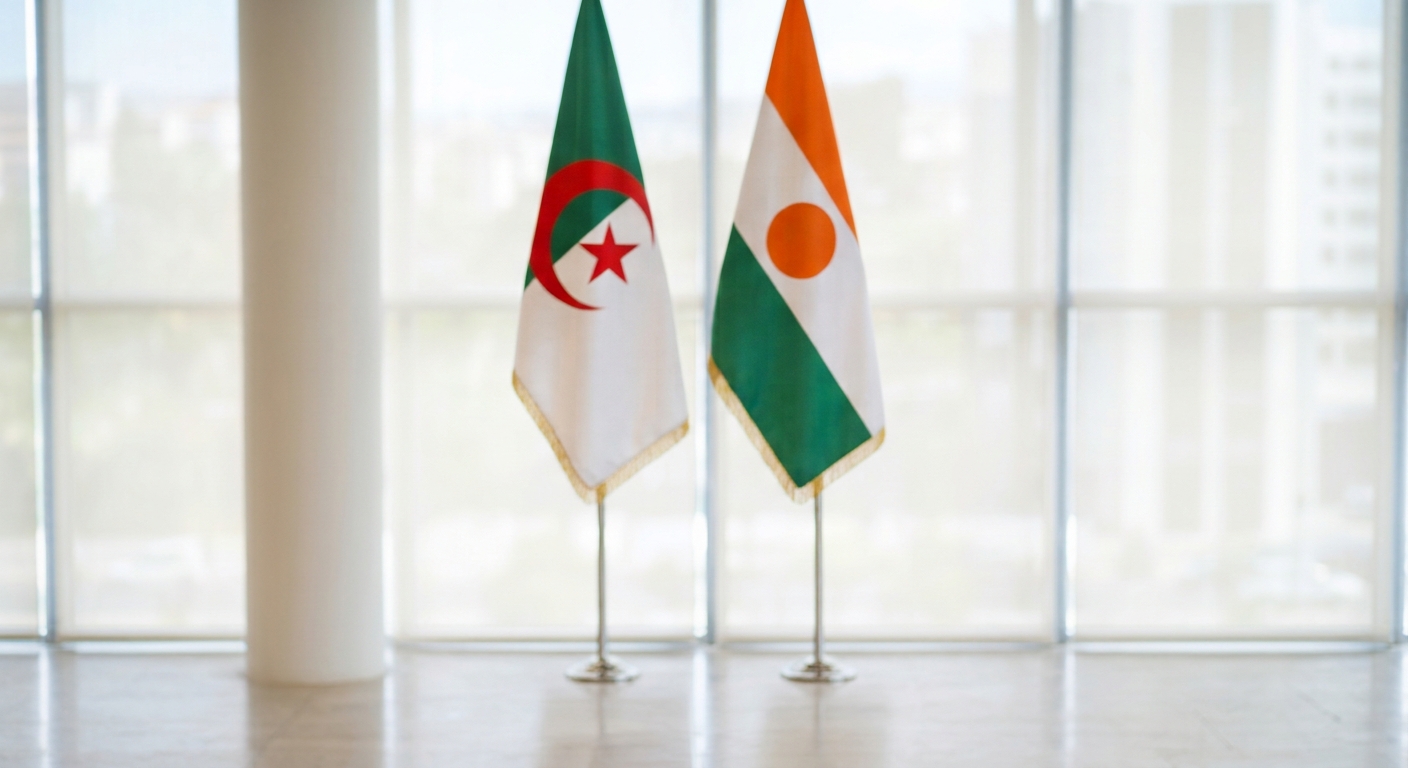
Over 2026, relations between Algeria and Niger have moved beyond ordinary neighborliness into a multi-layered partnership in which border security meets energy and infrastructure projects, and in which both sides are working toward a new regional balance in the Sahel.
The relationship draws its weight from the two countries’ position in a volatile region, where armed groups, smuggling networks and irregular migration flourish and states face accumulated economic and political challenges. From that vantage point, Niger’s stability becomes part of Algeria’s national security, just as Algeria is for Niamey a strategic gateway to North Africa and the Mediterranean.
A political credit that began in the summer of 2023
The rapprochement took shape after the July 2023 coup in Niger, when the Economic Community of West African States (ECOWAS) threatened military intervention to restore the ousted president, Mohamed Bazoum.
Algeria held firm at the time to a return to constitutional order through political and diplomatic means, and warned that any foreign military intervention could have grave consequences for Niger and the whole region.
Although the Algerian initiative did not produce a final settlement, Algeria’s rejection of the military option earned it political credit among sections of Nigerien opinion who saw its stance as an attempt to spare the country another regional war.
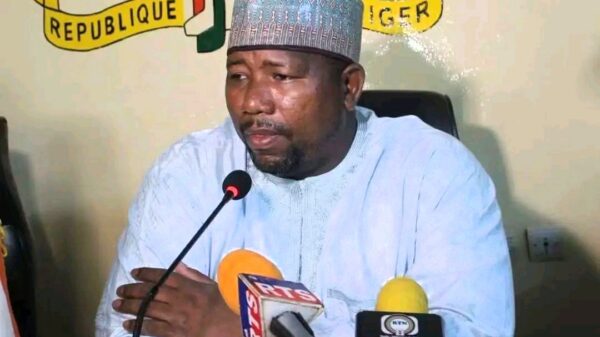
Among those who defended this course early on was Omar Mokhtar al-Ansari, a Nigerien politician and writer and a founding member of the opposition Democratic Renewal Party. On October 4, 2023, he posted a photo of himself with the then foreign minister of his country’s authorities, saying the Algerian initiative was a safe, sovereign choice in the face of threats of military intervention.
Three years later, that position has resurfaced, with Algerian tributes describing Ansari as one of the first Nigerien politicians to argue for building a strategic relationship with Algeria. Ansari replied that his stance was nothing but “a national duty toward Niger,” arguing that closer ties with Algeria serve the security and stability of the Sahel and praising what he called the wisdom of Algeria’s leadership in handling regional crises.
Security: helicopters and units to protect oil facilities
Security is the relationship’s main pillar. Algeria needs a stable southern neighbor able to police its own territory; Niger needs Algerian experience in fighting armed groups and securing its vast desert borders.
In 2026 that cooperation turned into direct field support: Algeria’s Ministry of Defense gave the Nigerien army four fully equipped military helicopters, two Mi-24Vs and two Mi-171s, along with other military equipment.
The significance goes beyond the hardware. It reflects a shift from political coordination to practical security partnership. Niger faces armed attacks in Tillabéri, Tahoua and Diffa, while Algeria fears that the activity of armed groups and smuggling networks will move toward its southern border.
Commenting on the latest developments, Ansari said: “We thank the Algerian parliament for its unanimous decision to send units to secure our oil facilities. This comes within the requirements of the strategic partnership. If only we had an elected parliament that welcomed this fraternal partnership unanimously.”
His remark expresses support for wider security cooperation and also carries an implicit criticism of Niger’s domestic political situation: the country is still run by a transitional authority with no elected parliament.
Energy: from the Solidarity plant to the Kafra well
Energy is the second pillar. In June 2026, Algeria inaugurated the “Solidarity” power plant in Niamey, with a capacity of 40 megawatts and two gas turbines of 20 megawatts each.
The plant was built as an Algerian gift to Niger. Official estimates say it raises national electricity output by about 20% and improves supply to a capital that has long suffered outages and weak generating capacity. Its meaning goes beyond electricity: it is a model of diplomacy built on projects whose results citizens feel directly, and it gives Algeria a growing economic and technical presence in an African market that needs heavy infrastructure investment.
In hydrocarbons, the two countries signed a memorandum of understanding covering development of exploration projects in the Kafra field in northern Niger, better performance at the Soraz refinery, and progress on the Trans-Saharan gas pipeline, along with training and expertise-sharing programs.
In August, drilling began on the exploratory well “Kafra South-East-1” with the participation of Sonatrach, a step that takes oil cooperation from studies and agreements into field work.
The Trans-Saharan pipeline: a bet larger than two countries
The relationship’s strategic weight grows when seen alongside the Trans-Saharan gas pipeline, meant to carry gas from Nigeria through Niger to Algeria and on to European markets.
The project is more than an energy conduit. It could become an economic corridor linking West Africa to the north, giving Niger transit revenue and openings for investment and jobs while strengthening Algeria’s standing as a regional gas hub.
Its success, though, depends on stability on Nigerien soil and on securing the facilities and routes it will cross. Here security cooperation meets economic interest: no investment without security, and no lasting stability without development projects that give residents alternatives to smuggling and to joining armed groups.
Officials from both countries discussed speeding up the project during 2026, stressing its importance at the regional, African and international levels.
What each side stands to gain
For Niger, Algeria offers a regional partner with military and energy expertise that does not treat it only through the lens of emergency aid. It also offers a potential route to Mediterranean markets and a chance to reduce reliance on traditional trade routes through West African states.
For Algeria, Niger’s stability is a way to protect its southern border, counter cross-border threats, secure its energy and continental projects, and strengthen its political and economic presence in the Sahel.
The helicopters, the power plant and the Kafra well should therefore not be read as separate initiatives; they are parts of a wider design tying the two countries’ security to their development and shared economic interests.
From an early voice to concrete policy
The recent tributes to Omar Mokhtar al-Ansari are a reminder of the part political and media voices can play in preparing public opinion for new strategic choices. Ansari was not an official decision-maker, but since 2023 he defended a choice that then seemed contentious, before it turned in 2026 into security cooperation and electricity, oil and gas projects.
Even so, the relationship’s future will be measured by whether the two countries can turn agreements and gifts into lasting institutions, sustainable projects and benefits that reach people in border areas, not by the number of visits and statements.
Relations between Algeria and Niger are no diplomatic luxury; geography, security risks and energy interests demand them. If the two countries anchor them in respect for sovereignty and an exchange of interests, they could become one of the pillars of stability and development in the African Sahel.