











From Paris to Brussels, Rome, Madrid and Lisbon, social protests are mounting across several European countries, driven by crises in education, housing and the cost of living. But the struggle is no longer only about economic demands, as immigration, identity and religion have entered the fray, turning the protests into fodder for a fight between right and left — and into a political row that reaches beyond Europe’s borders.
Analysis | October 24, 2026
The protests sweeping several European cities are no longer isolated actions by students demanding better schools, workers seeking higher pay, or tenants facing soaring housing costs. They have begun to expose wider tensions over governments’ ability to protect living standards and maintain public services, at a time when they face growing financial and political pressure.
While the causes of protest differ from country to country, a common thread in many of them is a feeling among social groups that government policies no longer respond adequately to their needs, and that economic burdens are growing without a matching improvement in wages and services.
But the most important shift lies not just in the spread of the protests but in the struggle over how to interpret them. While protesters present social and economic demands, political forces are seeking to place the events within wider battles over immigration, identity, security and the future of European democracy.
France: from school protests to a national crisis
France appears to be at the heart of this wave, after student actions that began last September in the Paris suburb of Créteil, demanding better teaching conditions and more teachers and resources, grew into protests spreading across large parts of the country.
By early October, more than a thousand high schools had been affected by strikes or protests, according to French Education Ministry figures relayed by Le Monde. The movement then widened to include unions, workers and demands tied to the cost of living and government policy.
Rather than staying confined to education issues, the crisis has become a test of the French government’s ability to manage the protests and reconcile the right to demonstrate with the maintenance of public order.
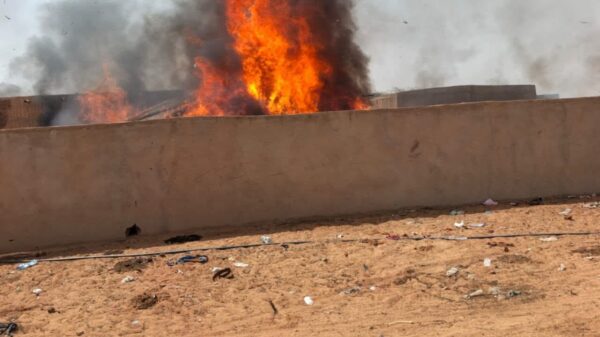
Some cities have seen clashes with police, vandalism and looting, while other demonstrations have continued peacefully. The authorities’ handling of the protests has drawn criticism from rights groups and politicians, especially after students and protesters were injured in confrontations.
On October 24, French authorities mobilized up to 70,000 police and gendarmes to confront the possibility of renewed violence, a sign of the scale of the security and political challenge the protests have become.
Here lies the dilemma for the French government under President Emmanuel Macron and Prime Minister Sébastien Lecornu: a security response may curb vandalism but does not necessarily address the causes of the protests, while delay in offering tangible social solutions may widen the circle of anger.
From Brussels to Rome and Lisbon: a crisis beyond France’s borders
The tensions are not limited to France, even if French events have drawn the most international coverage.
In Belgium, tens of thousands took to the streets of Brussels on October 9 to protest austerity measures and rising living costs, with the margins of the marches seeing clashes with police.
Italy has seen student and worker protests in several cities, including Rome, Milan and Turin, amid anger over rising energy prices, economic conditions and the state of schools. Unions have called a general strike scheduled for November.
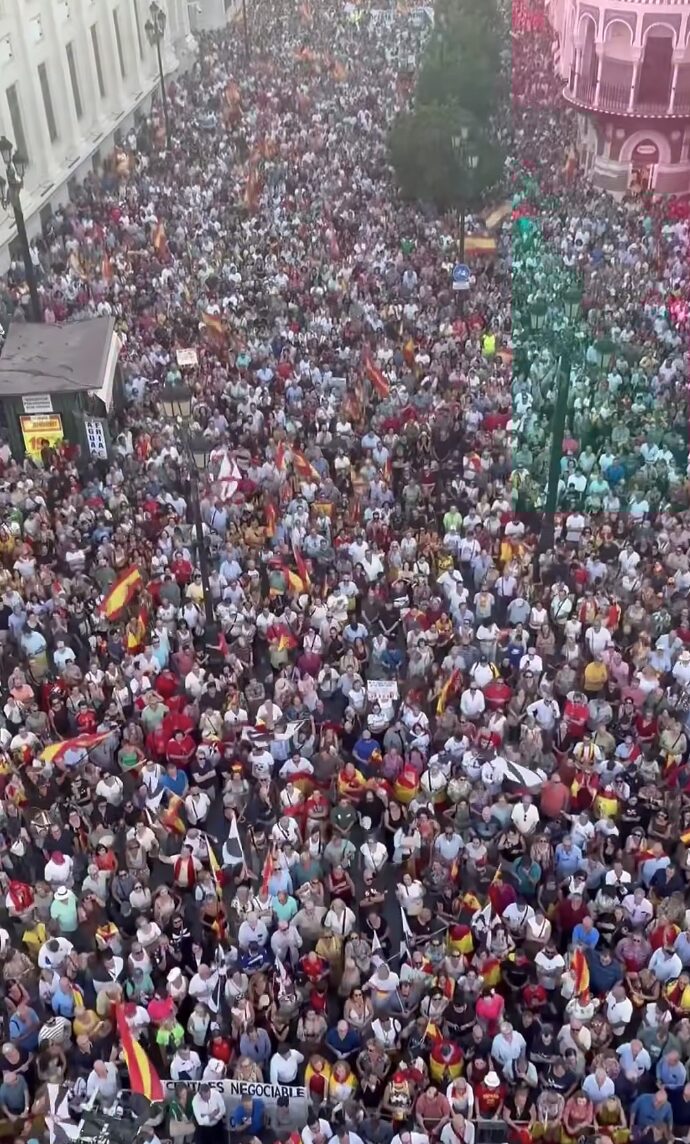
In Portugal, demands for higher wages and pensions have mixed with anger over rising property prices and rents, while protests tied to the housing crisis have appeared in Lisbon and Porto. Spain, too, has seen social action tied to the cost of living and housing, along with union calls for broader mobilization.
The coincidence of these events does not mean a unified European protest movement or a shared leadership among demonstrators; each country has its own internal conditions, unions and political disputes. But the simultaneity of the crises raises a common question: can European governments still balance fiscal discipline with the social commitments on which the welfare state rests?
Why young people lead the way
The presence of students and young people is one of the most striking features of these movements. In France, the demands began inside schools before turning into a wider debate over the future of education and the opportunities available to new generations. In other countries, the housing crisis, job insecurity and the cost of study top young people’s concerns.
The significance of the phenomenon is that it reflects an anxiety that goes beyond current economic conditions to expectations for the future. A young person who sees that education does not offer stable career prospects, and that housing has moved beyond their means, may gradually lose confidence in the ability of existing policies to improve their situation. As that feeling spreads, the protests cease to be demands for a particular service alone and become a way of expressing declining trust in political institutions.
Still, European youth cannot be reduced to a single political position. Some adopt a leftist discourse calling for expanded social spending; others are drawn to parties offering solutions based on tighter immigration policy or changed public-spending priorities; and others feel represented by none of the traditional parties.
Trump steps in: from social demands to immigration and Islam
Amid these events, U.S. President Donald Trump entered the European debate, offering a different explanation for the French protests.
On October 6, Trump attributed the unrest to immigration and Islam rather than to education-related demands, in a post on his Truth Social platform. He later renewed his criticism of European immigration policies, warning of their consequences for the continent’s future.
These remarks did not remain within the bounds of a U.S.-European spat; they entered the debate over the identity of those taking part in the violence and its causes, and supplied political material to forces that see immigration as one of Europe’s main sources of crisis.
However, the press investigations available have not offered evidence to support generalizing responsibility for the unrest to Muslim immigrants, and the protest movements’ declared demands relate in large part to education, wages, housing and the cost of living.
French Foreign Minister Jean-Noël Barrot responded to Trump’s remarks on October 7, stressing that France must craft its own narrative of what is happening in the country rather than let others define the nature and causes of events.
The confrontation reveals a new aspect of the crisis: local events in a European country can quickly become material in international political struggle, especially when interpreted through the files of immigration, religion and identity. In that sense, the dispute is no longer only about how to handle the protests, but also about who has the power to define them before the public.
Right and left: a battle over interpreting popular anger
The protests are a political test for Europe’s various forces, which are trying to deal with social anger according to their own priorities and programs.
Nationalist and hard-right parties focus on scenes of violence, declining security and criticism of immigration policy, proposing tighter security measures and border control as part of restoring stability. Some of these forces found support for their rhetoric in Trump’s remarks. In Germany, leaders of the Alternative for Germany party linked the French unrest to immigration, while Reform UK leader Nigel Farage used the events to warn against similar scenes in Britain.
By contrast, leftist forces and unions focus on the economic and social causes of the protests, calling for more investment in education, health and housing and for better wages and purchasing power. Figures from Italy’s left-wing opposition took part in wide-ranging union actions, while the French protests have become a ground of political confrontation between the government and opposition parties over education and social policy and the police’s handling of demonstrators.
But these divisions do not mean the right or the left will necessarily make electoral gains. Some voters may turn to opposition parties because of economic conditions, while fear of violence may push others toward tougher security platforms. The outcome will depend on several factors, including parties’ ability to turn their positions into convincing programs, the nature of electoral alliances, and the level of trust in their leaders.
Centrist parties face a test of trust
Governing parties and centrist forces face a different kind of challenge. They are expected at once to calm social anger, control public spending, maintain essential services, and keep demonstrations from turning into widespread violence.
In some cases, responding to any demand becomes politically or economically costly. Raising spending on public services may conflict with deficit-reduction targets, while insisting on balanced budgets may deepen tension with unions and students.
For this reason, the crisis goes beyond the popularity of any particular government, raising broader questions about the European political system’s ability to forge a new social consensus amid economic and security challenges. France is a clear example of this dilemma, especially with the 2027 presidential election approaching and the competition among right, left and centrist currents to set the next phase’s priorities.
Will the protests redraw the electoral map?
It is too early to say with certainty that the wave of protests will produce a sweeping electoral shift in Europe, particularly as political and economic crises differ between countries. But there are three tracks the events could influence:
- Bringing cost-of-living issues back to the center of electoral competition, after years in which security, immigration and international relations took up much of the political debate.
- A widening dispute over security and identity, especially if clashes and vandalism continue and become tied in political discourse to immigration and social cohesion.
- The level of trust in traditional parties. If governments fail to offer convincing responses, more room may open for opposition forces, whether from the right or the left, or for new political movements.
These possibilities take on special importance with the French election approaching and the debate continuing within the European Union over public spending, social policy and immigration.
Yet the protests, however wide, are not in themselves evidence of a unified electoral direction, nor of the end of the European democratic model. They may also push governments and parties to adjust policies and open new channels of negotiation.
A crisis in the social contract?
Current developments reveal growing tension between citizens’ expectations and the constraints facing governments. The European state, built on providing education, health care and social protection, finds itself facing growing demands at a time when its budgets are under pressure from debt, energy, security and demographic challenges.
Hence the question the protests pose is not only how much governments can spend, but how public resources are distributed, who bears the cost of economic crises, and how citizens’ trust in institutions can be maintained.
The events also reveal the complexities of handling protest in democratic societies. Peaceful protest is a fundamental right and a legitimate means of expressing demands; at the same time, authorities bear responsibility for protecting people and property and dealing with violence within the limits of the law. The challenge grows harder when peaceful protest mixes with rioting, or when broad social or religious groups are held responsible for acts not shown to be linked to them.
Bottom line: Europe between reform and polarization
Europe is not necessarily witnessing a unified revolt against its political systems, but it is going through a wave of simultaneous protests that expose deep social, economic and political challenges. In France, education comes to the fore alongside anger over living costs; in Belgium, resistance to austerity stands out; while movements in Italy, Spain and Portugal reflect pressures tied to wages, housing and public services.
Despite their differences, these movements meet at a fundamental question about governments’ ability to respond to citizens’ demands and maintain a balance between economic stability and social justice. But the protests have also become an arena of competition over how to explain the crises, where students’ and workers’ demands intersect with discourses of security, immigration and identity, and international actors step into the European debate.
In that context, the greatest challenge for European governments may not be containing demonstrations in the streets alone, but restoring confidence in their ability to manage economic and social transformation and preventing political difference from hardening into lasting polarization.
The battle under way in Europe is not merely a confrontation between protesters and police, but a wider debate over the nature of the welfare state, governments’ priorities, and the future of the relationship between citizens and their political institutions.