





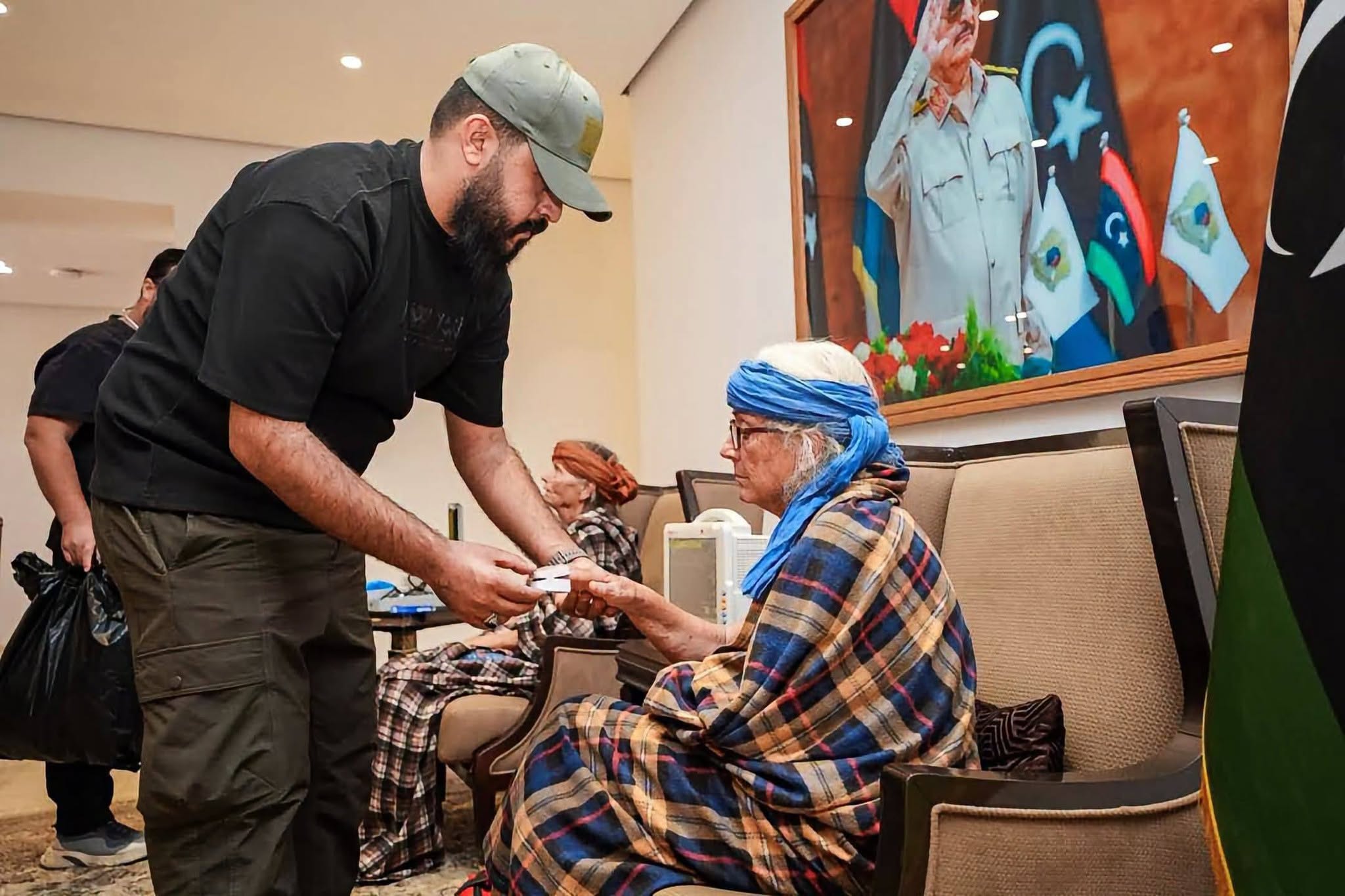
An Austrian and a Swiss woman have arrived in the eastern Libyan city of Benghazi after being released following more than a year and a half since their abduction in the northern Niger city of Agadez, while mystery still surrounds the terms of their release.
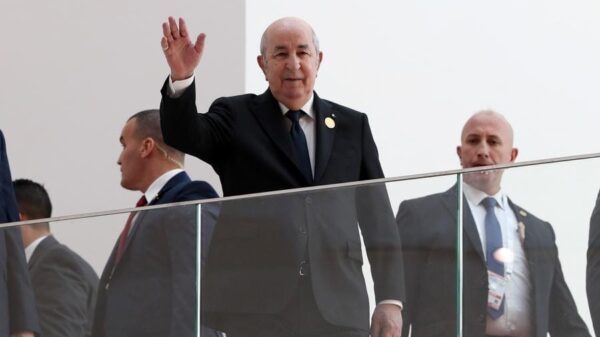
Reuters, citing two official sources who asked not to be named, reported that the women arrived in Benghazi on Wednesday, October 21, and that authorities are completing the necessary procedures before handing them over to representatives of their countries. The sources added that the operation was carried out under the supervision of Saddam Haftar, deputy commander-in-chief of the forces under the General Command in eastern Libya.
Libyan media circulated footage of the two women after their arrival in Benghazi, in which they thank Khalifa Haftar and his son Saddam for their role in securing their release.
Who are the two women?
The Austrian national is Eva Gretzmacher, a development activist who lived in Agadez for more than two decades and contributed to projects tied to education, women’s empowerment, culture and the environment.
Gunmen stormed her home in Agadez on January 11, 2025 and took her to an unknown location. Austria’s Foreign Ministry confirmed at the time the abduction of an Austrian citizen without disclosing further details, while local media named Gretzmacher.
The Swiss national is identified by local media as Claudia Abt. She was abducted from her home in the Dagamanet district of Agadez on the night of April 13, 2025.
Switzerland’s Foreign Ministry officially confirmed the abduction and the formation of a crisis team to follow the case, but declined to publish the hostage’s name or personal details, citing her privacy and safety.
Who held them?
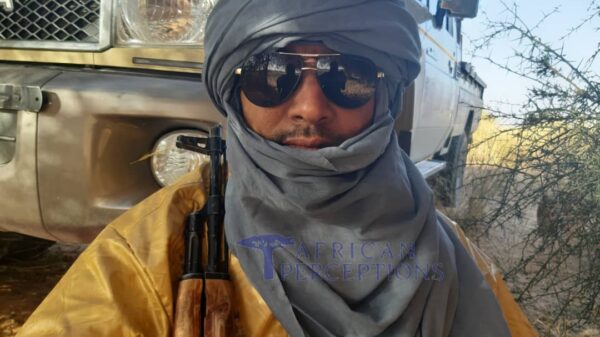
According to information obtained by African Perceptions from private sources, the group that carried out the abduction is the Islamic State in the Greater Sahara, which cooperated with the group’s branch in Nigeria to hide the two women.
Neither Austrian nor Swiss authorities have publicly disclosed the identity of the abducting group, and the nature of the negotiations that led to their release remains unclear, including whether the operation involved a ransom or other concessions.
Along the same lines, the “Libya 2030” page, which is aligned with eastern Libya’s leadership, attributed the abduction to the Islamic State in the Sahel, saying the women were moved after their release from the Sahel to Sebha, and from there to Benina airport in Benghazi under the protection of Libyan special forces.
However, the governments of Austria, Switzerland and Niger have not independently confirmed these details, and no detailed official statement has been issued specifying where they were held or how they got out of their captors’ hands.
Describing what happened as a “military liberation operation” therefore still requires further evidence, while the information available so far confirms the release and the women’s arrival in Benghazi, along with the role that anonymous official sources attributed to Saddam Haftar.
Harsh conditions of captivity and constant moves between secret sites
According to information obtained by African Perceptions from well-informed sources, the two women endured tragic conditions of captivity, chiefly being moved between secret locations for security reasons tied to concealing where they were held, under special and poor conditions.
The severity of that period was compounded, according to the same sources, by the women’s advanced age: they were cut off from their usual diet and health routine, forced to wear a particular type of clothing in harsh climatic conditions, and made to travel over rough roads between hiding places. That made the time they spent in captivity many times harder than the months alone suggest.
Benghazi as a new gateway for Sahel hostage cases?
The military leadership in eastern Libya is seeking to present the operation as evidence of its expanding security reach in the Sahel and Sahara, drawing on its control of large areas of southern Libya and its ties to local actors and cross-border networks.
This role previously surfaced in the case of American missionary Kevin Rideout, who was held by a group linked to the Islamic State in the Sahel. Reuters reported conflicting accounts of his release at the time: sources spoke of a deal and mediation involving figures with ties to armed groups and smuggling networks, while eastern Libya’s leadership said special forces carried out an operation to free him. The agency could not verify the account of a military operation.
A private source in northern Mali told African Perceptions that Saddam Haftar also led the negotiations for Rideout’s release.
According to information obtained by African Perceptions, part of Haftar’s growing influence in northern Mali and the Sahel more broadly stems from his excellent relationship with Russia’s Wagner fighters, who now operate under the cover of Russia’s Africa Corps. This was seen recently in his mediation to secure the release of two Wagner prisoners who had been captured by the Azawad Liberation Front after they attacked it in Tinzaouaten, in fighting in which dozens of them were killed and two were taken prisoner.
The repeated transfer of freed hostages through Libyan territory points to an effort by eastern Libya’s leadership to cement its position as a security broker in Sahel files, but the lack of transparency over who negotiated and the terms of release leaves open questions about the nature of this role.
Handover procedures
According to the sources, the two women are currently undergoing medical and administrative procedures before being handed over to the relevant authorities in Austria and Switzerland.
No detailed statements have yet been issued by the two governments about their health or when they will return, and Niger’s authorities have not announced the results of the investigation into the two abductions.
The ordeal that lasted more than a year and a half has thus ended for the two women and their families, while the circumstances of the release, the possible price of the operation, and the route by which they were taken to Libya remain questions without full official answers.
Source: Reuters and African Perceptions