












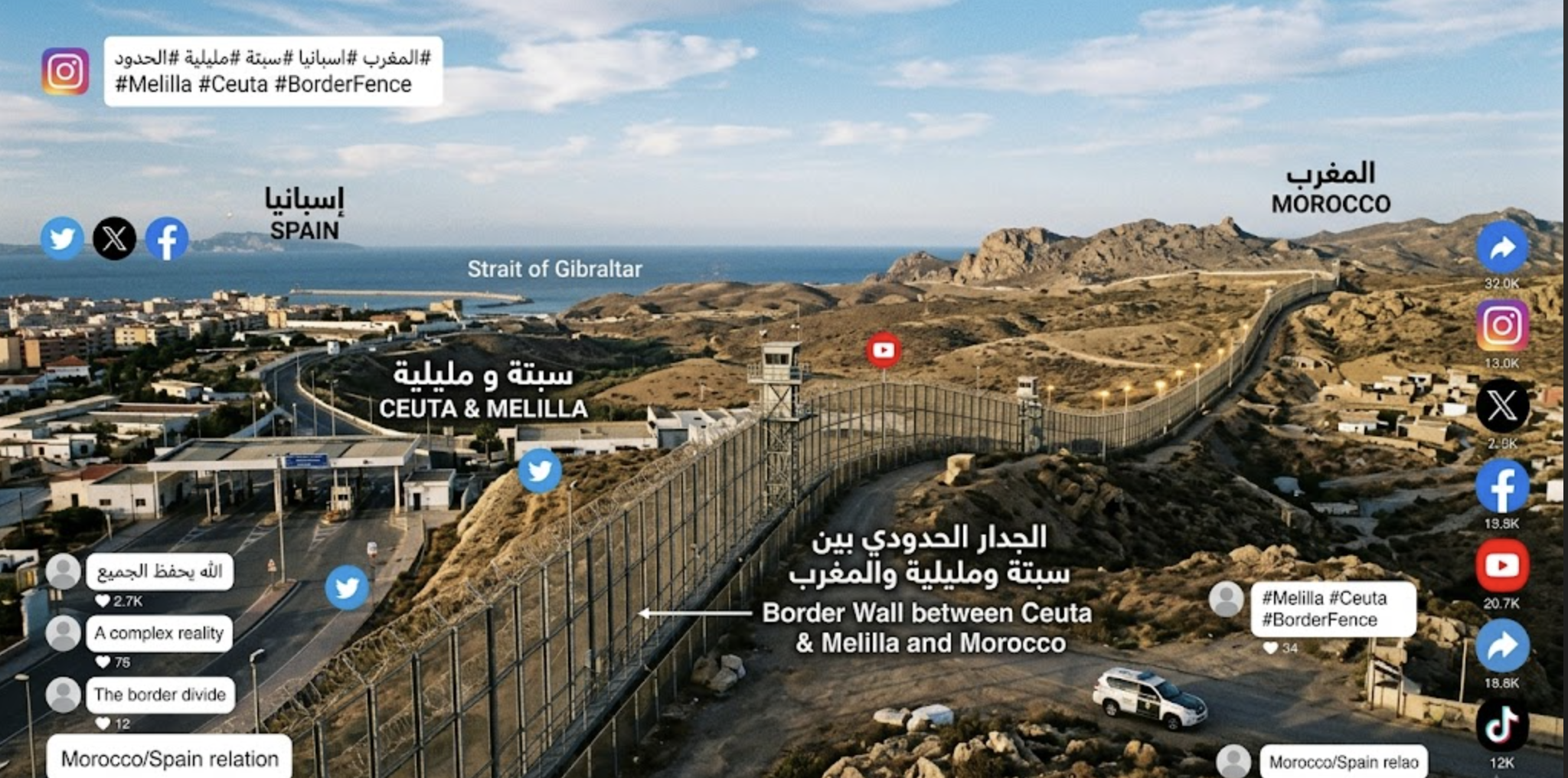
Moroccan and Spanish authorities have raised alert levels on both sides of the borders surrounding the Spanish enclaves of Ceuta and Melilla, bracing for anonymous calls circulating on social media urging a mass irregular crossing attempt on Saturday, August 15, 2026.
The preparations come barely two weeks after an unprecedented wave of crossings into Ceuta left dozens dead, threw the city into chaos, and stirred political and security tensions on both sides of the border and within the European Union.
Morocco’s interior ministry says it has taken all necessary measures to prevent any new attempt, while Spain has reinforced its ground and maritime forces and surveillance, with officials warning against being swept up by misinformation suggesting the enclaves can be reached without being sent back.
Anonymous Posts, Calls to Mobilise
Morocco’s interior ministry said it had detected posts and messages from unidentified sources in recent days inciting a mass irregular crossing into Ceuta and Melilla on August 15. In a statement issued Wednesday, the ministry said such calls pose serious risks to people’s safety and amount to an attempt to exploit migration for incitement that is punishable under Moroccan law.
Authorities have not identified who is behind the calls, nor estimated how many people might take part, and there is no official confirmation the mobilisation will materialise or how large it might be. Spanish media reports, however, have pointed to discussions within large Facebook, WhatsApp and Instagram groups referencing the date and potential routes and gathering points. A Spanish security report cited by local media described the possibility of the calls translating into an actual mobilisation as “real,” though its scale remains uncertain — cautioning that the available information comes from monitoring public online content rather than firm evidence of a centrally organised plan.
Morocco Reinforces Security
Morocco’s interior ministry said authorities are closely monitoring the situation and have taken measures to intercept participants in any irregular crossing attempt, alongside pursuing those promoting such calls online. It said a group of suspects had been detained over online incitement and referred for judicial investigation under the supervision of the relevant public prosecutor, without disclosing their number or the specific charges.
Images and footage from border areas have shown a build-up of security units and riot-control equipment, water-cannon vehicles, ambulances and crowd-management gear, concentrated particularly around Fnideq and Beni Ansar and the routes leading to the two border fences, as well as nearby beaches that could be used for attempts to swim across. The ministry stressed that the security posture is not tied solely to August 15, but forms part of an ongoing surveillance system around the Ceuta and Melilla crossings that is continuously adapted to developments and identified risks.
Spain Secures Land and Sea
On the Spanish side, the Civil Guard and National Police have stepped up monitoring of the fences, official crossing points and coastlines around Ceuta and Melilla, seeking to prevent a repeat of the chaos seen at the border in late July. Measures include increased land and maritime patrols, surveillance of approach points to the fence, heightened readiness among riot-control and rescue teams, and monitoring of social media content to gauge the scale of any potential mobilisation.
Following the recent crossing wave, Spain installed a roughly 500-metre floating barrier off the Ceuta coastline to obstruct attempts to swim around maritime barriers, while keeping the area accessible to monitoring and rescue patrols. Spain’s Civil Guard has also issued public warnings stating the border is not open, urging those considering crossing not to trust sources spreading misinformation about the ease of entering Ceuta or Melilla.
Coordination to Avoid a Repeat Crisis
Rabat and Madrid are acting proactively this time, after the late-July crisis exposed how quickly digital posts and misinformation could translate into a large, hard-to-contain human flow. Coordination between the two sides centres on monitoring border areas, sharing information on potential movements, and preparing to respond to crossing attempts by land or by sea.
Moroccan authorities say their interventions aim to protect people’s safety and public order within the law, while Madrid considers preventing crowds from forming before they reach the fence the key factor in avoiding further loss of life and disorder in the two cities. The issue nonetheless remains fraught with political and legal sensitivities, particularly regarding how those who cross are returned, the status of asylum seekers and unaccompanied minors, and ensuring migrants are not subjected to treatment that violates their rights.
Dispute Over Returning Minors
Morocco’s interior ministry has called on Spanish authorities to speed up the process of returning unaccompanied Moroccan minors currently in Ceuta to their families, urging that administrative and judicial obstacles delaying their return be overcome, while stressing the need to safeguard the best interests of the child. Spanish authorities, for their part, maintain that return requests must be assessed individually, in line with legal safeguards and child-protection rules.
Morocco reiterated its commitment to what it calls the “immediate return mechanism,” which it says has proven effective in containing flows. But its application is legally contested in Spain, particularly after a Spanish Supreme Court ruling barred the use of “pushbacks” against people intercepted at sea while attempting to swim across, requiring instead that they go through standard administrative return procedures and their accompanying safeguards.
The Memory of July’s Wave
The new state of alert follows the crisis of late July, when tens of thousands surged toward Ceuta by land and sea in a short period, driven in part by misinformation and videos that spread widely on digital platforms. That crisis demonstrated how quickly online content can mobilise large numbers of people within hours, as well as the dangers of the methods used — particularly long-distance swimming and attempts to scale maritime barriers amid dense, surging crowds. Dozens died from drowning or crush injuries, while most of those who managed to enter Ceuta returned to Morocco in the following days after facing shortages of food and shelter and difficulty reaching mainland Spain.
Authorities in both countries fear smuggling networks or unidentified actors could exploit the aftermath of that crisis to trigger a new wave, capitalising on the vulnerability of young people seeking to migrate and on the rapid spread of unreliable information.
A Security Test Before August 15
The days leading up to August 15 represent a test of Morocco and Spain’s ability to translate security coordination into preventive measures that stop large crowds from forming, without endangering people or undermining legal safeguards. While nothing confirms the calls will translate into a crossing attempt on the scale Ceuta saw before, authorities are treating them as a credible threat warranting the highest level of vigilance.
The effectiveness of these preparations will hinge on how quickly movements are detected, how well the two countries share information, how effectively digital misinformation is countered, and how crowds are managed to prevent crush incidents or participants resorting to more dangerous maritime routes. As Rabat and Madrid affirm their readiness to prevent any new breach, the clearest warning remains directed at young people: the border has not opened, reaching Ceuta or Melilla guarantees neither a stay nor onward passage to Europe, and an attempted crossing could end in death before reaching the other shore.