






Iran on Monday described the joint defence agreement signed by Saudi Arabia, Türkiye and Pakistan in Mecca as a “major shift” in regional security arrangements. Tehran also announced that it had reached an understanding with Oman on a map for ships transiting the Strait of Hormuz, while discussions on technical issues continue.
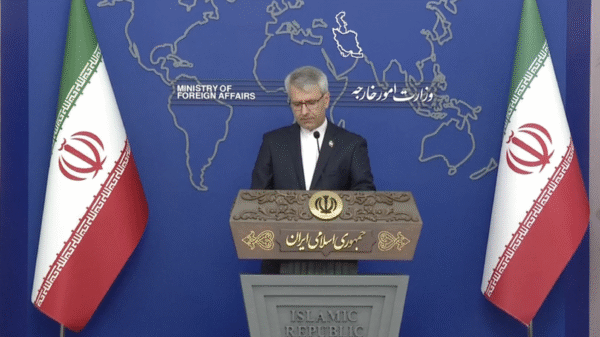
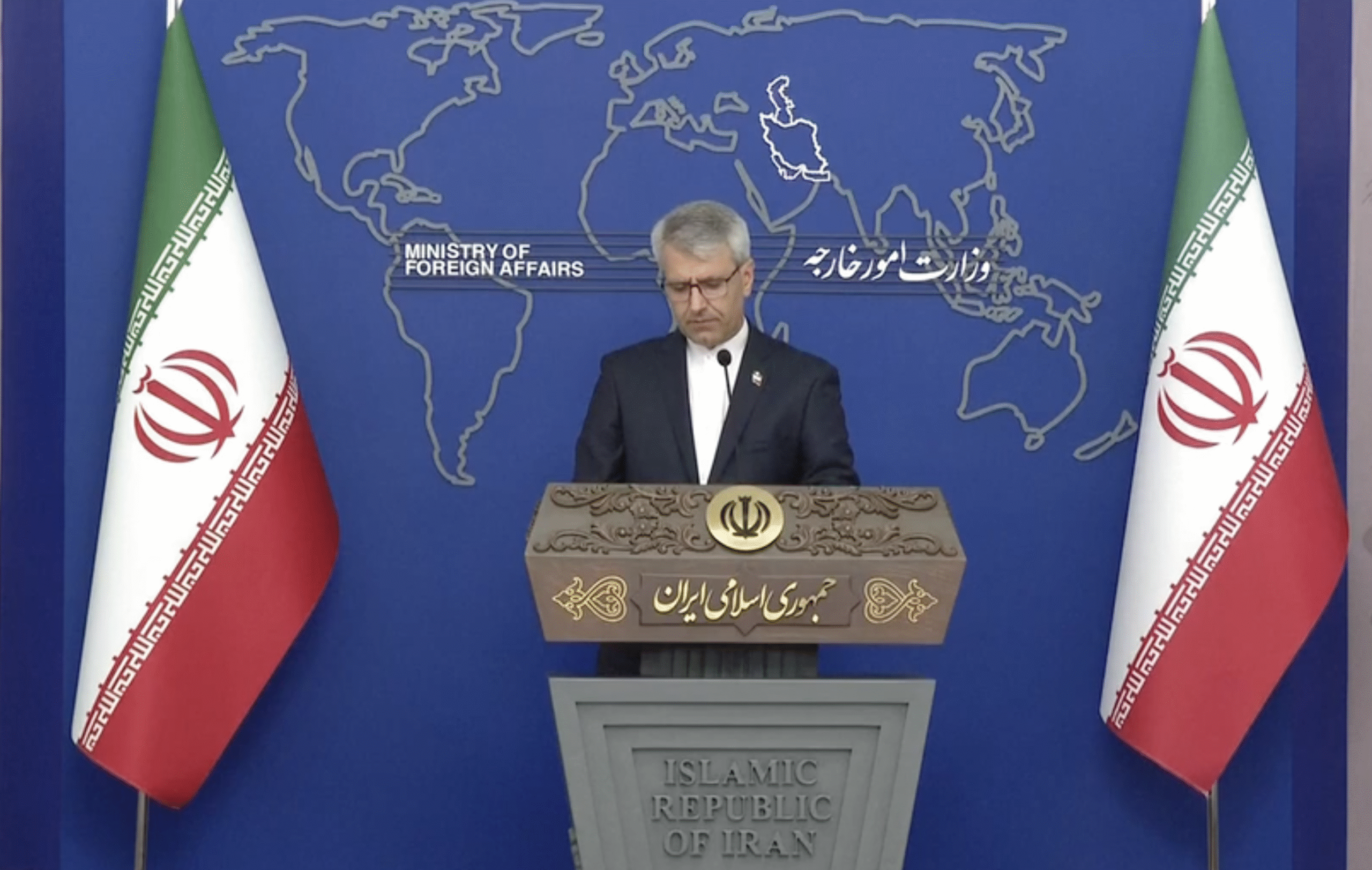
Iranian Foreign Ministry spokesman Esmail Baghaei said during a news conference that the trilateral agreement reflected a growing recognition that regional security could not depend on the United States or other outside powers.
In Tehran’s first official response to the pact, Baghaei said Iran had no reason to be concerned, noting that it maintained strong and historic relations with Saudi Arabia, Türkiye and Pakistan.
Three-country joint defence pact
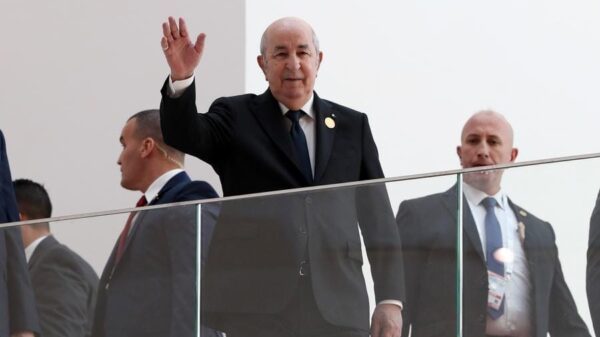
Saudi Crown Prince Mohammed bin Salman, Turkish President Recep Tayyip Erdogan and Pakistani Prime Minister Shehbaz Sharif signed the Mecca Joint Defence Agreement at Al-Safa Palace in Mecca on Friday.
The agreement aims to strengthen collective deterrence and expand defence cooperation among the three countries. It stipulates that an armed attack against any one of them will be considered an attack against all three signatories.
Baghaei urged regional countries to strengthen cooperation and mutual trust and develop their own security arrangements without relying on external powers. He described US policies as one of the causes of regional insecurity.
He also warned of what he called Israel’s “expansionist ambitions”, saying the so-called “Greater Israel” project affected several countries in the region.
Understanding on transit map
Regarding the Strait of Hormuz, Baghaei announced that Iran and Oman had agreed on a map for the passage of ships. He said discussions were continuing to resolve several technical issues before a final arrangement could be reached.
He described negotiations with Muscat as “constructive and positive”, saying they were intended to define navigation routes and regulate maritime traffic through the strait.
Reports previously indicated that Tehran and Muscat had reached an understanding on the geographical coordinates of a proposed shipping route. Its implementation, however, remained dependent on resolving technical and security details.
Iran has described the proposed southern route near Oman’s coastline as “illegal and unsafe”, while Muscat has stressed that navigation must remain subject to international law and that freedom of passage must be guaranteed.
Located between Iran and Oman, the Strait of Hormuz is one of the world’s most important maritime routes for oil and gas trade. Any disruption to shipping through the waterway can therefore have an immediate impact on international energy markets.
Mine clearance and service charges
Baghaei said mine clearance was a matter for Iran and Oman as the two countries bordering the strait. He added that fully reopening the waterway remained linked to the implementation of Tehran’s conditions while the war continued.
He said imposing transit fees on passing ships was not currently under discussion. However, mechanisms could be introduced to monitor navigation and provide maritime services, for which he said it would be natural to charge fees.
Oman, other regional states and the United States oppose charging vessels merely for passing through the strait.
Omani Foreign Minister Badr Albusaidi previously reaffirmed his country’s commitment to freedom of navigation and international law. He distinguished transit fees from optional charges for maritime, environmental and navigational services.
Indirect messages with Washington
Baghaei said the Strait of Hormuz could not become a fully secure maritime route while US policies and the naval blockade remained in place. He added that Tehran considered itself to be at war as long as what he called the “aggressive US naval blockade” continued.
He reiterated that Iran was not currently engaged in direct negotiations with the United States, but that the two countries were exchanging messages through intermediaries.
Washington has linked the lifting of its naval blockade to Iran fully reopening the Strait of Hormuz. Tehran, meanwhile, has set several conditions, including the lifting of sanctions, an end to military threats, the release of frozen Iranian assets and compensation for damage caused by previous attacks, according to Reuters.
Iran and the United States reached a memorandum of understanding in June that was intended to pave the way for a broader agreement ending the war and addressing their principal disputes, including the Strait of Hormuz and Iran’s nuclear programme.
Implementation of the initial understanding stalled after the two sides exchanged strikes again last month.
As part of wider regional diplomatic efforts, Baghaei said Pakistan had invited Iranian parliament speaker Mohammad Bagher Ghalibaf and Foreign Minister Abbas Araghchi to visit the country, adding that the visit would take place when conditions were appropriate.