

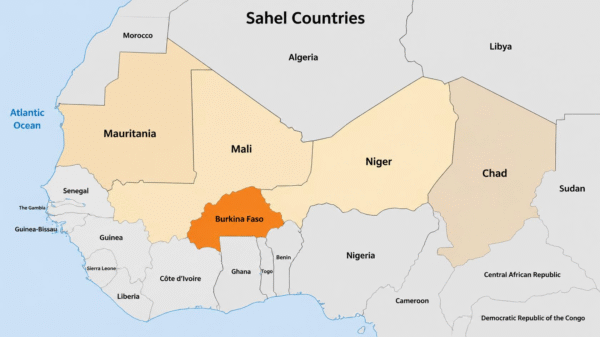






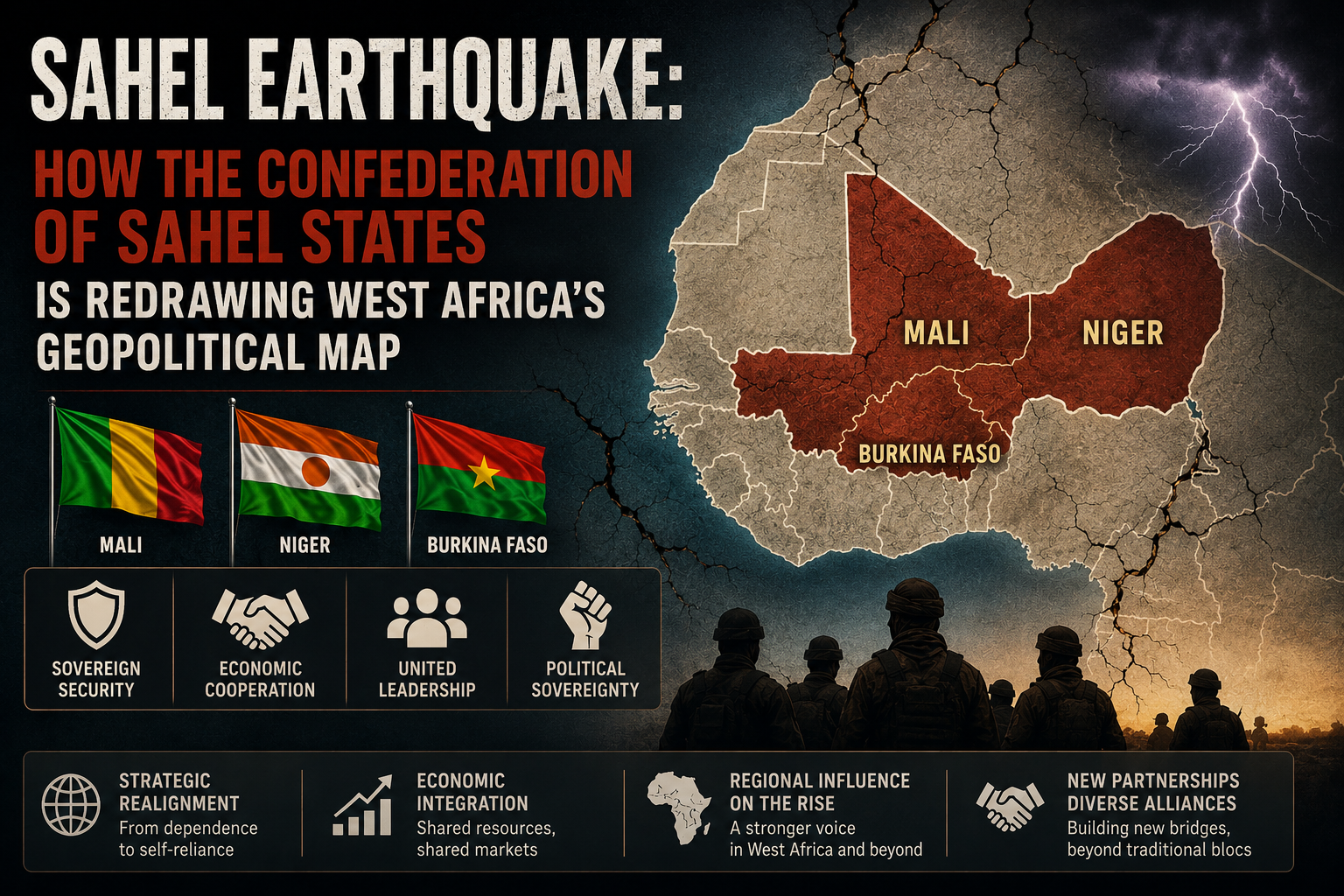
The transformations unfolding across the African Sahel are no longer merely the result of a series of military coups or deteriorating security conditions. They have evolved into a comprehensive political and geopolitical project aimed at reshaping the balance of power in West Africa. After decades of dominance by traditional regional frameworks and Western-backed security partnerships, Mali, Burkina Faso and Niger have emerged as a new political bloc seeking to build an independent sovereign space through the Confederation of Sahel States, in an unprecedented challenge to the regional order led by the Economic Community of West African States (ECOWAS).
The current landscape reflects one of the most profound political and security realignments the region has experienced since independence, as security calculations intersect with questions of national sovereignty while humanitarian crises become intertwined with growing geopolitical rivalries.
From Security Alliance to Political Project
The creation of the Alliance of Sahel States in September 2023 marked the starting point of this strategic transformation. Initially conceived as a defensive mechanism against regional and international pressure following military takeovers in the three countries, the alliance quickly evolved into a broader political project culminating in the establishment of the Confederation of Sahel States.
The political philosophy of the confederation is built on a central premise: the ruling military authorities do not view security threats solely as military challenges, but rather as the direct consequence of the failure of previous regional frameworks and the declining capacity of the state to assert its sovereignty. From this perspective, sovereignty has become the cornerstone of the new political discourse promoted by the three capitals.
This vision has gone beyond rhetoric. It has been translated into the creation of joint coordination structures and collective defense mechanisms that allow member states to intervene militarily in support of one another when faced with security threats, a step without precedent in the region’s history.
A New Security Doctrine
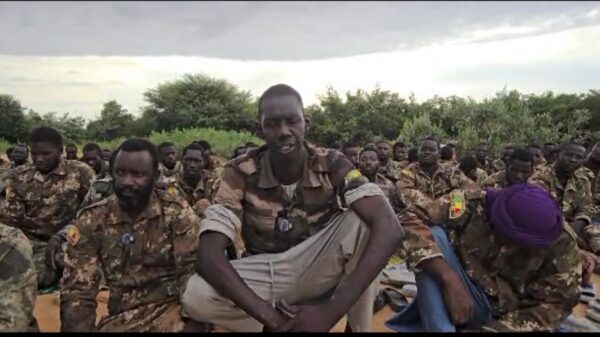
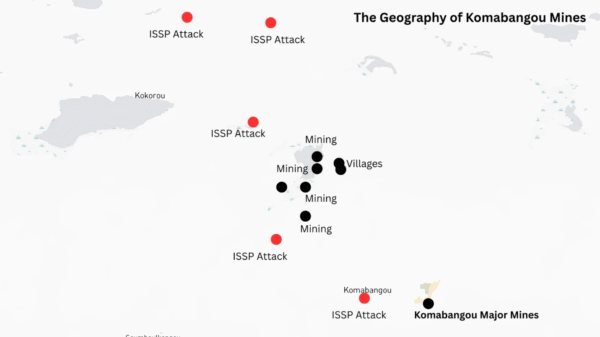
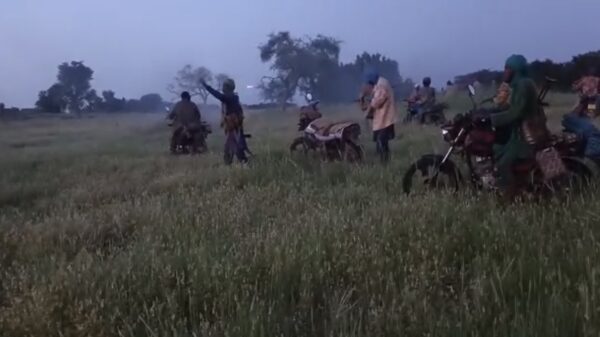
The military dimension represents the backbone of the new project. The three countries face a common adversary in armed groups affiliated with Al-Qaeda and the Islamic State, organizations that exploit porous borders and weak state institutions to expand across vast stretches of desert territory.
As a result, the three armies have moved beyond traditional border coordination toward joint military operations involving intelligence sharing, coordinated airstrikes and simultaneous ground operations along their shared frontiers.
Leaders of the three countries see the success of this approach as a decisive test for the future of the confederation itself. The legitimacy of the project depends largely on its ability to deliver tangible security gains that differ from the outcomes of previous Western-backed partnerships, which were widely criticized.
Yet significant challenges remain, including limited economic and military resources, the vast operational environment and the ability of armed groups to adapt to military pressure by moving across national borders.
The Refugee and Security Paradox
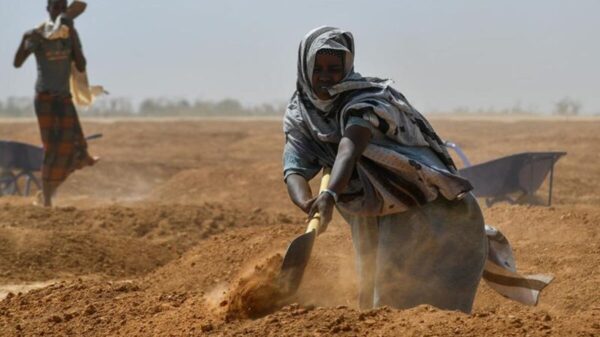
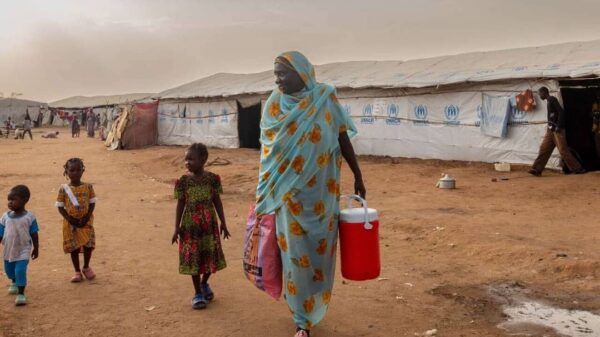
The refugee crisis highlights another layer of complexity in the current situation. While Mali continues to fight security battles on multiple fronts, it has simultaneously become a destination for tens of thousands of refugees fleeing violence in Burkina Faso and Niger.
These growing flows place additional pressure on local authorities already struggling with limited economic resources and basic services. They also create complex intelligence and security challenges, requiring governments to distinguish between civilians escaping conflict and militants who may seek to infiltrate communities through displacement routes.
This paradox reflects a fundamental reality of the Sahel: security and humanitarian crises have become so deeply interconnected that addressing one without the other is increasingly impossible.
ECOWAS Between Deterrence and Pragmatism
Meanwhile, the Economic Community of West African States has found itself facing its greatest institutional challenge since its creation. The economic and political sanctions imposed on the military governments were intended to force a return to civilian rule, but the outcome proved very different from what the organization anticipated.
Rather than yielding to pressure, Mali, Burkina Faso and Niger opted for collective withdrawal from the bloc, creating a historic precedent that shook the foundations of West Africa’s regional architecture.
With the separation formally completed in January 2025, ECOWAS was forced to move from a policy of pressure to one of managing the new reality. The objective shifted from reintegrating the three countries into the organization to minimizing the economic and security costs of the rupture.
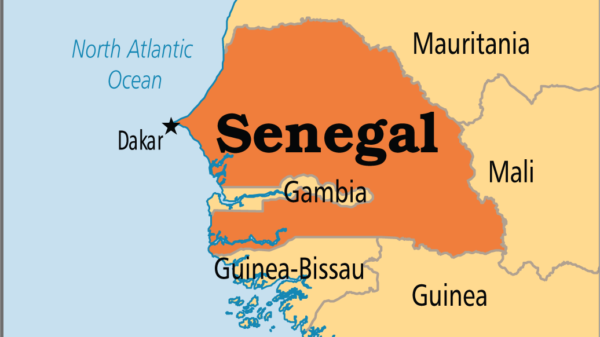
Regional mediators, including Senegalese President Bassirou Diomaye Faye and Togolese President Faure Gnassingbé, played a central role in maintaining communication channels between the two sides.
Negotiations increasingly focused on practical issues such as the free movement of people and goods, the protection of millions of citizens living outside their home countries and the preservation of a minimum level of security and intelligence cooperation against shared threats.
The International Influence Contest
Current developments cannot be understood without considering the broader international competition unfolding in Africa. The rise of the Confederation of Sahel States has coincided with the decline of traditional French influence and the expansion of new partnerships with Russia and other international actors.
Military authorities portray this shift as a recovery of national sovereignty and a break from the colonial legacy. Critics, however, argue that the region may simply be replacing one form of dependence with another without addressing the deep structural weaknesses that continue to affect Sahelian states.
The struggle underway today is therefore not only about combating armed groups but also about determining which international partners will shape the region’s future over the coming decades.
An Uncertain Future Between Ambition and Reality
The Confederation of Sahel States represents one of the most ambitious political projects in contemporary Africa. At the same time, it faces an extraordinarily difficult test. Its success will not be measured solely by its ability to challenge ECOWAS or reduce Western influence, but by its capacity to improve security, strengthen economic conditions and manage worsening humanitarian crises.
For ECOWAS, the challenge is equally existential. The organization must demonstrate its ability to preserve its relevance and cohesion after losing three countries that constitute a significant geographic and strategic component of West Africa.
Ultimately, geography appears to impose a degree of cooperation on all parties regardless of political disagreements. Armed groups do not recognize borders, while migration, trade and smuggling networks routinely transcend diplomatic divisions, making the region’s future dependent on the ability of regional actors to strike a new balance between national sovereignty and regional cooperation.
Until then, the African Sahel will remain an open laboratory for the restructuring of West Africa’s regional order and a theater of competition where questions of security, politics, identity and sovereignty continue to intersect.