









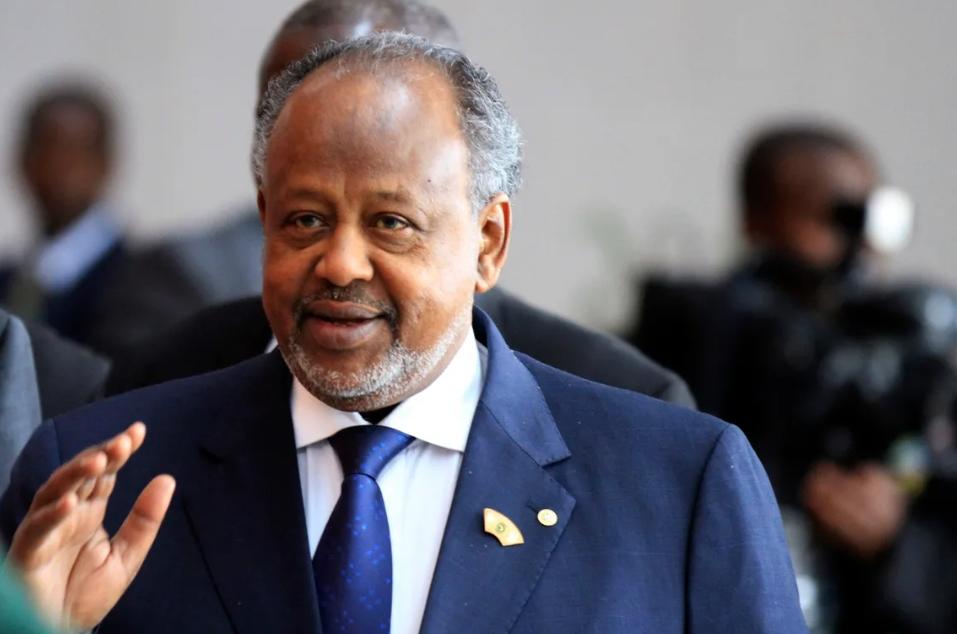
Djibouti City, April 11, 2026 — Incumbent President Ismaïl Omar Guelleh has been reelected for a sixth consecutive term following the presidential election held on April 10, according to provisional results released by the Ministry of Interior.
Official figures show that Guelleh secured 97.81% of the vote, defeating his sole challenger from the Unified Democratic Center, who received 2.19%. Voter turnout was reported at approximately 80.4%, indicating strong participation despite the largely uncontested race.
Guelleh, 78, has ruled Djibouti since 1999, when he succeeded the country’s founding president Hassan Gouled Aptidon. His latest victory extends a tenure spanning nearly three decades, reinforcing his status as one of Africa’s longest-serving leaders.
The election followed a controversial constitutional amendment in 2025 that removed the presidential age limit of 75, enabling Guelleh to run again. The move drew criticism from opposition groups and civil society organizations.
The political climate surrounding the vote was marked by tension, with several opposition parties boycotting the election over concerns about restrictions on political freedoms, limited media access, and the absence of a level playing field. Critics argue that these conditions undermined the credibility of the electoral process, while government officials rejected the claims, stating that the election was conducted in a transparent and lawful manner.
Djibouti’s strategic importance continues to attract international attention. Located at the southern entrance of the Red Sea, the country serves as a key maritime and logistical hub. It hosts military bases operated by the United States, China, France, and Japan, and functions as a vital trade corridor for neighboring Ethiopia, one of Africa’s largest landlocked economies.
While the official results confirm Guelleh’s continued leadership, the broader implications for political pluralism and governance are expected to remain under scrutiny by regional and international observers.