











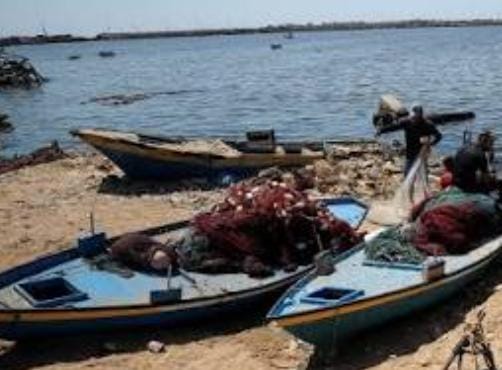
The fishing industry in the Gaza Strip has nearly collapsed, according to recent assessments by international humanitarian agencies, raising new concerns about food security and economic survival in the densely populated coastal territory.
Reports from United Nations agencies and international aid organizations indicate that the sector is now operating at only a small fraction of its pre-war capacity, with large portions of Gaza’s maritime infrastructure damaged or destroyed during the conflict.
Damage assessments conducted by humanitarian partners show widespread losses across the fishing fleet. A majority of the territory’s boats have reportedly been burned, sunk, or rendered unusable, leaving only a small number of vessels capable of operating.
The main fishing port, historically the center of Gaza’s coastal economy, has also suffered extensive destruction. The damage to docks, storage facilities, and maintenance infrastructure has severely disrupted the ability of fishermen to repair vessels or bring their catch to market.
Aquaculture facilities that once offered an alternative source of fish production have also been destroyed. The loss of these farms has eliminated an important backup supply of aquatic food for the territory.
The economic impact has been significant. International organizations estimate that the fishing sector has already suffered millions of dollars in production losses since the start of the conflict.
Access to the sea remains heavily restricted despite the ceasefire arrangements that came into effect months earlier.
Under earlier agreements, Palestinian fishermen were theoretically allowed to operate within a maritime zone extending several nautical miles from the coast. However, monitoring groups report that in practice fishing activity is limited to a much narrower area.
Fishermen say they risk interception or confrontation with naval patrols even when operating close to the shoreline.
At the same time, shortages of essential equipment continue to prevent recovery of the sector.
Humanitarian agencies report that critical materials such as boat engines, fiberglass, fuel, and fishing nets remain difficult to obtain due to restrictions on imports into the territory.
As a result, many damaged boats remain unrepaired and unable to return to service.
Human rights organizations also report that fishermen have faced significant risks during the conflict, with numerous casualties and detentions recorded over the past two years.
The collapse of the fishing industry has had direct consequences for food security.
Fish has historically been one of the most accessible sources of animal protein for Gaza’s population. With local production severely reduced, markets now rely largely on imported frozen fish, which is often far more expensive.
Humanitarian food monitoring indicates that dietary diversity in the territory has declined sharply since the conflict intensified.
For many families, the problem is compounded by the broader economic crisis.
Unemployment levels have risen dramatically, leaving households with limited purchasing power even when food is available in local markets.
International agencies warn that rebuilding Gaza’s fishing sector will require a long-term recovery effort involving infrastructure reconstruction and improved maritime access.
Experts say several key measures will be essential to restore the industry, including clearing maritime debris and unexploded ordnance from coastal waters, expanding safe fishing zones, and allowing the entry of boat-building materials and equipment.
Until such steps are implemented, aid organizations warn that Gaza’s once vital fishing economy will remain largely inactive, prolonging both economic hardship and food insecurity for the territory’s population.