











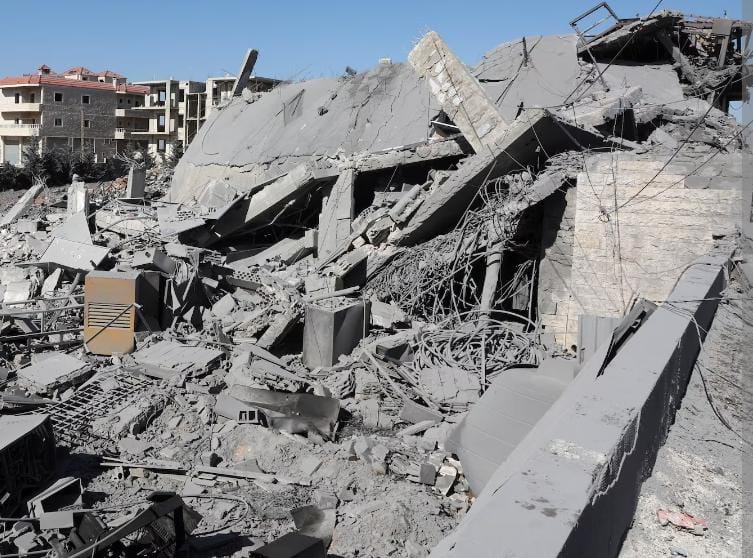
The confrontation between Israeli forces and Hezbollah has expanded deeper into Lebanese territory following a reported helicopter-borne operation carried out by Israeli special forces in the eastern Bekaa Valley.
Regional media and diplomatic sources reported that Israeli commandos conducted a night operation in the town of Nabi Chit, located far from the Israeli border and within a region historically linked to Hezbollah’s presence.
The operation reportedly involved several military helicopters that entered Lebanese airspace via neighboring territory in what appeared to be an attempt to avoid radar detection.
Local fighters were said to have confronted the landing unit near a cemetery area, triggering an exchange of fire before the Israeli forces withdrew.
During the withdrawal phase, a series of airstrikes were launched across the surrounding area, apparently intended to cover the extraction of the commando unit and suppress hostile fire.
Local media reports linked to Hezbollah said dozens of airstrikes struck nearby locations during the operation. Independent verification of the exact number of strikes and the scale of the operation remains difficult.
Regional monitoring groups indicated that several members of the Israeli unit may have been injured during the engagement, though these claims have not been officially confirmed.
The fighting comes amid a broader escalation that has sharply increased civilian suffering across Lebanon.
Health authorities said the latest bombardments across the Bekaa Valley and the southern suburbs of the capital have pushed the overall casualty toll higher.
Officials reported that more than two hundred people have been killed and hundreds wounded since the escalation intensified, while tens of thousands of civilians have been displaced from their homes.
In the town where the raid occurred, local officials said several people were killed during overnight strikes and clashes.
Across the wider confrontation involving Israel, Hezbollah and Iran-linked forces, the regional death toll has continued to rise as fighting spreads across multiple fronts.
International organizations have raised growing concern over the legal and humanitarian implications of the conflict.
The United Nations peacekeeping mission in Lebanon said it is seriously concerned about military activities and evacuation orders issued in areas north of the Litani River.
The mission warned that such actions could raise questions under international agreements that established the framework governing the ceasefire following the war fought between Israel and Hezbollah nearly two decades ago.
Lebanese authorities have urged urgent international intervention.
The country’s prime minister warned that Lebanon risks being drawn deeper into a devastating regional war as displacement grows and the humanitarian situation deteriorates.
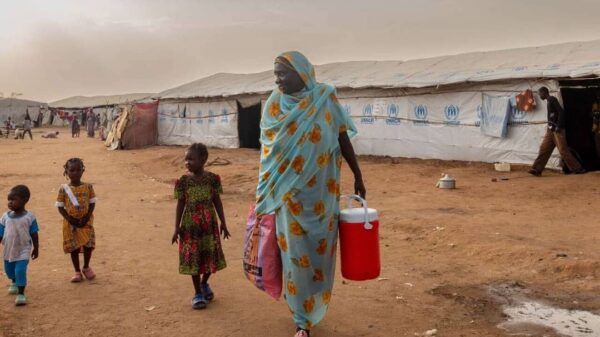
Officials said the country’s already fragile infrastructure is struggling to cope with the influx of displaced families fleeing bombardment in southern regions and around the capital.
Meanwhile, forces linked to Hezbollah and Iran have continued to launch missile and drone attacks toward Israeli military targets.
Air defense systems in several regional capitals reportedly intercepted incoming projectiles during overnight alerts, with authorities reporting only limited damage from falling debris.
Analysts say the raid in the Bekaa Valley represents one of the deepest incursions into Lebanese territory since the latest escalation began.
The operation highlights the increasingly regional nature of the conflict as hostilities expand beyond traditional front lines and spread across several countries in the Middle East.
Diplomatic efforts aimed at halting the fighting have so far failed to produce a breakthrough.
Humanitarian organizations warn that unless a ceasefire is reached soon, civilian casualties and displacement across the region could rise significantly in the coming days.