








Syria has undergone a major shift in both its military and political landscape, as government forces advanced into former Kurdish-held areas east of Aleppo while the country’s new leadership issued an unprecedented decree formally recognising Kurdish rights.
The developments come exactly one year and one month after the fall of the government of Bashar al-Assad in December 2024, marking a defining moment in Syria’s fragile post-war transition.
Syrian Army Advances East of Aleppo
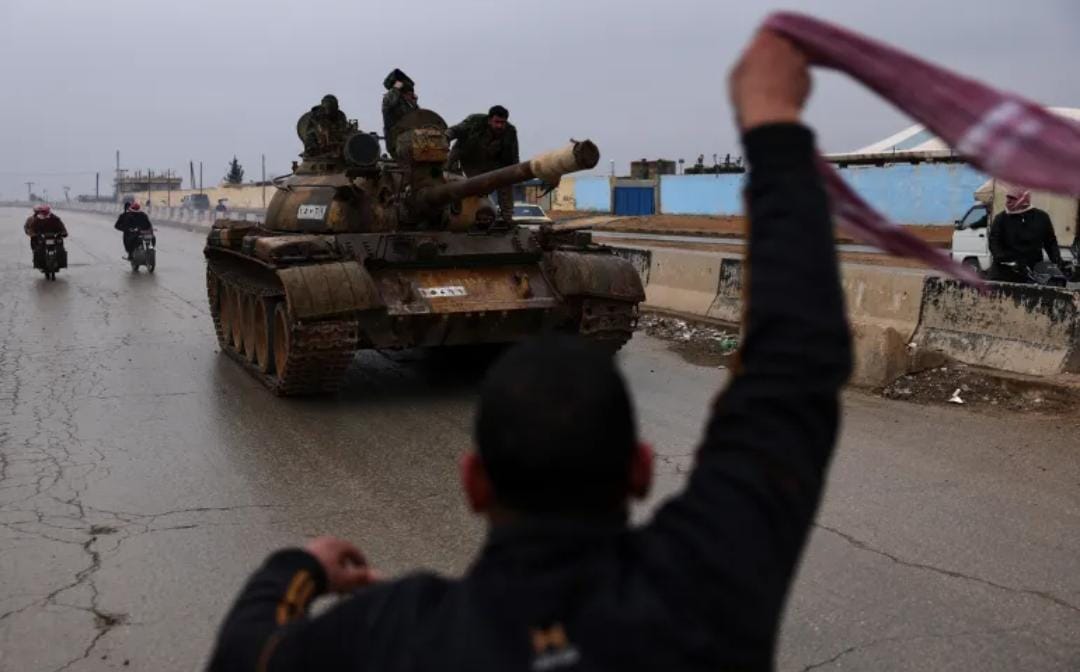
After a week of heavy clashes inside Aleppo city, the Syrian Arab Army (SAA) secured wide territorial gains in the eastern countryside previously controlled by the Kurdish-led Syrian Democratic Forces (SDF).
Military officials said government troops captured 34 villages and towns, establishing full control over Deir Hafer, Maskana and the Jarrah Military Airport.
The advance followed a statement by SDF commander Mazloum Abdi, who said Kurdish forces would withdraw to the eastern bank of the Euphrates River to avoid further escalation. However, both sides later accused each other of violating the withdrawal arrangement.
State media reported that two Syrian soldiers were killed near Maskana after an army patrol was targeted during the handover process. The SDF, for its part, accused government forces of entering towns before Kurdish units had fully withdrawn, warning that the situation was “highly dangerous” and risked unintended clashes.
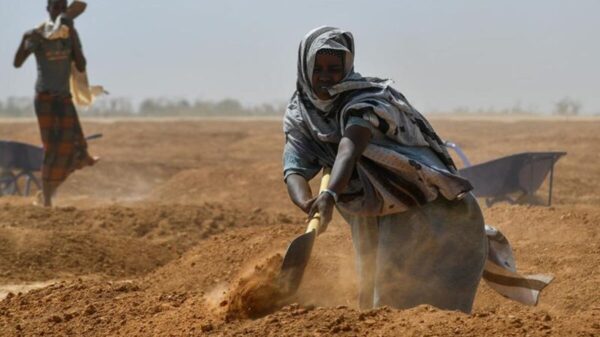
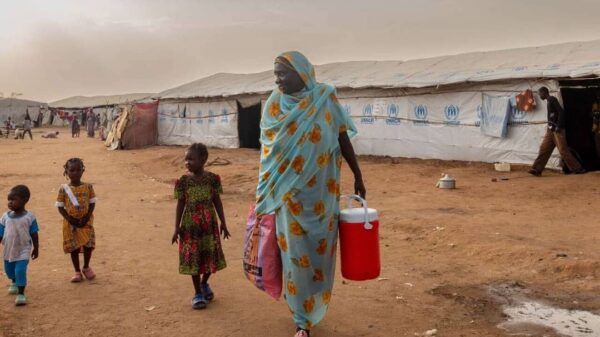
Despite security warnings, early signs of civilian return were reported. Families were seen arriving in Deir Hafer in pickup trucks carrying household belongings, even as authorities warned that mines and unexploded ordnance remain widespread.
Historic Decree Recognises Kurdish Rights
In a parallel political move, President Ahmed al-Sharaa issued Decree No. 13 of 2026 on Jan. 16, a step described by officials and observers as historic.
For the first time in Syria’s modern history, Kurdish was recognised as a national language authorised for instruction in schools in predominantly Kurdish areas. The decree also restored citizenship to Kurds stripped of nationality under the 1962 census laws, a measure affecting an estimated 20% of Syria’s Kurdish population.
In addition, March 21, marking Nowruz, was declared a national holiday symbolising unity and brotherhood among Syria’s diverse communities.
Kurdish administrative bodies welcomed the decree as a positive first step, while noting that it falls short of long-standing demands for a decentralised federal system.
A Fragile Post-Assad Landscape
Despite diplomatic progress, including partial sanctions relief and Syria’s gradual re-entry into international forums, the country remains deeply fractured.
Monitoring groups say sectarian violence continues in several regions, with more than 1,400 Alawites and 2,000 Druze killed in waves of unrest over the past year.
The developments in Aleppo and Damascus underscore the challenge facing the al-Sharaa administration: consolidating territorial control while pursuing political reconciliation after more than a decade of war.
Wider Regional Context
The changes in Syria come amid shifting regional diplomacy. Separately, U.S. President Donald Trump has invited the leaders of Türkiye and Egypt to join a proposed Gaza “Board of Peace” established under UN Security Council Resolution 2803.
Analysts say the parallel initiatives point to broader efforts to redraw political arrangements across the post-conflict Middle East.
Uncertain Road Ahead
While the military gains east of Aleppo strengthen Damascus’s territorial position and the Kurdish decree signals a move toward inclusive governance, Syria’s path to lasting stability remains uncertain.
Mine clearance, humanitarian assistance for returning families and negotiations over Kurdish political autonomy are expected to shape the next phase of the country’s fragile recovery.