















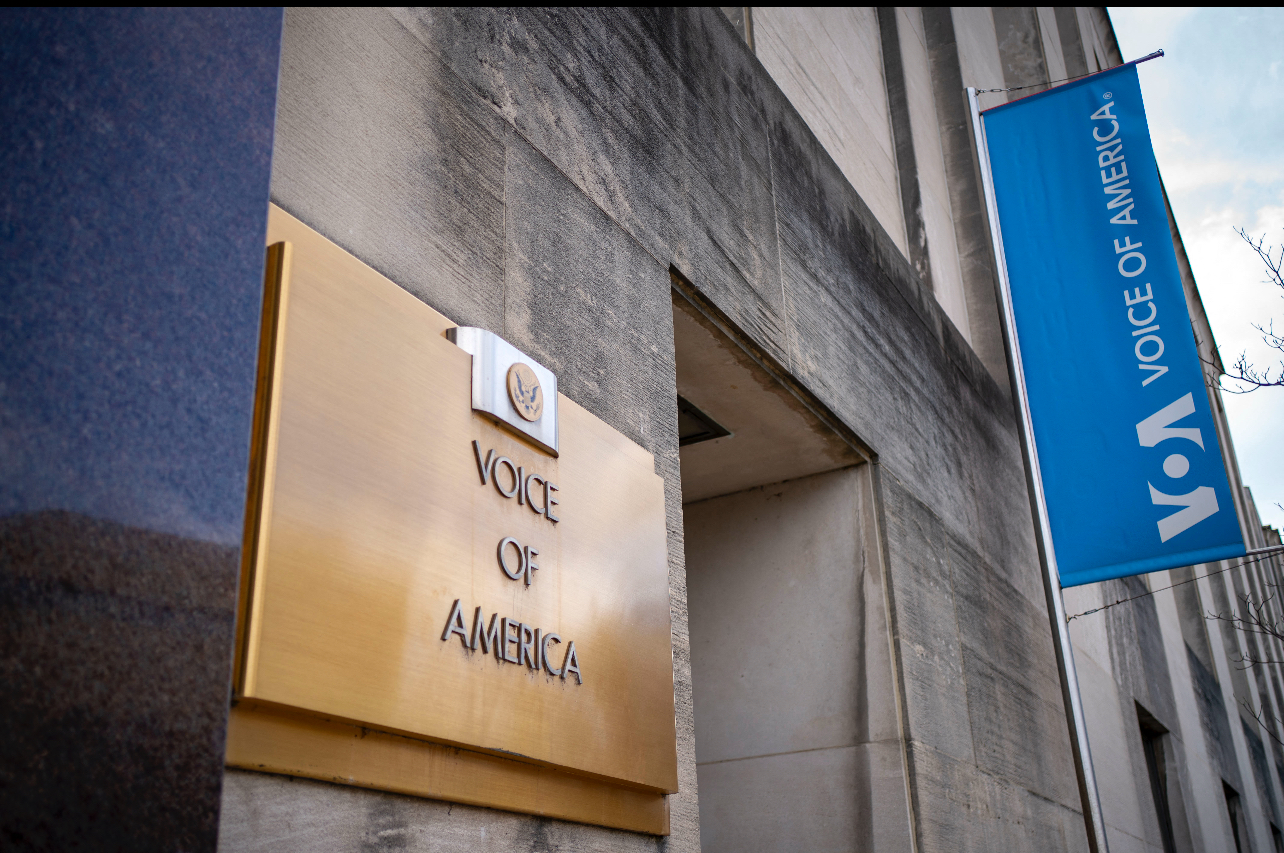
In a sweeping move that reignited concerns about press freedom, the Trump administration ordered on Friday the mass dismissal of journalists and staff at Voice of America and other U.S. government-funded media outlets. The decision drew sharp criticism, as it came amid rising global tensions and increasing propaganda efforts by U.S. adversaries.
1,400 Jobs Cut — Bureaucracy or Blow to Democracy?
Carrie Lake, a senior official at the U.S. Agency for Global Media (USAGM), defended the layoffs as a “long-overdue effort to dismantle an oversized and unaccountable bureaucracy.” She claimed the shake-up was intended to modernize the way America tells its story—aligning it more closely with U.S. foreign policy objectives.
On Friday, 639 employees were served termination notices, following earlier voluntary resignation offers and contractor dismissals. The agency has reportedly eliminated nearly 1,400 positions, leaving only about 250 remaining.
Targeting the Persian Division — Politics Meets Journalism
Among the most affected was the Persian-language division, whose journalists had recently been reinstated to cover fallout from the Israeli strike on Iran. The abrupt reversal from rehiring to termination sparked questions about the growing politicization of editorial decisions.
Legal Action: “Don’t Silence America’s Voice”
In response, staff filed a lawsuit challenging the move, noting that Congress had already allocated funding for the broadcaster. “Moscow, Beijing, Tehran, and extremist groups are flooding the information space with anti-American propaganda. Don’t surrender this right by silencing Voice of America,” read the statement.
Some Stations Survive — Others Gutted
While Radio Martí, which targets Cuba, survived the purge, Radio Free Asia is now operating under limited capacity. Radio Free Europe continues only thanks to financial support from the Czech government.
Donald Trump had repeatedly criticized U.S. media outlets, often mocking Voice of America’s editorial independence—seen as a barrier to tighter government control over narratives