








The confrontation involving the United States Israel and Iran intensified sharply after Israel announced a new wave of large scale airstrikes targeting Iranian military and government infrastructure widening a conflict that has already destabilized much of the Middle East.
The Israeli military said it carried out a wide wave of strikes against what it described as regime infrastructure in western parts of Iran. The operation followed earlier strikes in Isfahan province where Iranian authorities reported that an attack on an industrial facility killed at least fifteen people.
Israeli officials say the strikes form part of a coordinated campaign aimed at weakening Iran’s strategic military capabilities.
Officials in the United States say the broader campaign seeks to dismantle Iran’s missile and nuclear infrastructure.
President Donald Trump and Secretary of State Marco Rubio have said the operation aims to eliminate Iran’s ballistic missile program and prevent Tehran from acquiring nuclear weapons while describing the campaign as a preventive measure designed to neutralize long term regional threats.
Iran’s Islamic Revolutionary Guard Corps said it responded by launching what it described as its fiftieth wave of retaliatory strikes.
Regional defense officials reported missiles and drones fired toward Israeli territory including areas around Tel Aviv while additional attacks targeted United States military facilities in Bahrain Kuwait and the United Arab Emirates.
Military analysts warn that continued cycles of retaliation could draw additional regional actors into the confrontation.
Health authorities and international organizations report significant casualties across several affected areas.
Available figures indicate that Iran has recorded one thousand four hundred forty four deaths and more than eighteen thousand five hundred injuries including at least two hundred two children. Two hundred twenty three women have also been reported killed and more than one thousand four hundred others injured.
In Lebanon the health ministry reports eight hundred twenty six deaths and more than one thousand nine hundred thirty three injuries.
Israeli authorities say twelve civilians and two soldiers have been killed while the United States military has confirmed the deaths of thirteen service members since the escalation began.
Humanitarian officials say the toll could rise further as rescue operations continue in several heavily affected areas.
Civilian infrastructure has also suffered extensive damage.
Iranian authorities say one hundred fifty three health facilities have been damaged since the start of hostilities while in Lebanon forty eight primary healthcare centers and five hospitals have been forced to close due to security concerns.
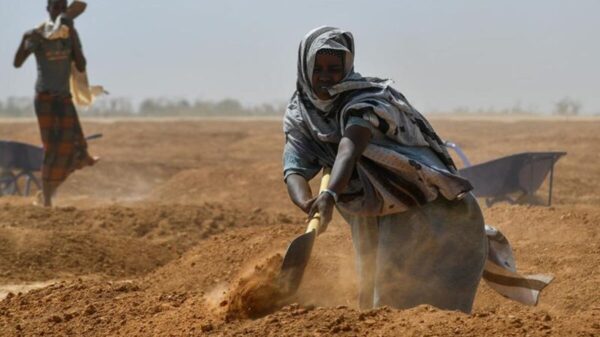
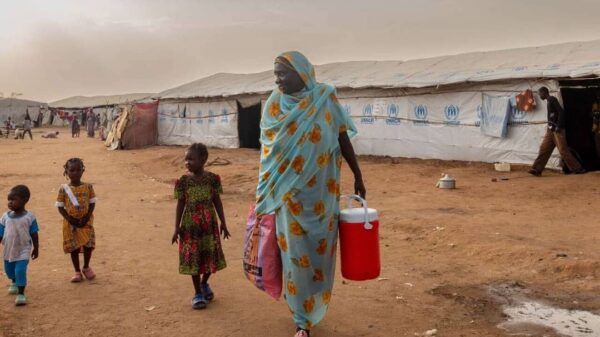
The United Nations refugee agency estimates that up to three point two million people have been displaced inside Iran while about eight hundred thirty thousand people have been displaced in Lebanon.
Iranian officials also reported damage to fifty six historical and cultural sites including landmarks at Golestan Palace and Naqsh e Jahan Square.
Diplomatic efforts to de escalate the conflict appear stalled.
Officials in Washington have reportedly rejected mediation proposals from Oman and Egypt stating that the United States would only consider negotiations under conditions of unconditional surrender from Tehran.
In a military assessment United States Defense Secretary Pete Hegseth said recent strikes have significantly degraded Iran’s military production capacity.
According to Pentagon estimates Iranian missile production has fallen by about ninety percent while drone manufacturing capability has declined by roughly ninety five percent as a result of the sustained campaign.
The conflict is also affecting global markets.
Shipping traffic through the Strait of Hormuz a critical corridor for global oil supplies has been heavily disrupted contributing to rising energy prices worldwide.
Security concerns have also affected international sporting events with several competitions planned in the region postponed or canceled.
Security analysts warn that the confrontation is entering a highly volatile phase as continued missile exchanges growing humanitarian pressures and the absence of active diplomatic channels raise fears that the conflict could expand into a broader regional war.