











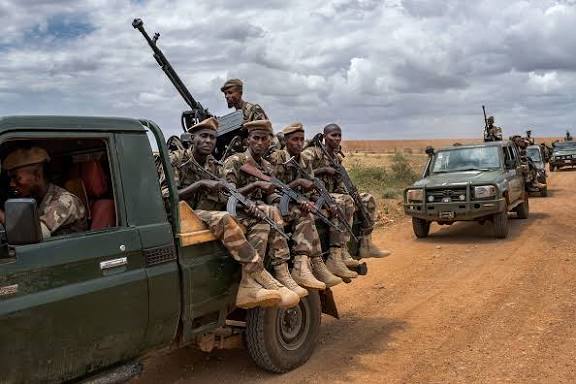
In early December 2025, the Southern Transitional Council (STC) launched a swift military campaign dubbed “Operation Promising Future,” seizing large areas in the southern governorates of Hadramout and Al-Mahra—resource-rich regions bordering Saudi Arabia and the Sultanate of Oman.
The operation included the takeover of key cities such as Seiyun and Tarim, control over vital oil facilities in the Al-Masila area, and access to the strategic port of Al-Mukalla.
The STC stated that the operation aimed to “restore sovereignty,” “cleanse the areas of terrorist groups,” and cut arms smuggling routes.
These moves sharply escalated tensions with the internationally recognised Yemeni government based in Aden and backed by Saudi Arabia. The head of the Presidential Leadership Council, Rashad al-Alimi, accused the United Arab Emirates of exerting pressure on the STC and directing it to undermine state authority.
In response, the Yemeni government announced a series of decisive measures on 31 December 2025, including the declaration of a nationwide state of emergency for 90 days, the imposition of a 72-hour air, sea and land blockade, the cancellation of the joint defence agreement with the UAE, and a 24-hour deadline for Emirati forces to leave Yemeni territory.
The crisis escalated into an open regional confrontation when Saudi Arabia, the main pillar of the coalition, accused the UAE of backing the STC, describing such support as “extremely dangerous” and a direct threat to Saudi national security, which it declared a “red line.”
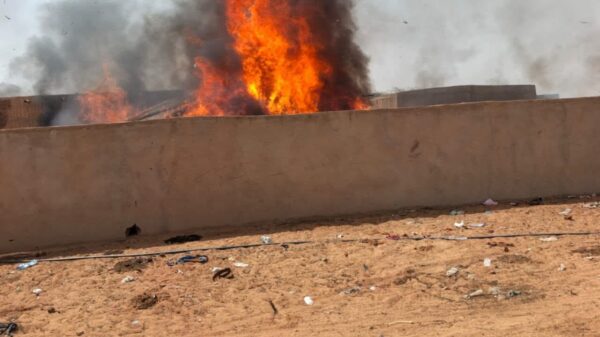
Tensions peaked on 30 December when the Saudi-led coalition carried out an airstrike on Al-Mukalla port, claiming that two vessels arriving from the UAE had unloaded weapons and military vehicles to support the STC without coordination.
The UAE denied the allegations, announcing the termination of its remaining counterterrorism units in Yemen “of its own accord,” and reiterating that it had ended its primary combat military presence in 2019.
This escalation reflects a deep rift within a partnership that had united Saudi Arabia and the UAE since 2015 in the fight against the Houthis. Riyadh has adopted a clear stance in support of Yemen’s unity and sovereignty, viewing any separatist move as a direct threat to its national security—particularly in sensitive border regions such as Hadramout.
By contrast, the UAE’s support for the Southern Transitional Council, which seeks to re-establish an independent southern state, is widely seen as part of a broader regional influence strategy.
This divergence has transformed the nature of the alliance, placing Saudi- and Emirati-backed forces in a situation of near-direct confrontation in southern Yemen.
Amid growing risks, regional and international actors have called for de-escalation. U.S. Secretary of State Marco Rubio discussed the situation with his Saudi and Emirati counterparts, expressing concern and urging restraint.
Gulf states such as Oman and Kuwait also called for dialogue and political solutions, while the Organisation of Islamic Cooperation stressed that Saudi Arabia’s security constitutes a “red line.”
In this context, an STC spokesperson stated that southerners had become “more determined than ever to restore the state,” adding that separation would occur when the “appropriate historical moment” emerges at both regional and international levels.
Meanwhile, Saudi Arabia and the Yemeni government continue to press for the STC’s full withdrawal from the areas it has seized, with the option of turning to the UN Security Council to impose sanctions remaining firmly on the table.