








Bamako — Mali’s fuel crisis has rapidly evolved from a mere economic challenge into a strategic battle that strikes at the very core of the nation’s education system. As fuel supplies shrink and energy infrastructure falters, schools and universities are finding themselves on the front lines of a broader conflict that seeks to weaken state authority by disrupting access to learning.
Over recent weeks, numerous educational institutions across Bamako and other major cities were forced to close for extended periods. With public and private transportation paralyzed, teachers and students simply could not reach classrooms. Compounding the crisis, frequent power outages disrupted digital learning environments, laboratories and essential campus services — pushing thousands of students into an enforced academic standstill.
Even as classes resume partially in the capital, the return is marked by difficulty and exclusion. Transportation costs have surged as fuel prices skyrocket on the black market, forcing students — especially those from low-income families — to choose between attending school and supporting their households. Long queues at petrol stations have made the simple act of commuting a daily struggle.
Beyond Bamako, the situation is far worse. In regions where key transport routes remain vulnerable to armed attacks, many vehicle operators have stopped operating altogether. Students from rural and semi-urban communities who were once able to travel daily now face a stark choice: risk their personal safety or abandon their studies. Lecture halls are reopening, but they are half-empty — a visible reminder of an education system under siege.
International and regional organizations have sounded the alarm. UN agencies warn that the fuel shortage endangers not only education but also hospital operations and water treatment facilities in the capital itself. The Africa CDC cautions that disruptions to sample transport could undermine epidemiological surveillance, especially amid recent outbreaks in the region. The crisis, therefore, jeopardizes both the right to learn and the ability to protect public health.
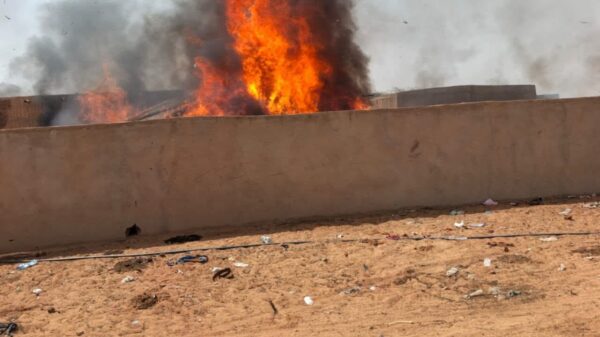
Security analysts argue that armed groups, chiefly JNIM and Katiba Macina, have shifted tactics toward economic strangulation — targeting fuel supply lines rather than attempting direct military control. By choking transportation, they aim to paralyze daily life, intensify public discontent and erode the ruling military authority’s claim to legitimacy — all without seizing a single city.
At the same time, the government’s reliance on Russian-aligned forces to secure main roads has failed to reassure the population. Instead, the spread of violence toward southern, densely populated regions has widened public mistrust and left the state increasingly isolated following its withdrawal from ECOWAS.
Education is emerging as the most vulnerable casualty of this strategy. Each day of suspended classes deepens learning deficits, fuels dropout rates and widens the divide between students in Bamako and those in the interior. For a generation already shaken by years of instability, this crisis threatens long-term personal and economic prospects.
In Mali today, the attack on fuel supply is, in truth, an attack on the classroom. And if the government fails to restore stable access to transport and energy soon, the country risks losing not only the academic year — but an entire future workforce.