

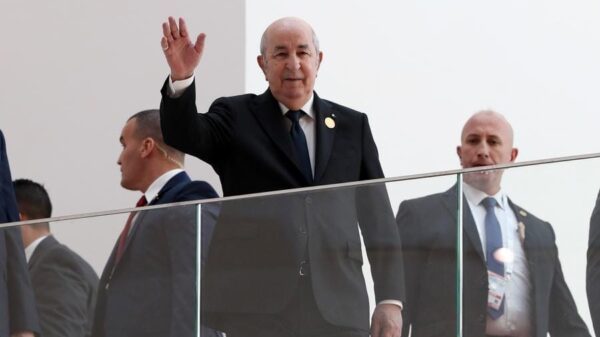





In a moment that highlighted the growing importance of regional energy cooperation, Spain’s Prime Minister Pedro Sánchez publicly thanked Morocco and France for their critical support during a massive power outage that affected large parts of the Iberian Peninsula earlier this week.
Speaking at a press conference, Sánchez emphasized that the swift restoration of electricity in southern and northern Spain was made possible “thanks to the interconnections with France and Morocco — two countries I wish to sincerely thank for their solidarity in this moment.”
A Swift Response from the South
According to Spanish newspaper El País, Morocco played a pivotal role in helping stabilize the Spanish electricity grid. On Monday afternoon, the North African country mobilized nearly 38% of its national energy production capacity to transmit power across the Strait of Gibraltar, using the existing interconnection lines between the two nations.
These lines — operational since 1997 and upgraded in 2006 — enable a capacity of up to 1,400 megawatts, providing a crucial energy lifeline during times of crisis. A third line is currently under development as part of an ongoing agreement signed in 2020, with completion expected by 2026.
The Moroccan National Electricity Office responded promptly to an emergency request from Spain’s electricity operator, transferring power through the undersea cables that link Fardioua in northern Morocco to Tarifa in southern Spain.
Avoiding a Worsening Crisis
The blackout that affected Spain, Portugal, and parts of France led to widespread disruption, including halted rail traffic, grounded flights, and disconnected telecommunications. Morocco’s rapid intervention helped restore supply to key areas in southern Spain within hours, underscoring the strategic value of energy interdependence.
Notably, despite its connection with the Spanish grid, Morocco itself remained unaffected by the outage — a result of the use of direct current (DC) interconnections, which act as a safeguard preventing disturbances from spilling over across borders.
More Than Just Solidarity: Mutual Interests
Energy expert Amine Bennouna noted that Morocco’s participation in the European electricity market is governed by commercial agreements. The North African nation both exports and imports electricity from Spain, depending on market prices and national demand. In 2023, Morocco imported over 2,300 gigawatt-hours from Spain while exporting just under 500 — a clear indication of the two-way nature of this partnership.
Morocco’s increasing reliance on renewable energy, including major solar farms like Noor Ouarzazate and Midelt, often leads to surplus electricity production. These green energy surpluses cannot be stored efficiently and are best utilized through export — primarily to Spain and, in the near future, to Portugal through a newly announced interconnection project.
The Road Ahead: Lessons and Challenges
The recent crisis revealed vulnerabilities in Spain’s emergency preparedness, especially in high-risk facilities such as data centers, airports, and hospitals. Energy expert Driss Mellouki argues that while backup generators are important, they are often insufficient to cover large-scale outages. This incident, he says, should prompt Spain and its neighbors to strengthen cross-border infrastructure and enhance energy resilience strategies.
With Spain, Portugal, and Morocco co-hosting the 2030 FIFA World Cup, regional energy security will become even more critical. The expected surge in energy consumption during the tournament will require robust, flexible, and interconnected electricity networks — not only to prevent blackouts but to ensure sustainable energy distribution.
Conclusion
Morocco’s role in Spain’s electricity emergency is more than just a newsworthy event — it is a case study in regional cooperation, infrastructure readiness, and the potential of renewable energy partnerships. As global energy challenges mount, the lesson is clear: interdependence is not a weakness — it’s a strength.