












Nigeria has launched a voluntary evacuation program for its citizens in South Africa following a renewed wave of xenophobic violence that has raised fears of a repeat of previous anti-immigrant attacks.
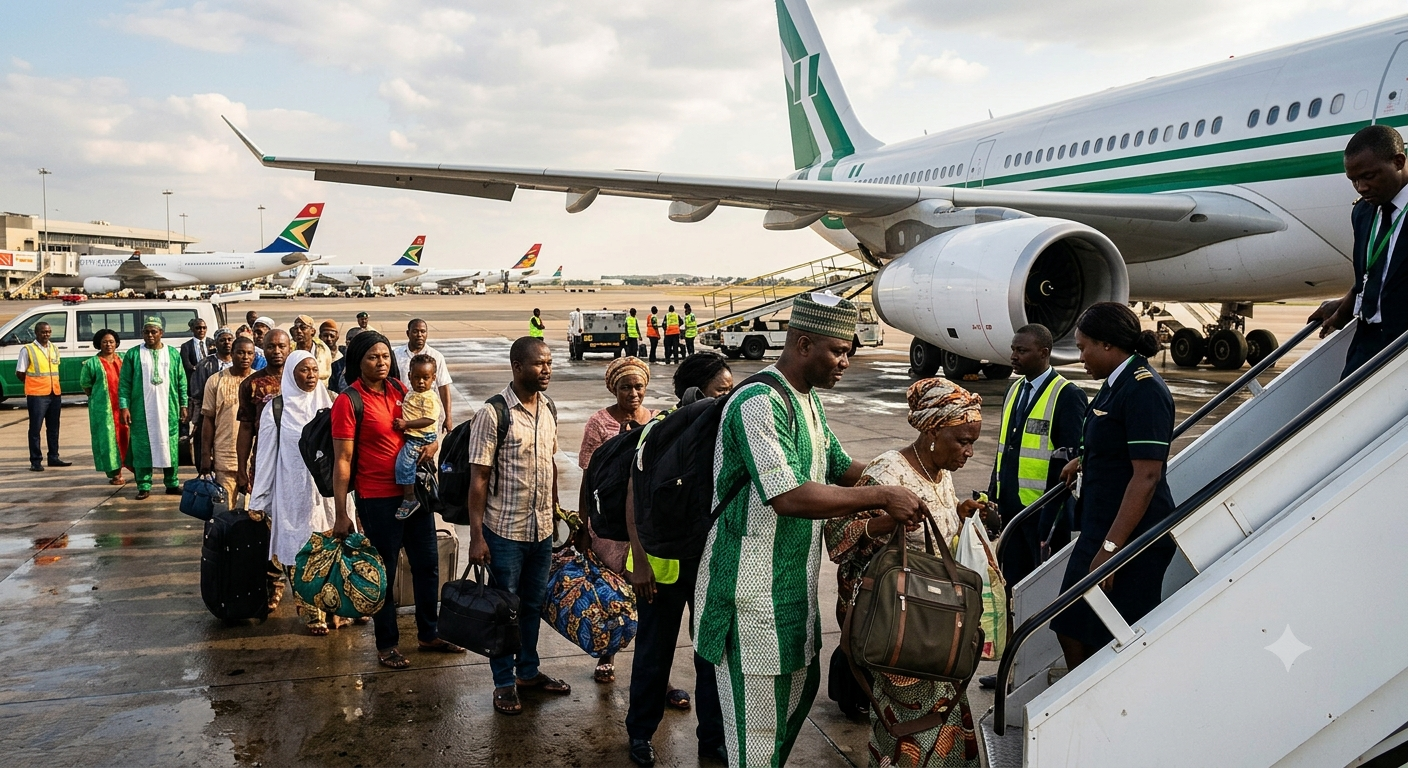
President Bola Ahmed Tinubu approved the funding of five free evacuation flights operated by Nigerian carrier Air Peace to transport citizens wishing to return home.
According to Nigeria’s Ministry of Foreign Affairs, more than 1,000 Nigerians have registered and completed security screening procedures for voluntary repatriation.
The move comes amid growing tensions and anti-immigrant demonstrations in several South African communities, prompting Abuja to take urgent measures to protect its nationals.
South African authorities have agreed to waive penalties related to visa overstays and immigration violations to facilitate the departure of those wishing to leave.
President Cyril Ramaphosa has condemned the violence and xenophobic attacks, pledging to prosecute those responsible and ensure the protection of all residents regardless of nationality.
A Recurring Crisis
The latest unrest is part of a recurring pattern of xenophobic violence that has periodically shaken South Africa, notably in 2008, 2015, and 2019, before resurfacing again in 2026.
Analysts argue that the violence stems from a complex mix of economic, social, and political factors that have repeatedly turned immigrants into targets of public frustration.
Economic Hardship and Unemployment
South Africa continues to face one of the highest unemployment rates in the world, with overall unemployment exceeding 32 percent and youth unemployment surpassing 50 percent in some areas.
Many residents in economically marginalized communities believe that migrants from countries such as Nigeria, Zimbabwe, Mozambique, and Somalia compete for scarce jobs, particularly in the informal economy and small businesses.
This perception has contributed to growing social tensions and resentment toward foreign nationals.
Crime and Public Perceptions
Negative stereotypes have also fueled hostility toward immigrants.
Nigerians in particular are often associated in public discourse with drug trafficking, organized crime, and human trafficking, despite the fact that the overwhelming majority are engaged in legitimate business and employment activities.
Human rights groups argue that isolated criminal cases are frequently generalized to entire migrant communities.
Historical and Social Factors
Researchers point to the legacy of apartheid as another contributing factor.
Decades of racial segregation and isolation left lasting social divisions, and the post-1994 opening of South Africa brought significant migration flows from across the continent.
The resulting challenges of integration have, at times, made foreign Africans convenient scapegoats during periods of economic and political stress.
Immigration as a Political Issue
The issue has become increasingly politicized with the rise of populist movements and organizations advocating stricter immigration controls.
Groups such as Operation Dudula have gained attention by portraying undocumented migration as a major cause of unemployment, crime, and pressure on public services.
Rights organizations warn that such rhetoric risks fueling further violence while diverting attention from deeper structural economic challenges facing the country.